Bifold Doors vs Sliding Doors: Which Is Right for Your Home?
Bifold and sliding doors both bring more glass, natural light and garden access into your home, but they create very different openings. Compare sightlines, space, cost and everyday use to decide which system suits your project.
If you’re choosing how to open your home onto a garden or terrace, you’ll almost certainly find yourself comparing bifold doors and sliding doors. Both create a wide expanse of glass and bring more natural light into the room, but they operate differently, suit different spaces, and create a different overall look.
How Do Bifold and Sliding Doors Work?
Bifold Doors
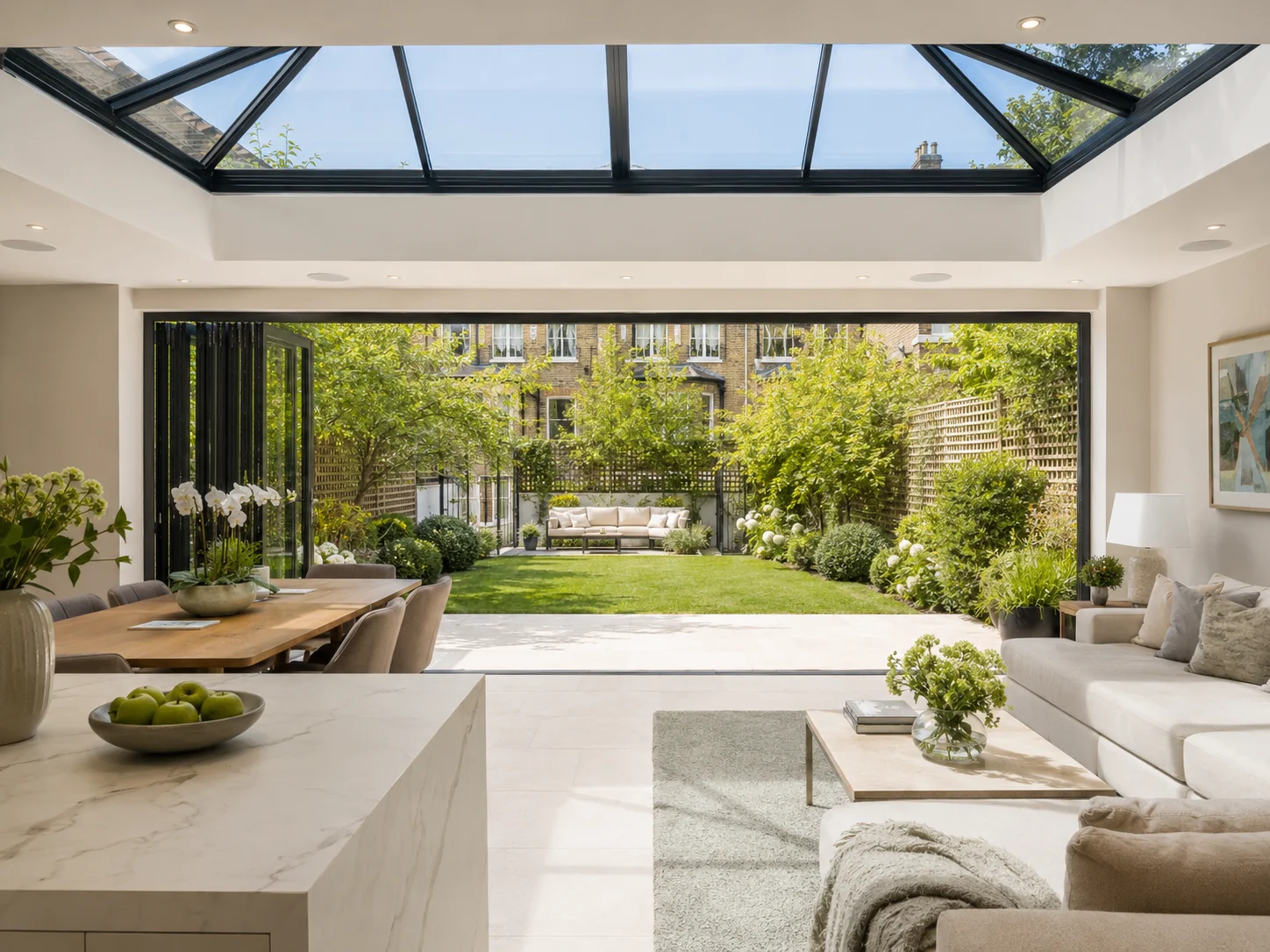
Bifold doors fold back on themselves in a concertina action. When fully open, the panels stack neatly at one or both sides of the opening, leaving most of the aperture clear.
This creates a genuinely open connection between the inside of your home and the garden, making bifolds particularly popular for kitchen extensions and open-plan living spaces.
Sliding Doors
Sliding doors move horizontally along a track. Depending on the configuration, one or more panels slide behind or in front of another panel.
They do not normally open the entire width of the frame, but their larger panes and slimmer vertical sightlines can create a more uninterrupted view when the doors are closed.
Opening Width: Which Gives You More?
Bifold doors generally provide the larger clear opening. Because their panels fold and stack at the edge of the frame, you can open most of the available width at once.
Sliding doors retain at least one panel within the opening. The exact amount left open will depend on whether you choose a two-panel, three-panel or multi-track configuration.
If your main priority is opening the rear of your home as widely as possible during warm weather, bifold doors are usually the stronger choice.
Which Option Needs More Space?
This is where sliding doors have an advantage. Bifold panels need space to stack when open. Depending on the configuration, that stack may sit inside or outside the property and can take up several hundred millimetres at one end of the opening.
This is worth considering if you have steps immediately outside, a narrow terrace, furniture close to the doors, or a kitchen island positioned near the opening.
Sliding doors remain within their frame and require no folding or stacking space beyond the opening itself, making them well suited to tighter layouts.
Natural Light and the View
Both options replace a substantial section of wall with glass, so either can transform the amount of natural light entering a room.
Sliding doors usually have fewer vertical frame sections and larger individual panes. This creates wider uninterrupted views of the garden when the doors are closed.
Bifold doors have more visible vertical frames because each folding panel requires its own frame. However, when fully opened, those panels move almost entirely out of the way.
The decision therefore comes down to which view matters most to you: the cleanest possible view when the doors are closed, or the widest possible opening when they are open.
Style and Frame Profile
Sliding doors tend to create a more minimal and architectural appearance. Their large panes and reduced number of frame sections work particularly well in contemporary extensions where the aim is to make the glazing feel almost frameless.
Bifold doors have a slightly busier appearance when closed, but their folding action creates a more dramatic indoor-outdoor transformation when opened.
Neither is objectively better. Sliding doors often suit highly minimal interiors, while bifolds can feel more flexible and sociable in busy family spaces.
Which Costs More?
Neither door type is automatically more expensive. The final price depends on the overall dimensions, number of panels, track arrangement, glazing specification, frame colour and any optional features such as integrated blinds.
A compact two-panel sliding door may cost less than a wide five-panel bifold. Equally, a large multi-track slider with oversized panes and specialist glazing may cost considerably more.
The most useful approach is to compare equivalent sizes and specifications rather than relying on a general price-per-door comparison.
Security
Both bifold and sliding doors can provide excellent security when properly specified. Look for robust aluminium frames, multi-point locking, toughened or laminated safety glass and an appropriate security accreditation for the exact system you are ordering.
Security performance varies by product and configuration, so always check the technical specification rather than assuming every aluminium door meets the same standard.
Maintenance
Both systems are relatively low-maintenance. Aluminium frames do not rot, warp or require repainting, and normally need only occasional cleaning with warm water and a mild detergent.
The tracks should be kept clear of grit, leaves and other debris. Bifold doors also have more hinges and moving connections, while sliding doors rely heavily on their rollers and track remaining clean and correctly adjusted.
Whichever type you choose, good-quality running gear will make a noticeable difference to how smoothly the doors continue to operate over time.
Which Should You Choose?
-
Choose bifold doors if you want the widest possible opening, enjoy a seamless indoor-outdoor living space and have enough room for the folded panels to stack.
-
Choose sliding doors if you prioritise large panes, slim sightlines, uninterrupted views and a system that does not need additional folding space.
For many homeowners, the decision comes down to how the doors will be used most often. If they will spend most of the year closed, the slimmer sightlines of sliding doors may be more important. If you regularly want to open the entire room onto the garden, bifolds are likely to deliver the experience you want.
Compare Bifold and Sliding Doors Online
Explore SmartaView’s aluminium bifold doors and aluminium sliding doors. Configure your dimensions, colour and glass options online and compare live pricing for your project.
Further reading
- Aluminium Sliding Doors: The Complete UK Buyer's Guide
- How Wide Can Bifold Doors Be? Sizes, Panels & What's Possible
- How Much Do Bifold Doors Cost in the UK? (2026 Guide)
Weighing up your options? Compare SmartaView's aluminium bifold doors and aluminium sliding doors, and see your price online. Still unsure? Speak to our team.
Author at Smartaview, writing about aluminium glazing, home improvements and the buying process.