What Is a Roof Lantern, and Is One Right for Your Extension?
Roof lanterns add drama and light to single-storey extensions, but they're not right for every project. Here's how to decide if a lantern is the right choice.
A roof lantern is one of the most dramatic architectural elements you can add to a single-storey extension. Get it right and it transforms a room. Choose it for the wrong project and it can feel out of proportion or at odds with the architecture. Here's what a roof lantern is, what it does, and how to decide if it's appropriate for your project.
What Is a Roof Lantern?
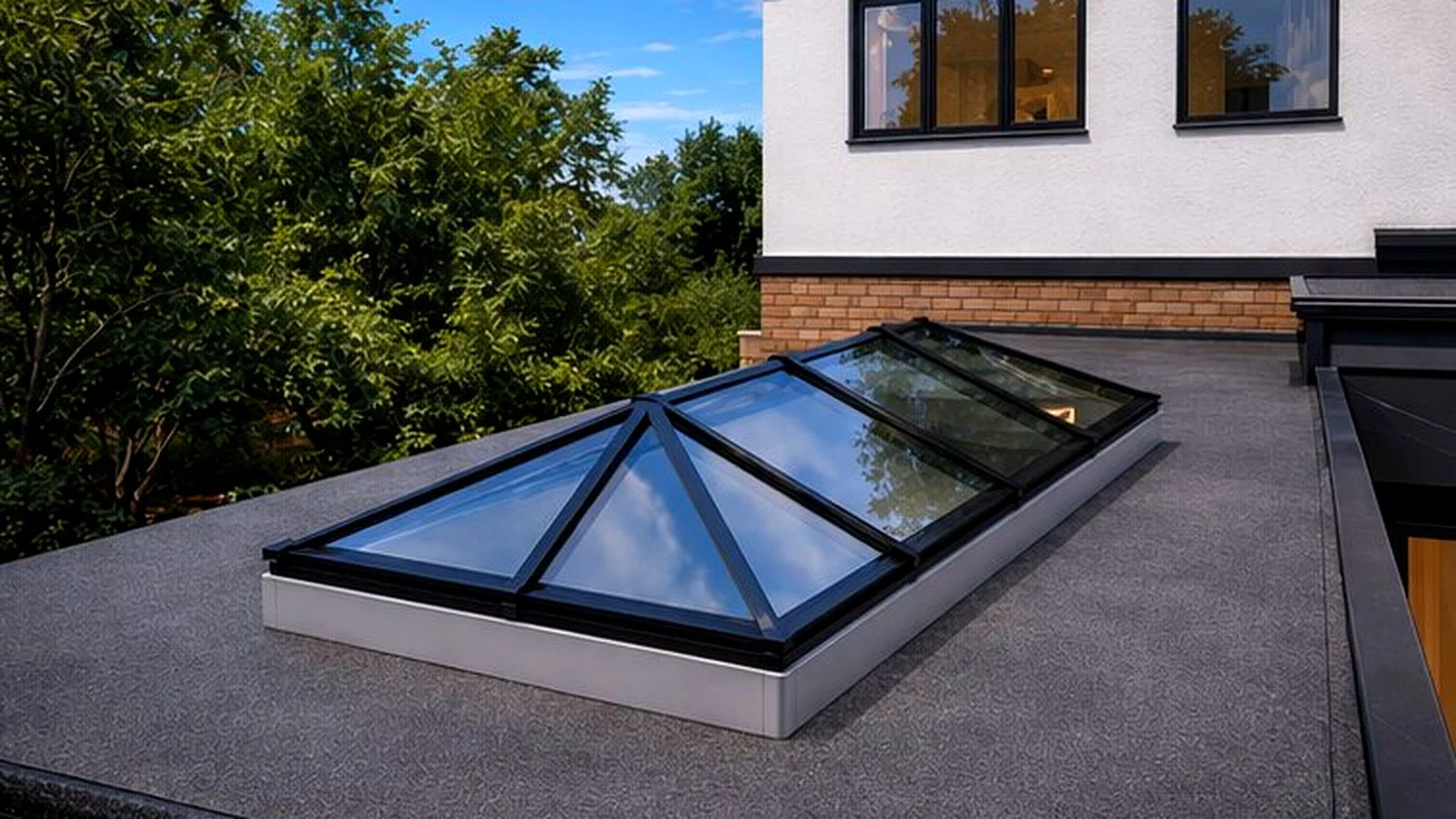
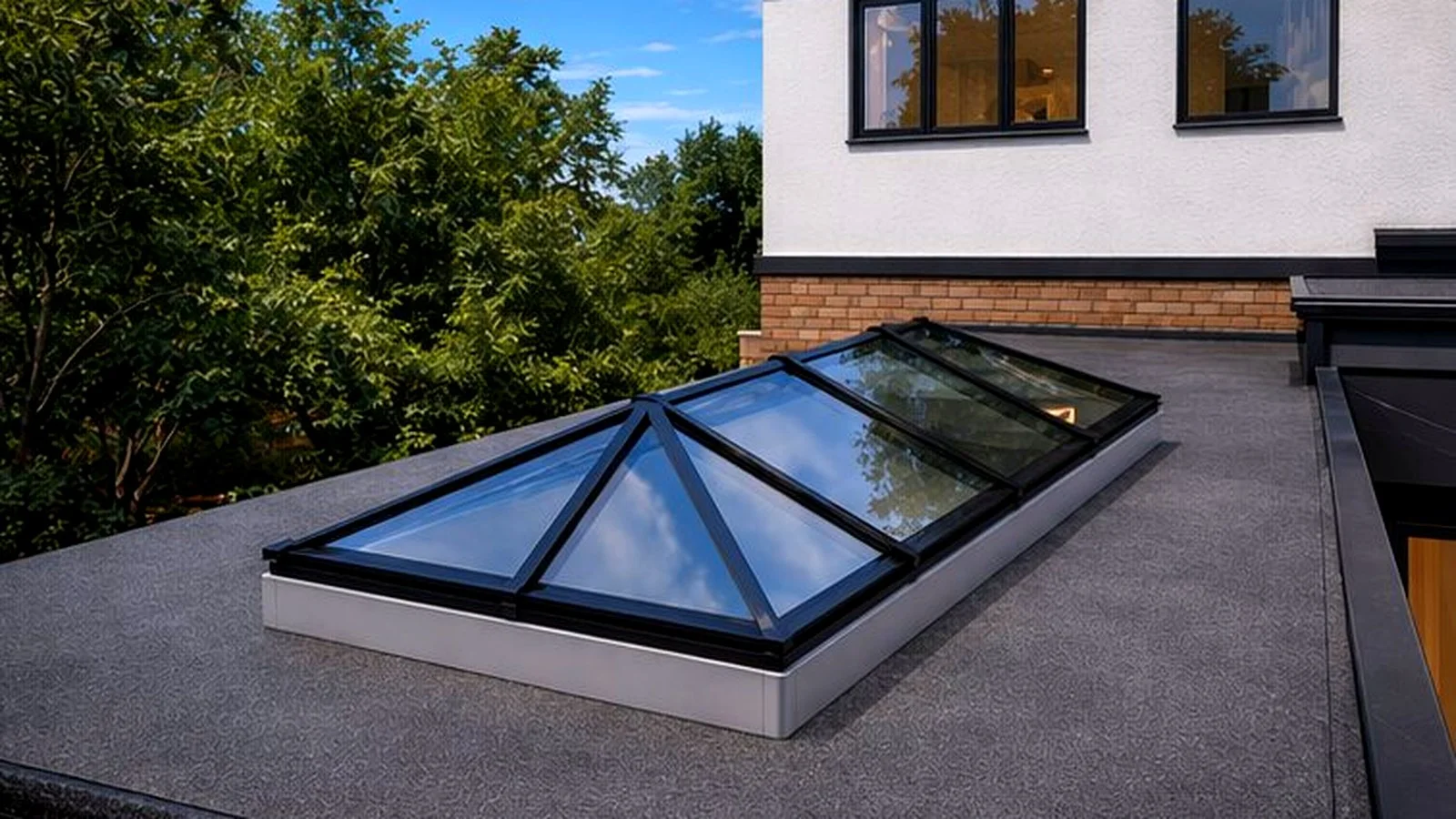
A roof lantern is a glazed structure that sits proud of the flat roof plane, essentially a glass box or ridge with glazed faces on all sides, projecting upward from the roof of the extension. Unlike a flat roof light, which is flush or near-flush with the roof, a lantern has visible internal height and creates a skylight effect with significant visual drama from inside the room.
Traditional roof lanterns, found in orangeries and Victorian conservatories, were often ornate, with decorative glazing bars. Modern aluminium roof lanterns take the same structural principle and deliver it with the clean lines, slim profiles, and powder-coat finish of contemporary design.
What a Roof Lantern Delivers
More light than a flat roof light
Because a lantern has glazed faces on multiple sides rather than just the top, it captures light across a wider angle of sky. On a bright day, this produces a noticeably greater light volume in the room below compared to a flat roof light of the same base dimensions. In winter, when the sun is low, the angled faces of a lantern continue to capture light that a flat roof light largely misses.
Architectural drama
A roof lantern creates a ceiling feature, a defined volume of light and space above the central seating or dining area of an extension that gives the room a focal point. In an otherwise flat-ceilinged extension, this makes a significant difference to how the space feels.
A sense of generous height
The interior height of a lantern, even a modest 600mm rise above the ceiling plane, creates a perceived generosity of space that makes extensions feel larger than their floor dimensions suggest.
When a Roof Lantern Is the Right Choice
• Orangery-style extensions where the architecture is formal and the room is a primary living or dining space
• Extensions with a generous ceiling height (2700mm+) where there is room to appreciate the lantern's projection
• Rooms of 12m² or more where a single flat roof light would not be sufficient to light the full space
• Projects where the roof structure is new-build and the lantern can be integrated from the outset rather than retrofitted
When a Flat Roof Light Is the Better Choice
For contemporary, minimal extensions where clean flat planes are part of the aesthetic, a flush or near-flush flat roof light is more architecturally coherent than a lantern. A lantern on a very modern extension can feel stylistically inconsistent, the traditional associations of the lantern form conflict with the minimalism of the architecture.
For smaller extensions (under 10m²), a lantern can feel oversized and dominating. A well-proportioned flat roof light delivers the light without the visual weight.
Specification: What to Look For
In an aluminium roof lantern, look for: thermally broken aluminium frames, self-cleaning solar control glass on all faces, a ridge detail that conceals fixings and is properly weatherproofed, and a powder-coat finish that matches your door and window frames. The lantern should be specified in the same RAL colour as your bifold or sliding doors for visual coherence across the extension.
Contact SmartaView to Discuss Roof Lantern Options for Your Extension
Explore more
Author at SmartaView, writing about aluminium glazing, home improvements and the buying process.