Do Roof Lanterns Need Planning Permission?
Most roof lanterns on single-storey extensions don't need planning permission, but the rules have important exceptions. Here's what you need to know.
Planning permission for roof lanterns is one of the questions we're asked most regularly, and the answer requires a little more nuance than a simple yes or no. Here's the complete picture.
The General Rule: Permitted Development
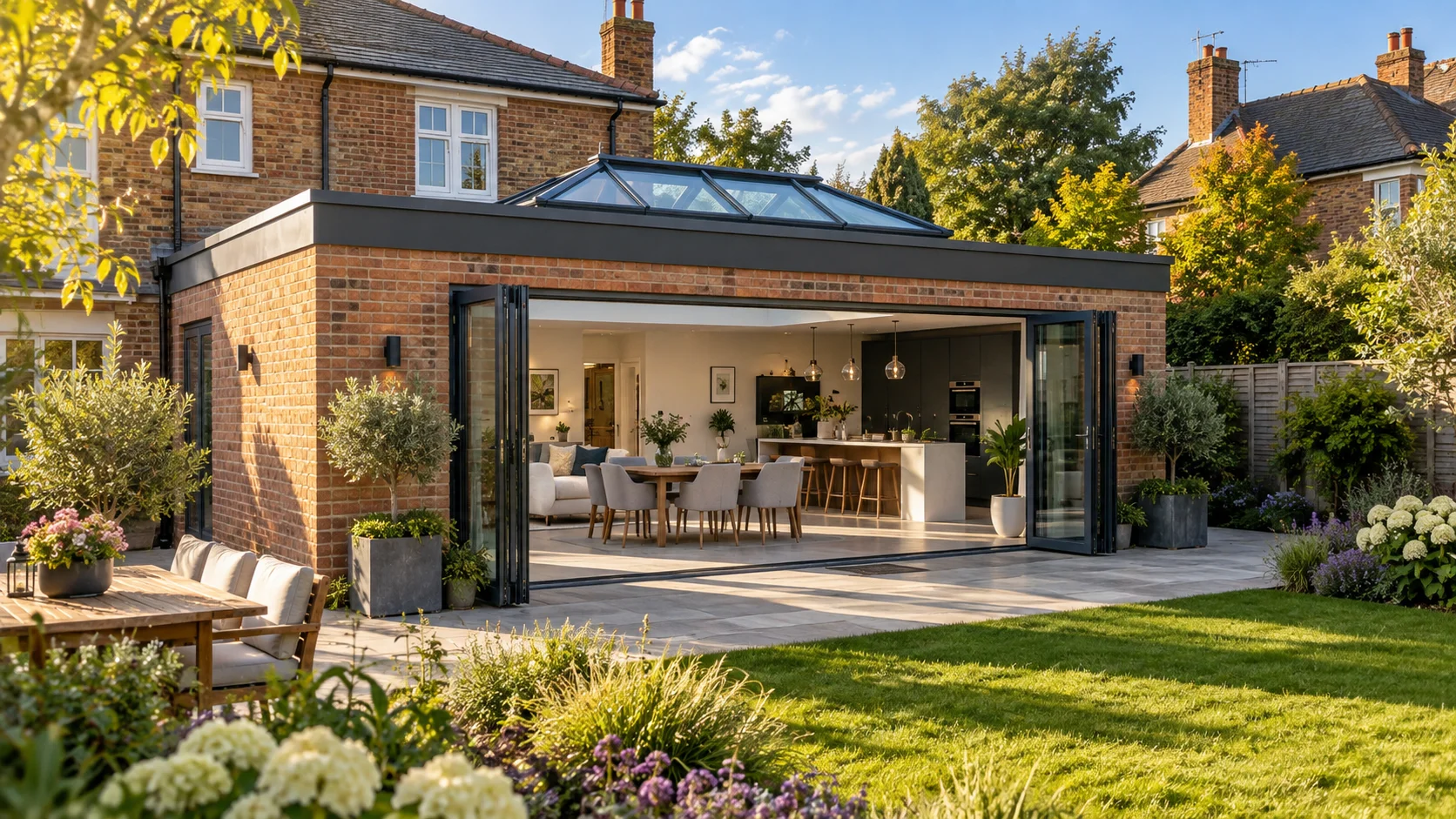
In England, adding a roof lantern to an existing single-storey extension generally falls within permitted development, meaning no planning application is required. The key conditions are that the lantern must not increase the overall height of the building beyond the limits set out in the General Permitted Development Order (GPDO), and the building must not be a listed building, flat, or in a conservation area with specific restrictions.
Most domestic roof lanterns, typically 400–700mm above the flat roof plane, do not materially increase the overall building height and therefore remain within permitted development rights.
The Exceptions
Listed buildings
As with all external alterations to listed buildings, adding a roof lantern requires Listed Building Consent, regardless of permitted development rights. The visual impact of a glazed lantern on the roofline is a material alteration that a local authority's conservation team will assess. Some listed building additions are approved; many are not. Always seek pre-application advice from your conservation officer before committing to this route.
Conservation areas
Within conservation areas, the rules are more nuanced. A roof lantern on a rear extension not visible from a highway may well be permitted development. A lantern visible from the street or public realm is more likely to need consent. The local planning authority's conservation officer can advise, their pre-application service is free and usually responsive for simple queries.
Properties with Article 4 Directions
An Article 4 Direction is a planning instrument that removes permitted development rights in a specific area, sometimes applied to entire streets or neighbourhoods where the character is considered sensitive. Properties subject to an Article 4 Direction typically need planning permission for external alterations that would otherwise be permitted development. Check your local authority's planning portal to see whether an Article 4 Direction applies to your property.
New extensions requiring planning permission
If the extension itself requires planning permission (it exceeds permitted development limits), the roof lantern specification will be assessed as part of that planning application. Provide the lantern specification, dimensions, materials, colour, within the application drawings.
Building Regulations: Always Required
Regardless of planning status, a roof lantern installation requires Building Regulations approval. The key regulations are Part A (structural integrity of the roof opening and lantern frame), Part L (thermal performance, the lantern must not significantly worsen the building's thermal envelope), and Part C (weather resistance, the waterproofing of the lantern junction with the flat roof). A Building Notice or Full Plans application through Building Control is the standard route.
The Practical Advice
For most single-storey rear extensions on non-listed, non-conservation area properties in England, a roof lantern is permitted development. If you're in any doubt, a free pre-application call to your local planning authority takes five minutes and removes uncertainty. Don't skip this step if the context is at all ambiguous.
Explore more
Author at Smartaview, writing about aluminium glazing, home improvements and the buying process.