Do Roof Lights Need Planning Permission in the UK?
Most roof lights don't need planning permission, but some do. Here's the complete guide to planning rules for roof lights in England and Wales.
The good news: most domestic roof light installations don't require planning permission. The less simple news: there are specific circumstances where they do, and getting it wrong can create costly problems. Here's the full picture.
Permitted Development for Roof Lights
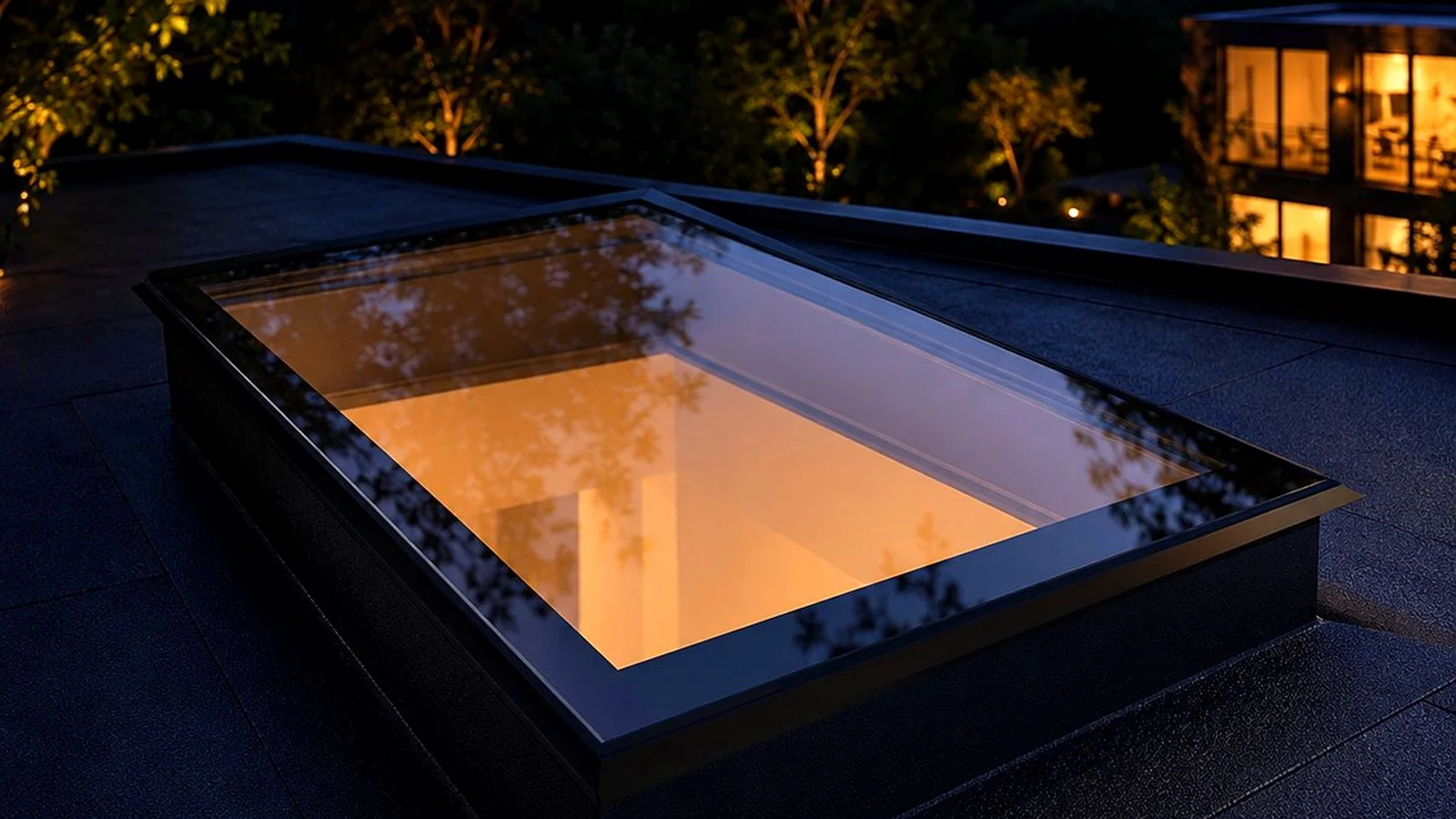
In England, inserting a roof light or skylight into an existing roof is generally permitted development, meaning no planning application is required, subject to the following conditions:
• The roof light does not protrude more than 150mm above the roof plane (for flat roof installations, this applies to the upstand and frame height)
• The roof light is not on the principal elevation (the front of the house facing the road) or on a side elevation visible from a highway
• The installation does not increase the overall height of the roof
• The property is not in an area where permitted development rights have been removed by an Article 4 Direction
When You Will Need Planning Permission
Listed buildings
Any alteration to a listed building, including adding a roof light, requires Listed Building Consent regardless of whether it would otherwise be permitted development. Contact your local authority's conservation officer before any work begins. Even a modest roof light that would be permitted on an unlisted property requires consent on a listed one.
Conservation areas
In conservation areas, roof lights on roof slopes visible from a highway are not permitted development. Front-facing roof lights on conservation area properties almost always require a planning application. Rear and side roof lights visible only from private land are more likely to be acceptable, but check with your local planning authority.
Flats and apartments
Permitted development rights for roof lights do not apply to flats and apartments. Any roof light installation on a flat or apartment building requires a planning application.
Properties with restricted permitted development
Some properties have had permitted development rights removed by planning conditions attached to the original permission, often new-build estates or properties in sensitive areas. Check your property's planning history if you're unsure.
Building Regulations: Always Apply
Regardless of planning permission, Building Regulations approval is required for most roof light installations. The key regulations are Part L (thermal performance, the roof light must not significantly worsen the thermal envelope of the building) and Part A (structural integrity, the roof structure must be adequate to support the roof light and the opening must be properly formed). A Building Notice or Full Plans application through your local authority's Building Control team is the standard route.
Wales, Scotland, and Northern Ireland
Permitted development rules differ in Wales, Scotland, and Northern Ireland. The principles are broadly similar but the specific thresholds and conditions vary. If your property is in Wales, Scotland, or Northern Ireland, check with your local planning authority directly rather than relying on English guidance.
The Practical Advice
For most single-storey flat-roof extensions in England, a roof light on the rear elevation is permitted development. If there's any doubt, conservation area, listed building, front elevation, a brief call to your local planning authority's duty planner is free and definitive. Don't skip this step.
Explore more
Author at Smartaview, writing about aluminium glazing, home improvements and the buying process.