Industrial vs Contemporary: Choosing the Right Aluminium Door Aesthetic
Aluminium doors span a wide aesthetic range, from raw industrial to refined minimal. Here's how to identify the right style for your home and specify it correctly.
Aluminium doors are not a single aesthetic. The same core material can produce a look that references Victorian industrial architecture or one that feels like a Scandi-minimal gallery space. Understanding the spectrum, and where your home sits on it, is essential for specifying doors that feel right rather than simply correct.
The Industrial Aesthetic
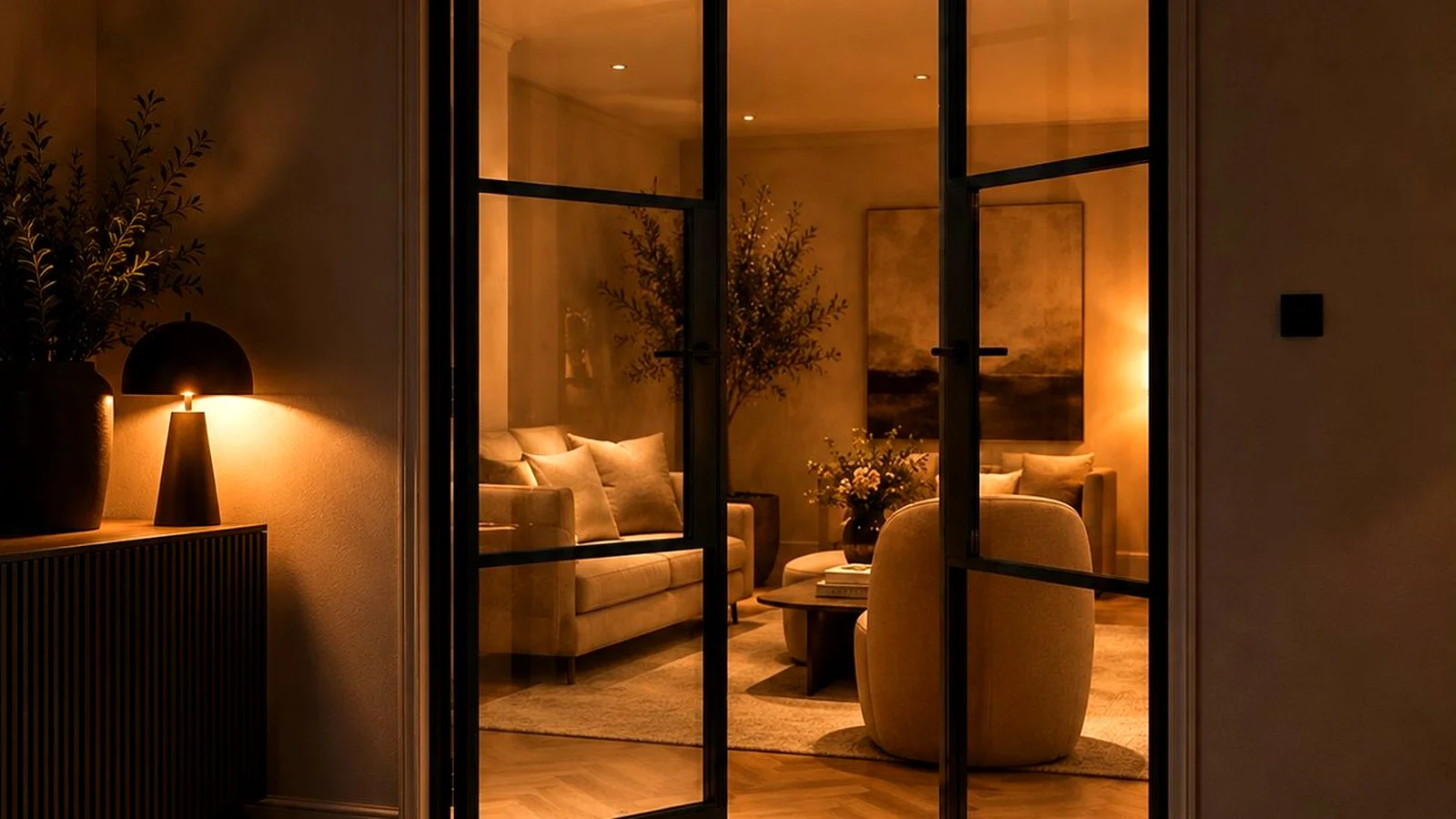
The industrial door aesthetic draws from the warehouse conversions, loft apartments, and Victorian factory buildings that have become some of the most coveted residential spaces in the UK. The references are honest: exposed structure, large glazed openings with visible grid bars, dark or raw metallic frames, and the absence of decorative detail.
What defines the industrial look
Glazing bars and grid patterns within the door or window, reminiscent of Crittall steel windows. Dark frames: black (RAL 9005) or very dark grey (RAL 7021). Robust, visible hardware, handles and hinges that look like they could withstand industrial use. Pairing with exposed brick, concrete floors, reclaimed timber, and raw steel elements in the interior.
When to choose it
Industrial aesthetics work best in: converted properties where the architecture is genuinely industrial in origin; contemporary new builds deliberately referencing industrial precedents; interiors with exposed structure, industrial finishes, or a raw material palette. It works less well in suburban semis or period cottages where the reference is incongruous with the building's character.
The Contemporary Minimal Aesthetic
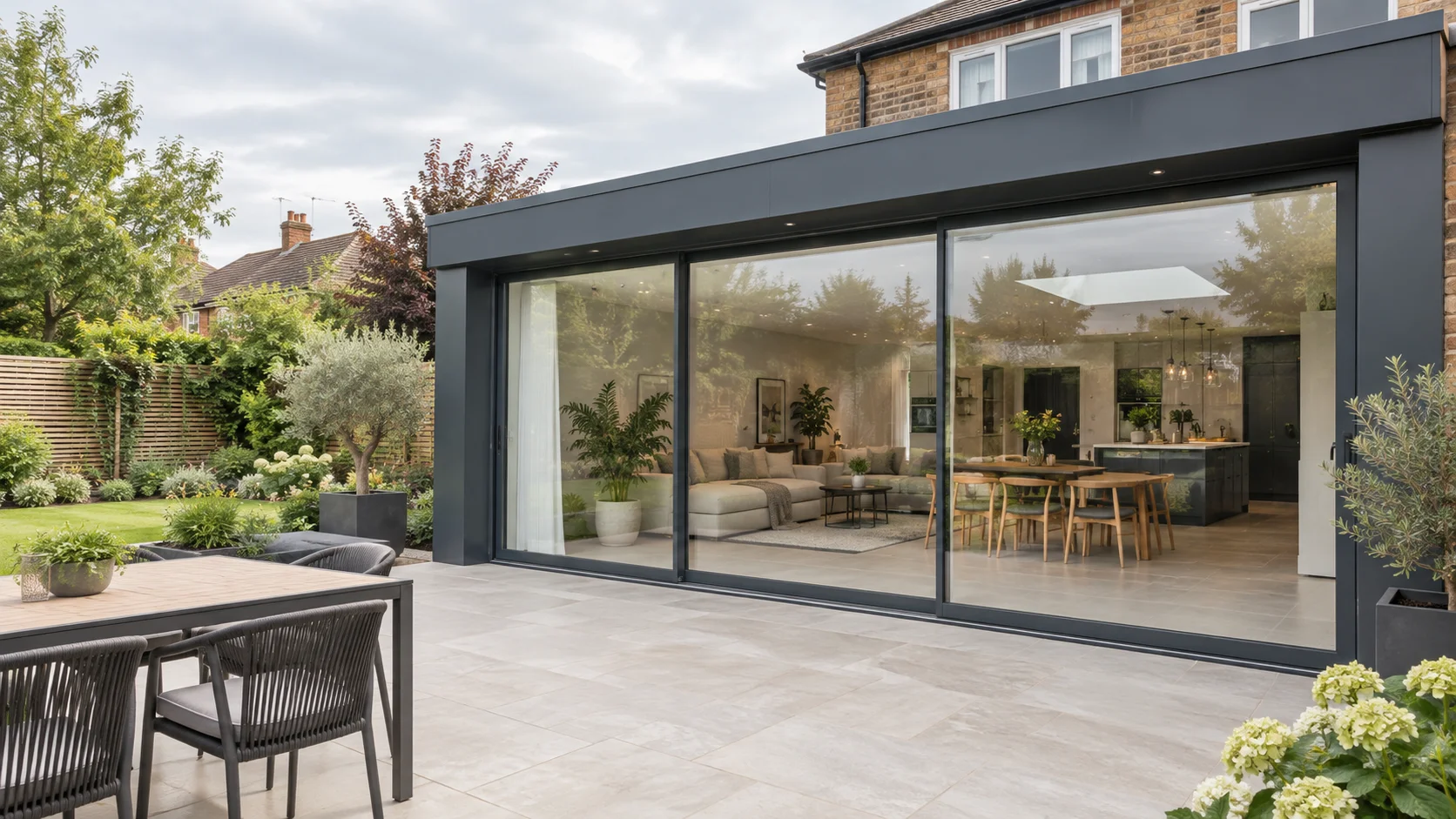
Contemporary minimal doors are the opposite of industrial, where industrial celebrates mass and reference, minimal seeks to reduce the door to the least possible visible frame, putting the glass and the view at the centre. The goal is to make the wall disappear.
What defines the minimal look
Ultra-slim frame profiles, 20–40mm visible aluminium. Frameless or near-frameless appearance when open. Clean colours: anthracite grey, white, warm grey. Hardware that is recessed or reduced to near-invisibility. Pairing with smooth render, polished concrete or large-format stone floors, white painted walls, and clean-lined furniture.
When to choose it
The contemporary minimal aesthetic suits: architect-designed extensions on suburban or rural properties; new build homes with a clean, resolved design language; interiors where the connection to the garden or landscape is the primary design move, and the door should facilitate rather than compete with that connection.
The Middle Ground: Architectural
Most high-quality residential door installations in the UK fall somewhere between these poles, what might be called 'architectural'. The frames are slim but not aggressively minimal. The colour is dark but not raw. The hardware is quality and visible but not industrial. This is the territory Origin occupies naturally, precision-engineered, visually resolved, designed to complement the best residential architecture without defining the look of the room.
Matching the Door to the Architecture
Rendered exteriors
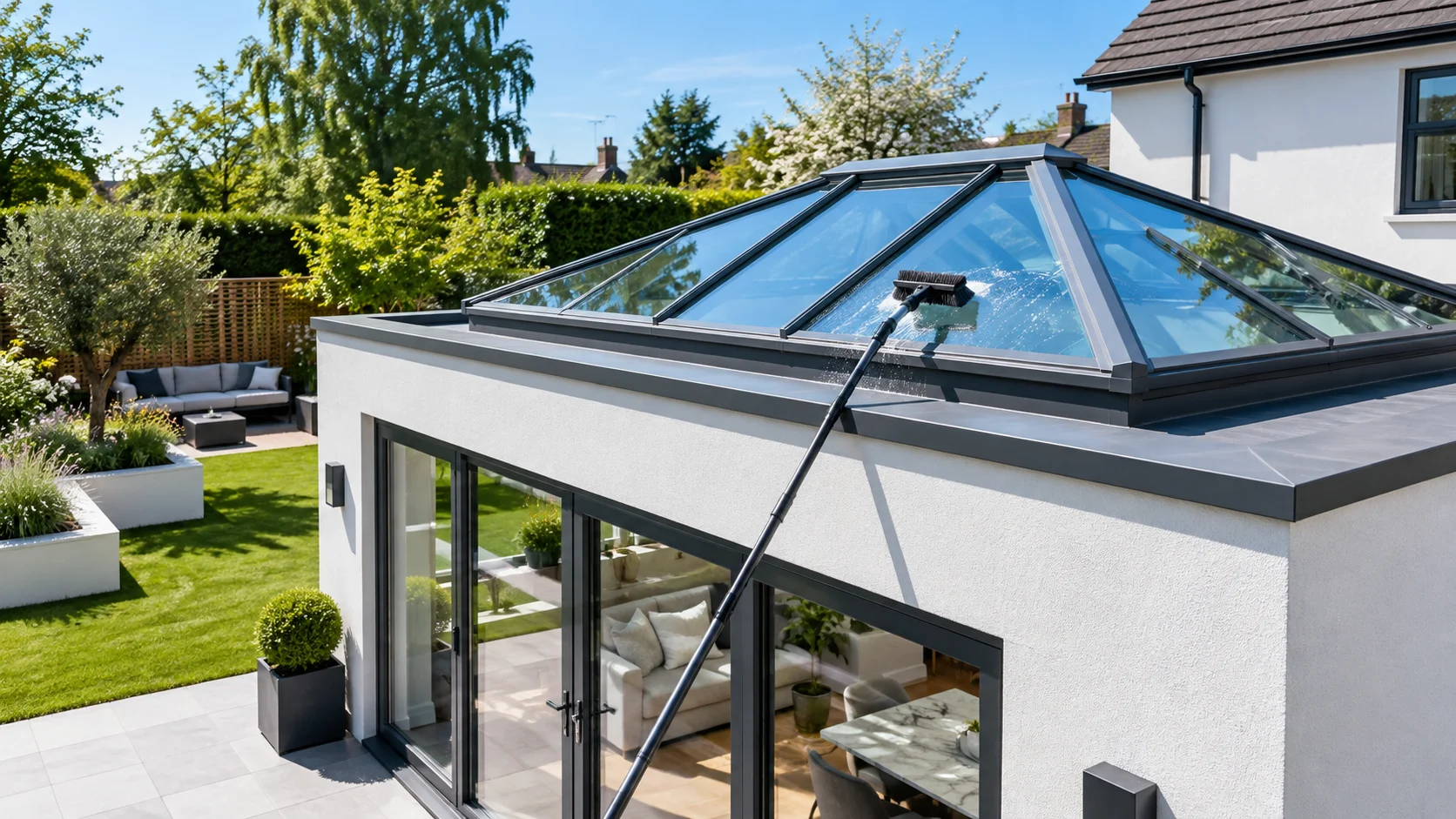
Smooth render reads as contemporary, pair it with slim-profile aluminium in anthracite or black for maximum visual impact.
Brick exteriors
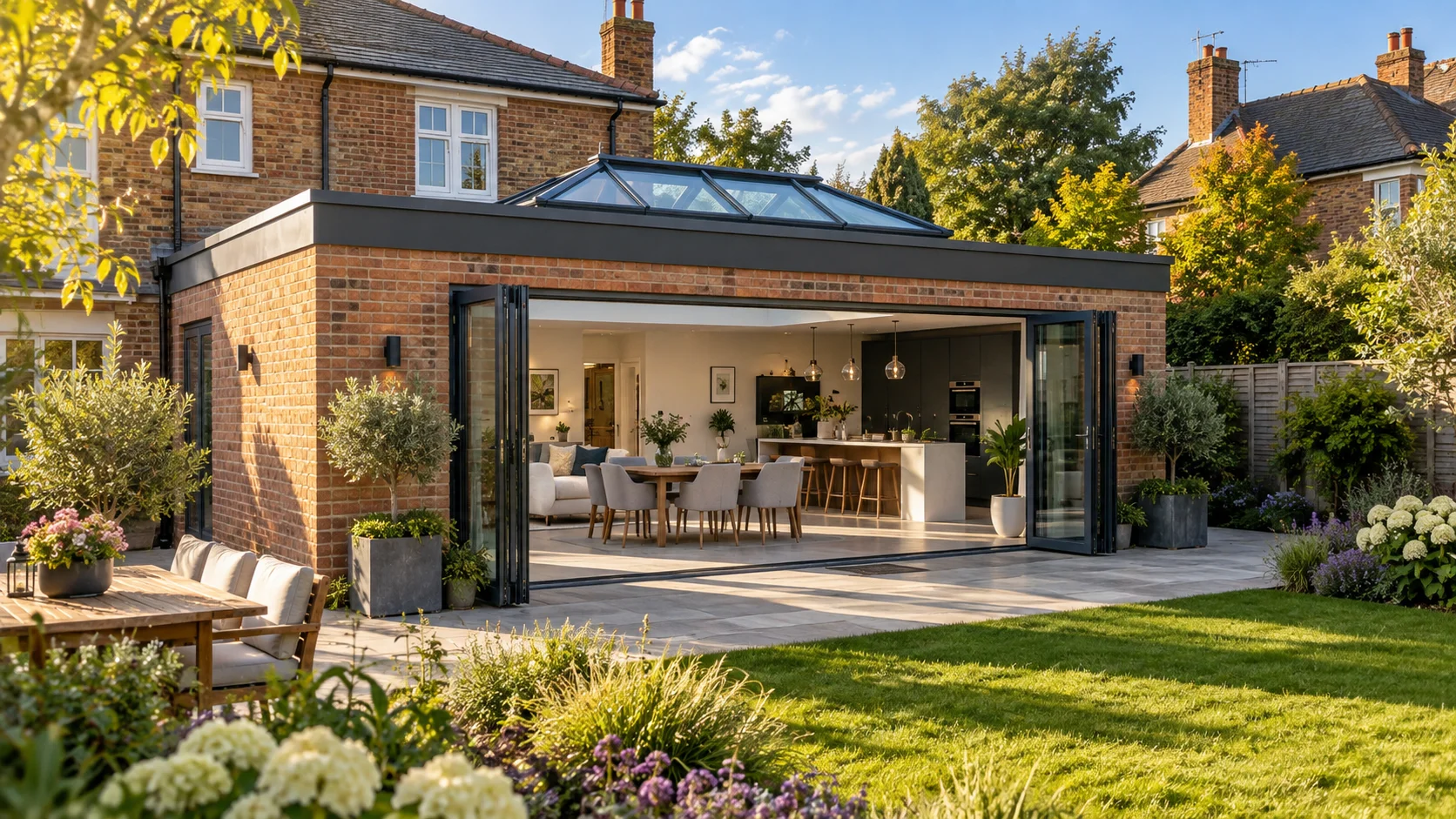
Brick is both traditional and industrial in its associations. Either dark frames for a bold contrast, or warm grey frames that relate to the brick's tone. Avoid mid-browns.
Timber cladding
Timber cladding and anthracite aluminium is one of the most successful combinations in contemporary domestic architecture, the warmth of the timber and the precision of the aluminium complement each other beautifully.
Stone or flint
Traditional stone-faced extensions are often best served by white or warm grey aluminium, the restraint lets the stone be the feature.
Explore more
Author at Smartaview, writing about aluminium glazing, home improvements and the buying process.