Toughened Glass Table Tops: A Practical Buying Guide
A made-to-measure glass top can protect a table or create a clean contemporary surface. The correct specification depends on how the glass is supported.
A glass table top can do one of two jobs.
It may sit over an existing timber, stone or painted surface as a protector. Alternatively, it may form the table surface itself, supported only by a base or frame.
Those applications look similar, but they place very different demands on the glass. Identifying which one you need is the starting point for a safe specification.
Glass used as a table protector
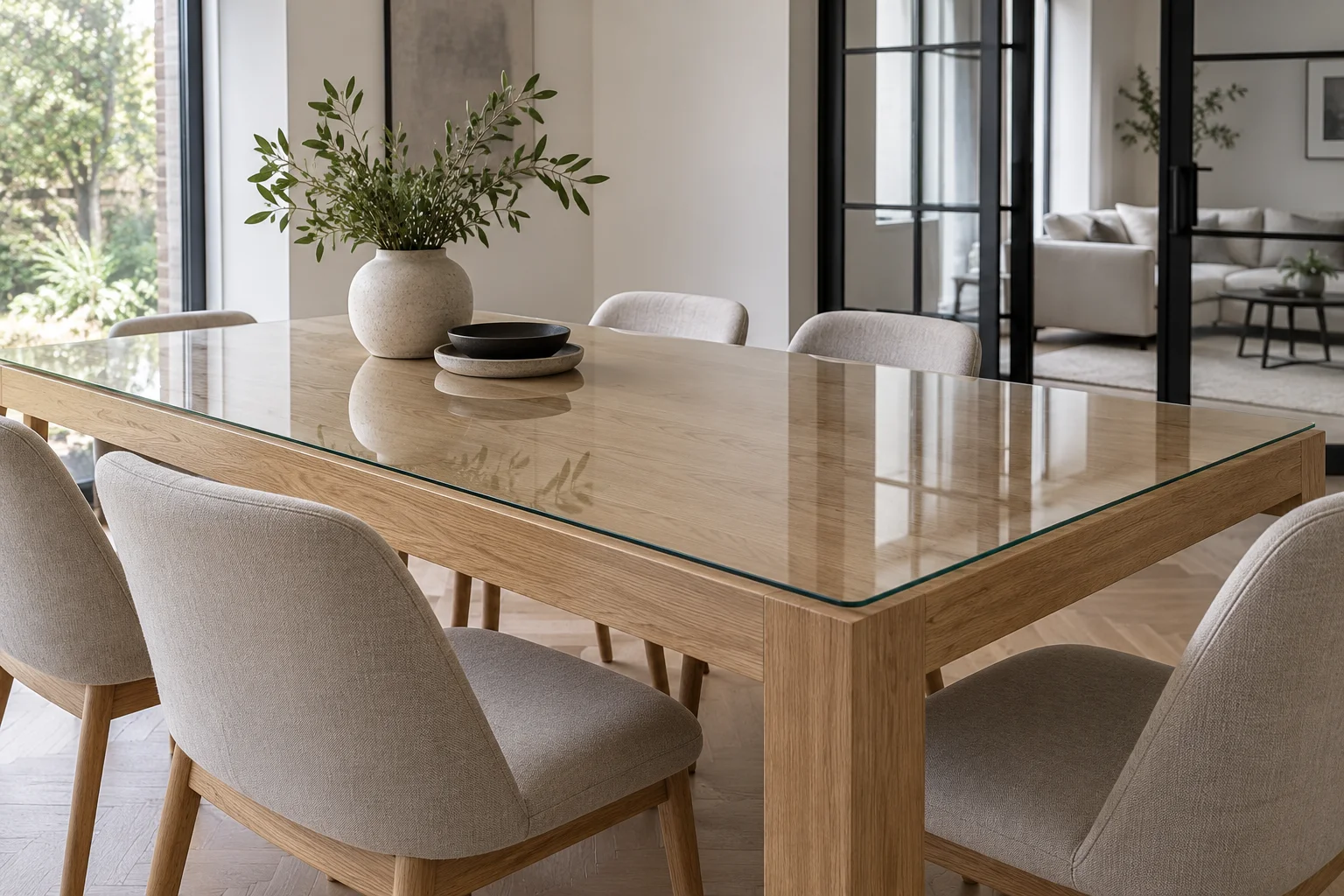
A protector is supported continuously by the surface beneath it. Its main purpose is to defend the table from spills, scratches and everyday wear while keeping the original finish visible.
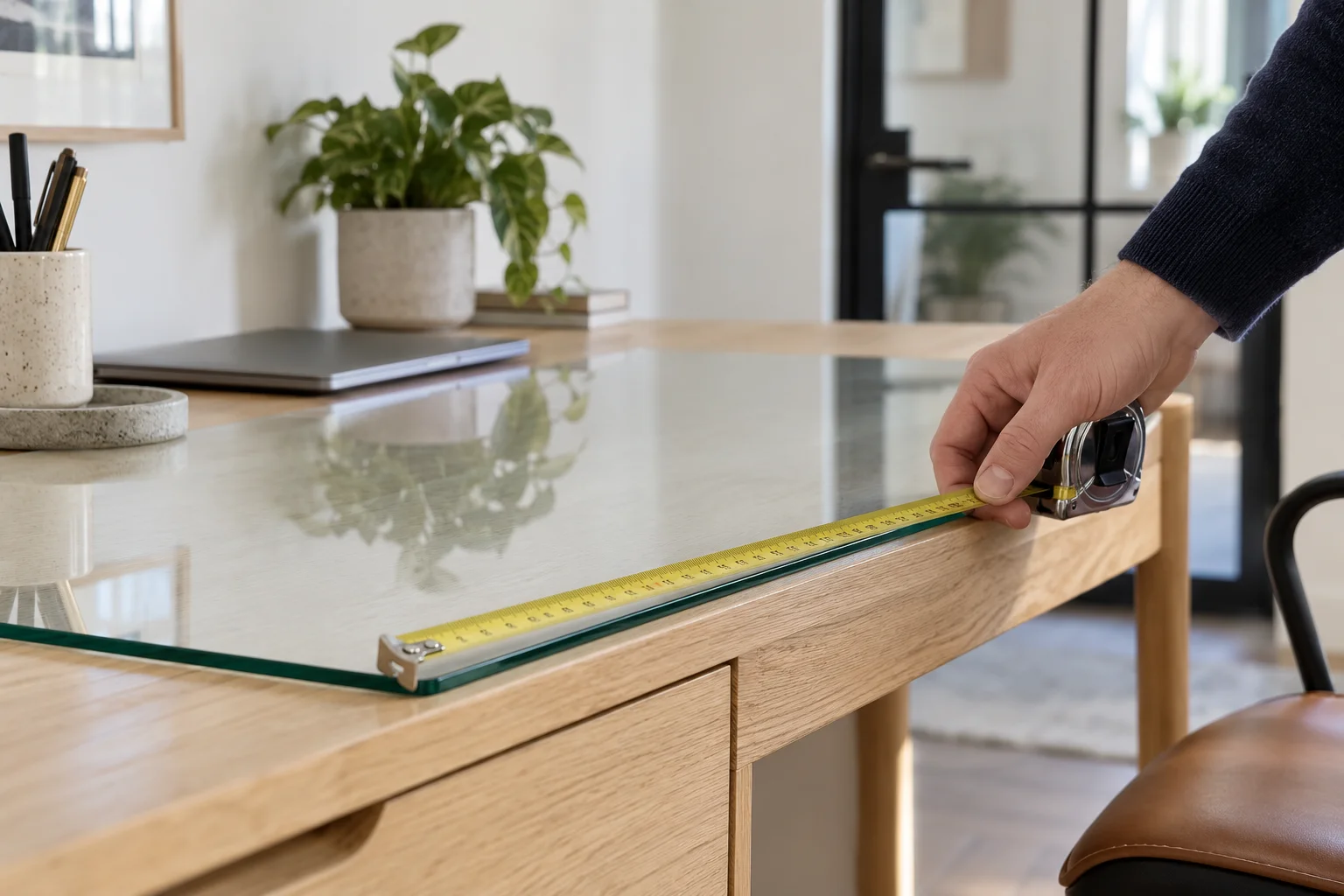
For this use, accurate width and depth are the main dimensions. Decide whether the glass should finish flush with the table edge or sit slightly inside it.
Small clear pads can separate the glass from the surface, reduce movement and prevent grit from becoming trapped directly beneath it.
Glass used as the structural table top
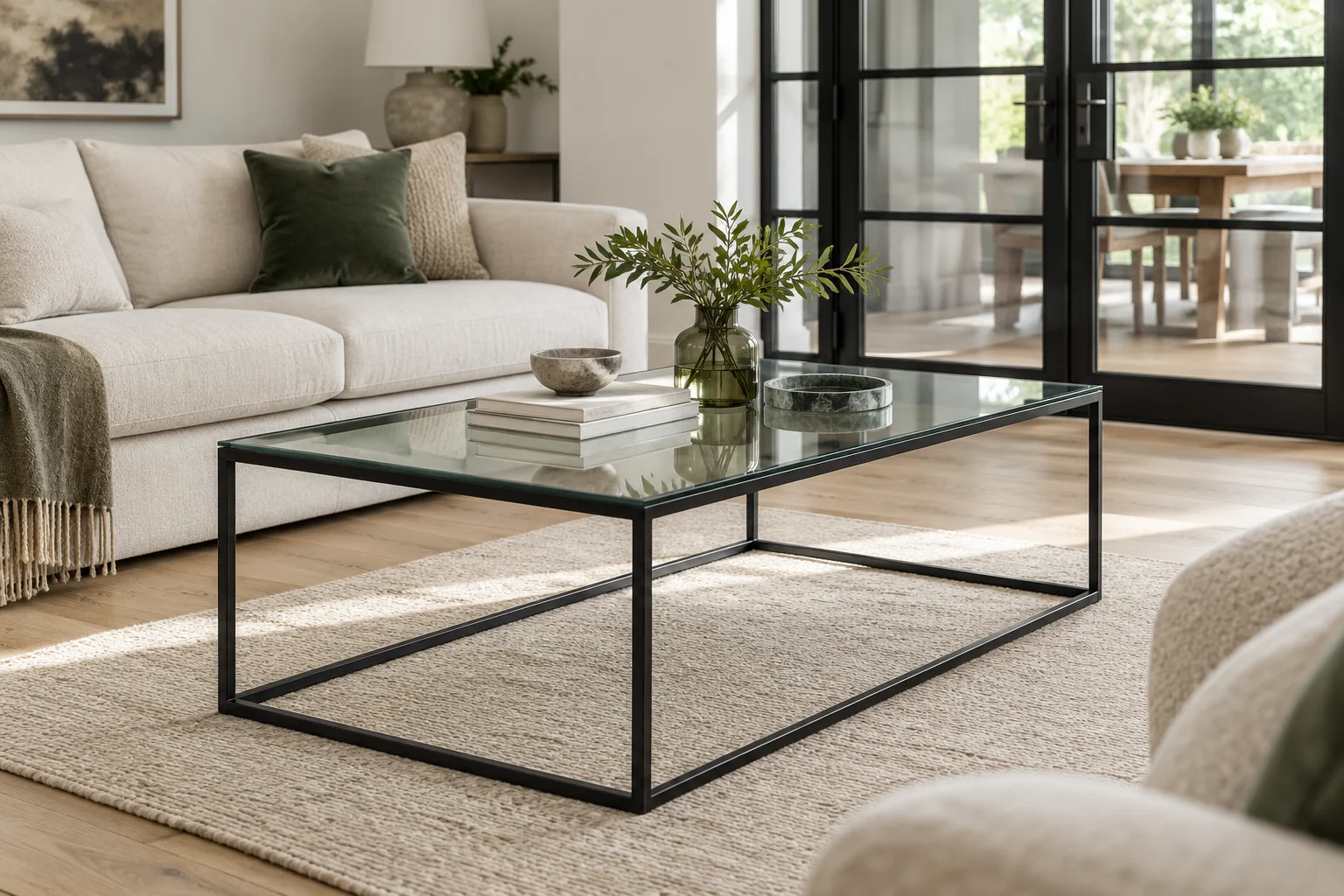
A free-standing glass top bridges between supports. Its thickness and type must suit:
- the overall size;
- the shape of the top;
- the distance between supports;
- the position and design of the base;
- expected loads; and
- how the glass is fixed or restrained.
A thin pane that is suitable as a fully supported protector may not be suitable as an unsupported dining or coffee-table top. Obtain a project-specific recommendation from a competent glass specialist or furniture designer before ordering.
Why choose toughened safety glass?
Toughened glass is heat treated for greater resistance to impact and temperature change. If it breaks, it is designed to fragment into many small pieces rather than large sharp shards.
That makes it a common choice for furniture and other exposed interior applications.
Toughening happens after all cutting and edge work. The finished pane cannot be trimmed, drilled or notched later, so every detail must be correct before manufacture.
Measure the table carefully
Measure the width and depth in millimetres at more than one point. Older timber tables are not always perfectly square, and handmade furniture can vary slightly from one end to the other.
For a rectangular protector, decide whether you want square or rounded corners. Note the required corner radius rather than describing it only as “slightly rounded”.
For circular or shaped tops, a physical template may be safer than relying on a small set of measurements.
Think about the exposed edges
The edge is highly visible on a table top. A polished edge provides a smooth, finished appearance and is normally preferable where people will touch or see the perimeter.
Corners also deserve attention. A sharp square corner may suit a crisp design but can be uncomfortable in a busy family space. Softened or radiused corners can be more forgiving.
Confirm which edge and corner options are available for the selected product before ordering.
Clear or privacy glass?
Clear glass protects a decorative timber grain or painted surface without hiding it. Frosted, satin or reeded finishes can create a stronger design statement, but they also obscure whatever sits beneath the pane.
Textured glass may require more attention during cleaning, depending on which face carries the texture.
Check suitability before you buy
SmartaView's made-to-measure 6mm toughened glass is described for protective surfaces and other compatible interior projects. Whether 6mm is appropriate depends on the size, support and use of the table.
For an unsupported or heavily loaded top, do not select the thickness by appearance alone. Confirm the complete specification with a competent professional.
For a suitable fully supported protector or compatible project, enter your dimensions on the SmartaView glass table-top configurator to see the live price.
Frequently asked questions
Can a glass table top be cut after toughening?
No. Cutting, drilling and edge shaping must be completed before the pane is toughened.
Should the glass overhang the table?
A protector normally finishes flush or slightly inside the existing surface. An overhang introduces an exposed unsupported edge and needs professional assessment.
Is 6mm glass suitable for every table?
No. It may suit some fully supported protectors, but a structural table top may require a different thickness or construction depending on its size and support.
Next steps for your project
At SmartaView, we can help you configure glass table tops to suit your needs. Explore glass table tops and see your options, or chat with our team on WhatsApp if you would like help choosing.
For an accurate order, use our table-top glass measuring guide and confirm the exact finished dimensions required for your chosen product. Share your project details, preferred finish, delivery postcode and intended timescale with our team. Any rough dimensions are for initial guidance only, not manufacture.
SmartaView supplies the products only and does not provide installation. Confirm measurements and suitability with the person responsible for fitting before ordering.
Author at Smartaview, writing about aluminium glazing, home improvements and the buying process.