Are Roof Lanterns Energy Efficient? U-Values Explained Simply
Understand roof-lantern U-values, thermal breaks and glazing choices so you can compare energy efficiency with confidence.
A roof lantern replaces part of an insulated roof with glass, so its thermal performance matters. Modern aluminium systems can be highly efficient when the frame, glazing, seals and installation work together.
WHAT IS A U-VALUE?
A U-value measures how readily heat passes through a building element. Lower numbers indicate better insulation. Check whether a quoted figure applies to the centre pane, the glass unit or the complete assembled lantern, because those figures are not interchangeable.
WHY THERMAL BREAKS MATTER
Aluminium is strong and slim, but it conducts heat. A thermally broken frame places an insulating barrier between internal and external aluminium sections. This reduces heat transfer and helps keep internal surfaces warmer in winter.
GLAZING OPTIONS
Low-emissivity coatings, warm-edge spacers and argon-filled sealed units improve performance. Triple glazing can reduce heat loss further, although weight, cost and solar gain also need consideration.
INSTALLATION COMPLETES THE SYSTEM
Even excellent products underperform if the kerb, seals or roof junction are poorly detailed. Building-control requirements and the overall extension design should be checked by competent professionals.
COMPARE THE COMPLETE PRODUCT
Ask for the whole-unit U-value and clear glass specifications. View Smartaview aluminium roof-lantern options:
https://smartaview.com/product-types/roof-lanterns
CAN A ROOF LANTERN HELP IN WINTER?
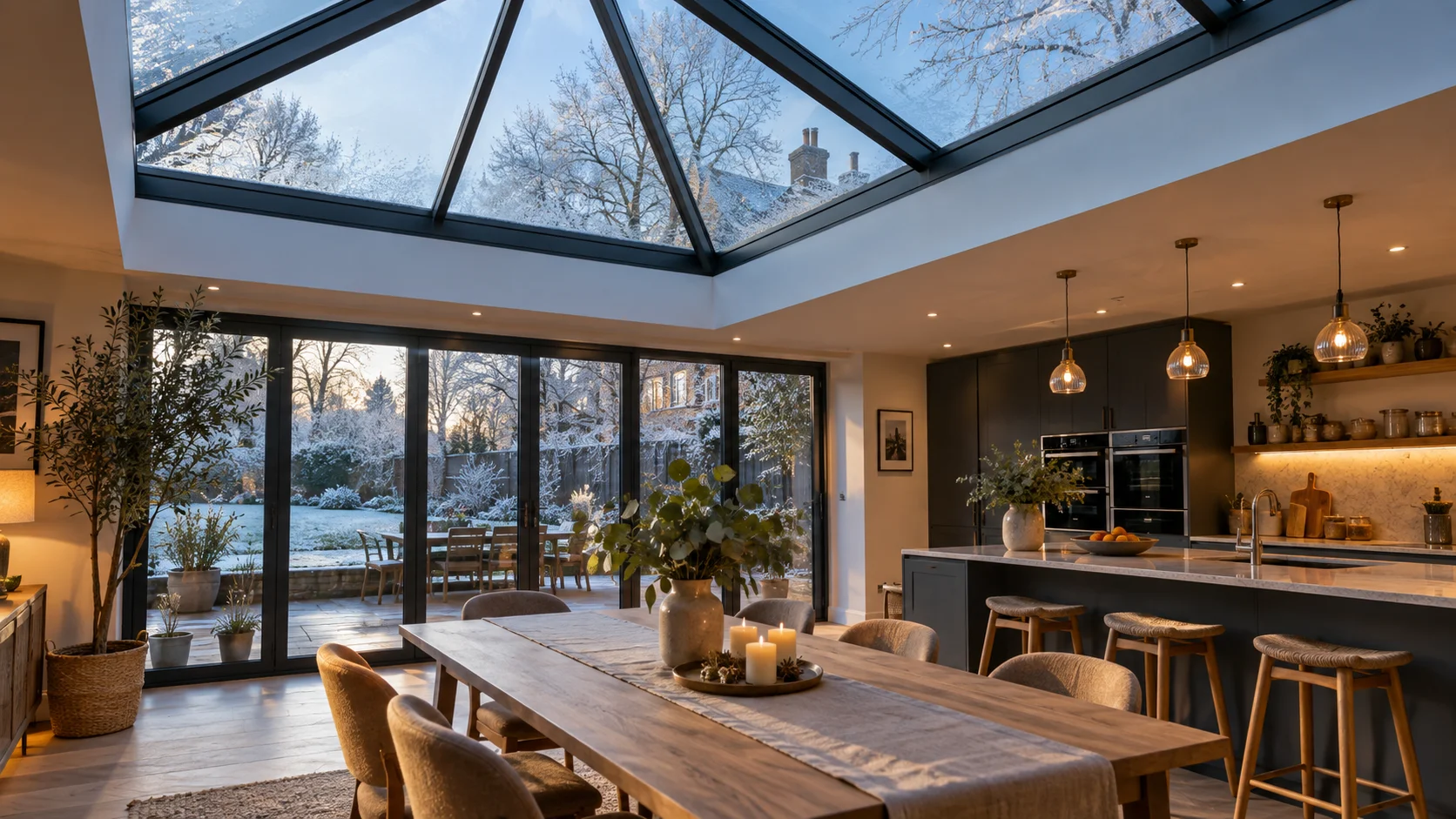
Daylight and useful solar gain can make a room feel brighter, but the lantern must still be included in the extension’s heat-loss calculation.
Author at Smartaview, writing about aluminium glazing, home improvements and the buying process.