Flat Roof Lights vs Pitched Roof Lights: Which Is Right for Your Project?
Flat roof light or pitched skylight, the choice depends on your roof type and design. Here's a clear guide to which works where and why.
The choice between a flat roof light and a pitched (sloping) roof light is, in most cases, decided by your roof structure, you can't install a flat roof light in a pitched roof without significant structural work, and pitched skylights look wrong on a flat-roof extension. But understanding the differences helps you specify correctly and set realistic expectations for each.
Flat Roof Lights
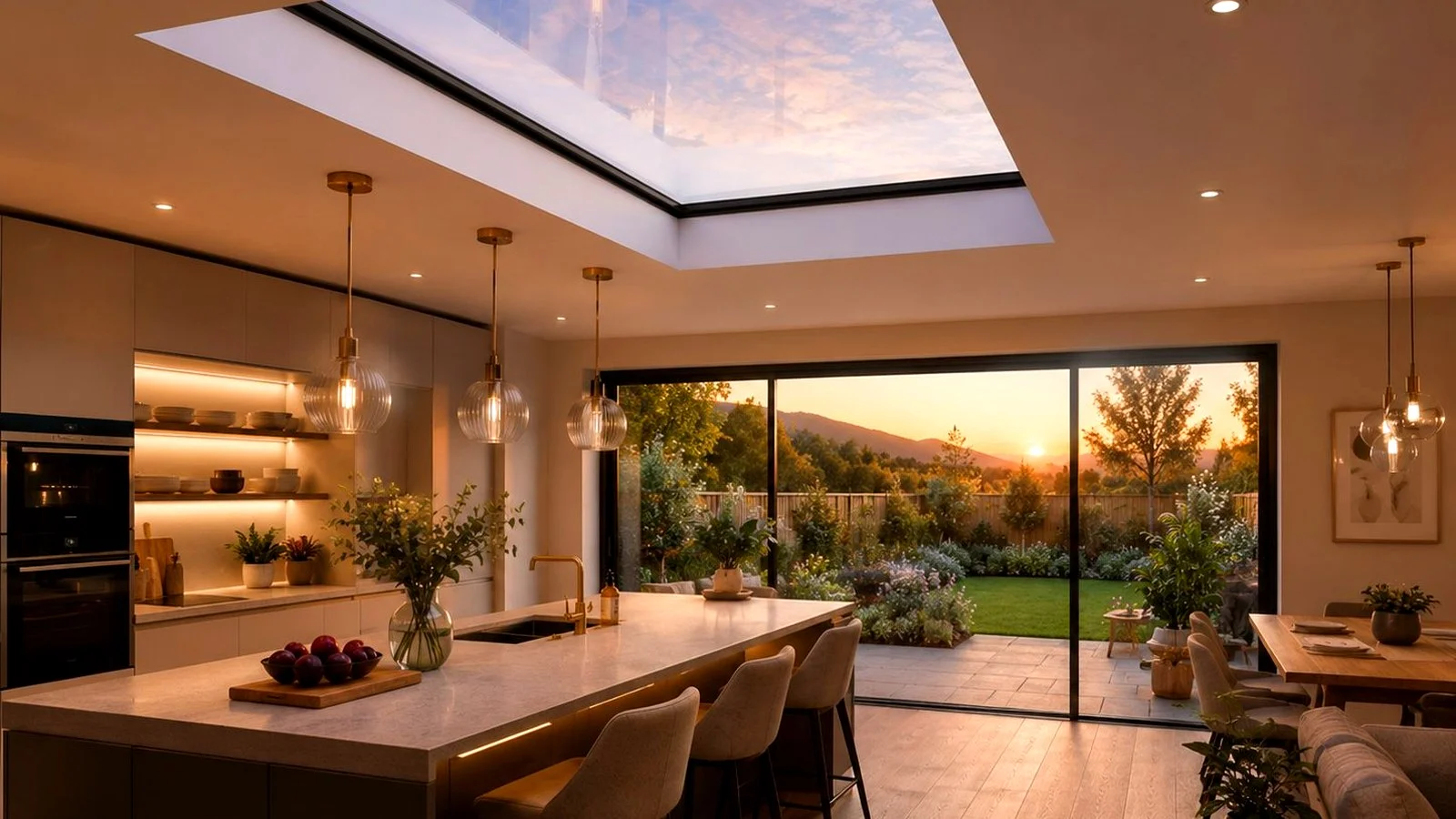
Flat roof lights are designed for flat or very low-pitch (under 15°) roofs. They sit on an upstand, a raised kerb of typically 150mm or more, which ensures water runs away from the frame junction and prevents pooling around the seal.
Advantages
• Clean, flush aesthetic that suits contemporary flat-roof architecture
• Available in very large sizes, effectively any dimension within structural limits
• Fixed and opening versions available
• Excellent thermal performance with thermally broken aluminium and quality glazing
• Any RAL colour, integrates with the design of the extension
Disadvantages
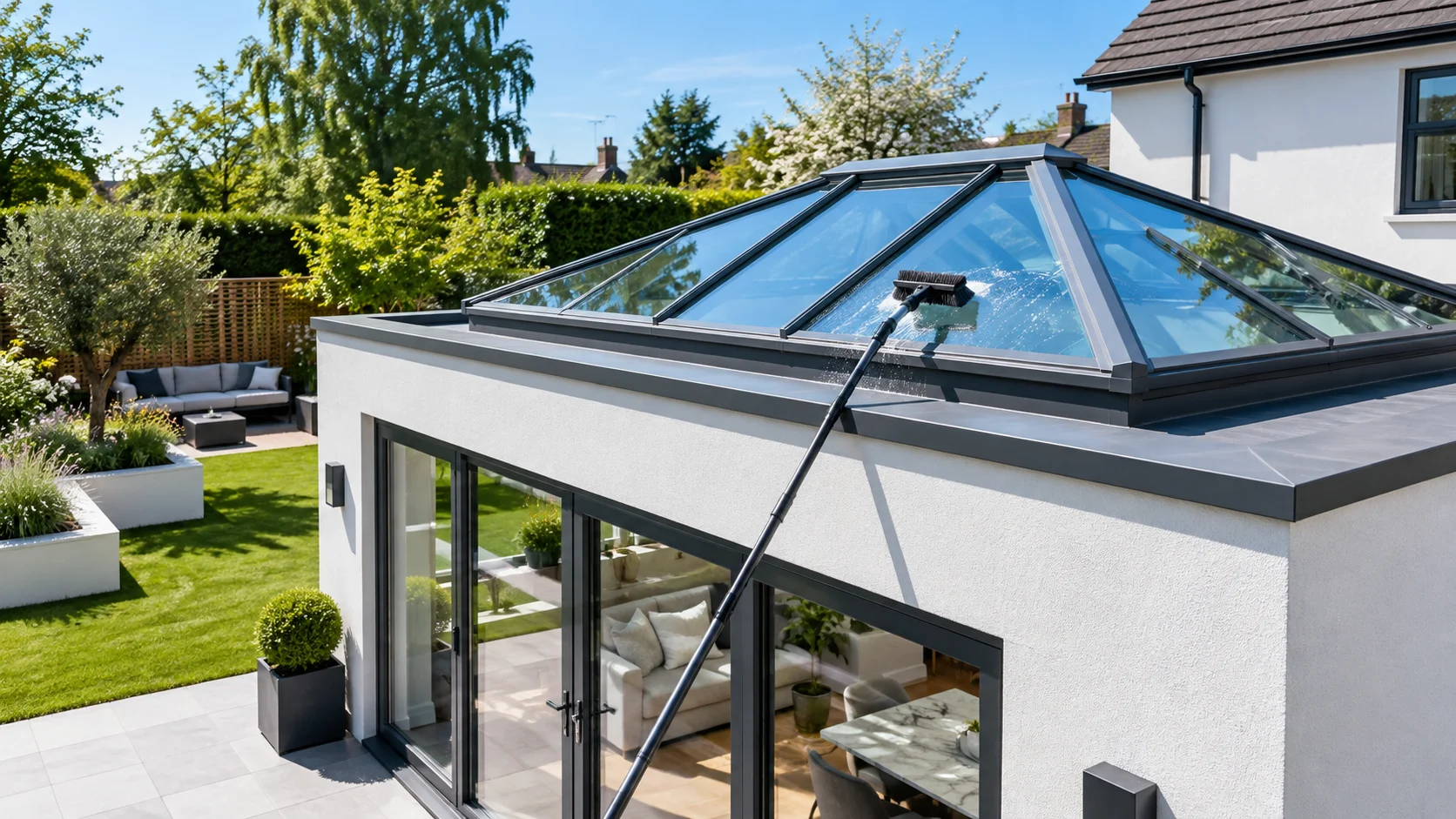
• Horizontal glass collects more debris than angled glass, self-cleaning glass is worth specifying
• Greater solar gain in summer due to near-horizontal angle, solar control glass recommended on south-facing applications
• Requires a properly waterproofed kerb, a key installation detail that must be done correctly
Pitched Roof Lights (Skylights)
Pitched roof lights are designed for installation in sloping roofs, typically at the same pitch as the surrounding roof surface. They're the standard choice for loft conversions, agricultural buildings, and any project with a traditional pitched roof structure.
Advantages
• Natural self-cleaning action, rain sheets off the angled surface efficiently
• Lower solar gain than flat equivalents, the angled surface receives less direct summer sun
• Very wide range of standard sizes available (especially for common roof pitches)
• Opening versions widely available at various price points
Disadvantages
• Less visually architectural than flush flat roof lights, more visible as a 'product' than a design element
• Standard sizes may not suit all roof pitches or opening requirements
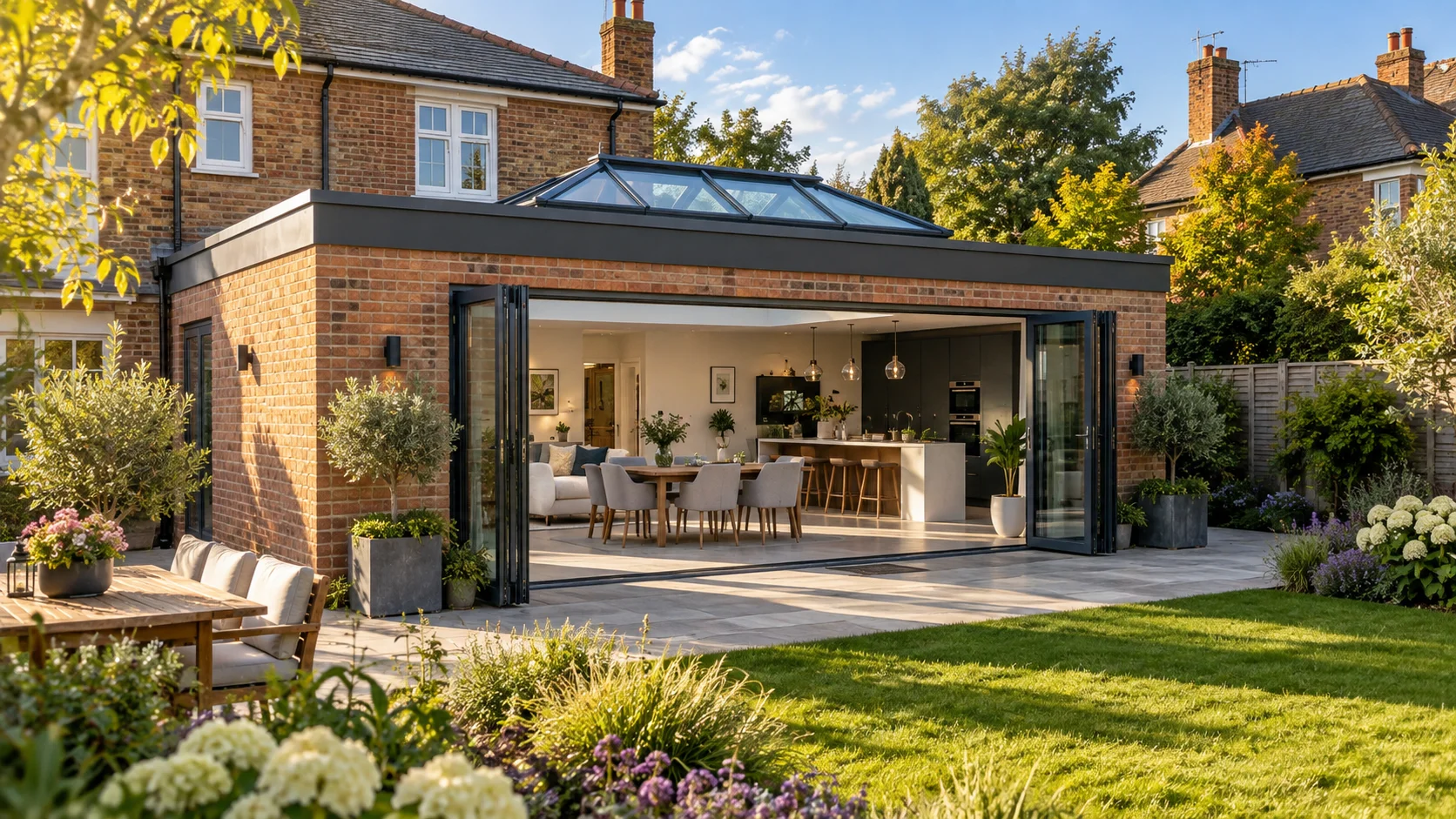
• On a flat-roof extension, a pitched skylight looks stylistically inconsistent
Can You Use Either on Any Roof?
Technically, a flat roof light can be installed in a pitched roof with a special adaptor frame that creates a horizontal plane within the sloping surface. This is sometimes done in contemporary extensions with a mono-pitch roof. It's more complex to flash and waterproof correctly, but achievable.
Installing a pitched skylight on a flat roof is less common but possible with an appropriate pitch adaptor frame. In practice, for flat-roof extensions, a flat roof light is almost always the better choice aesthetically and technically.
The Simple Guide
Flat-roof extension: specify a flat roof light. Loft conversion or pitched-roof building: specify a pitched skylight. Mono-pitch or low-pitch contemporary roof: flat roof light with appropriate upstand and adaptor if needed.
Explore more
Author at Smartaview, writing about aluminium glazing, home improvements and the buying process.