Clear, Reeded or Satin Glass for Internal Aluminium Doors?
The frame creates the outline, but the glass decides how an internal door feels. Compare clear, reeded and satin options before you configure your doors.
Choosing an internal aluminium door is only half the decision. The glass controls how much the two rooms connect, how private they feel and how the complete door fits the interior.
Clear, reeded and satin finishes can all carry light through the home. They simply handle the view differently.
Clear glass: maximum connection
Clear glass gives the brightest, most open result. It allows an uninterrupted view between rooms and makes the slim aluminium frame the main visual feature.
It works especially well between:
- kitchens and dining rooms;
- hallways and living rooms;
- dining rooms and garden rooms; and
- spaces where borrowed light matters more than privacy.
Clear glass also makes a smaller interior feel deeper because the eye continues beyond the door.
The trade-off is obvious: it hides very little. Fingerprints and everyday marks may also be more visible in strong light.
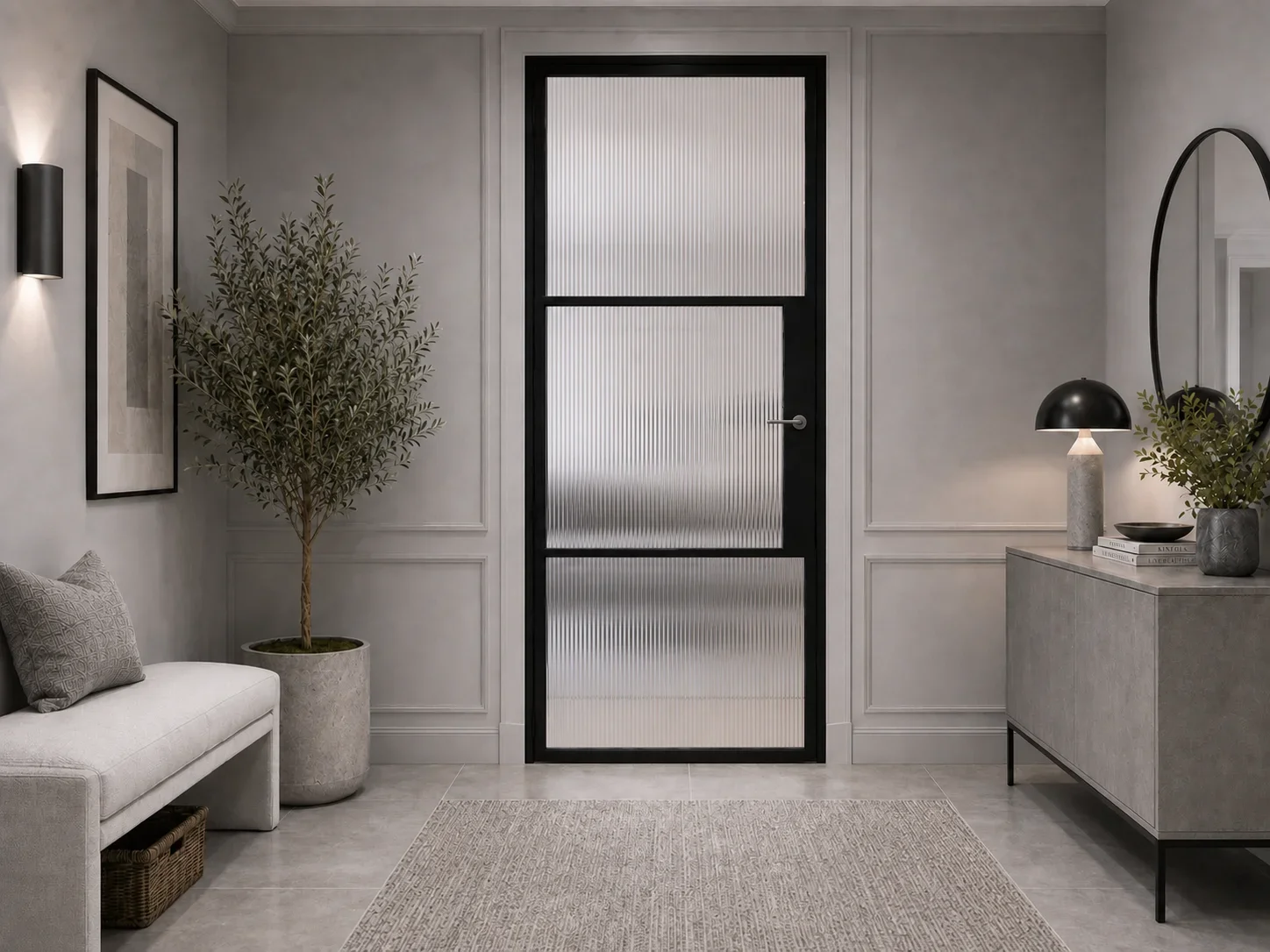
Reeded glass: character with partial screening
Reeded glass uses a vertical linear texture to distort the view. Shapes and movement remain visible, but fine detail becomes less clear.
The finish suits steel-look aluminium frames particularly well because its vertical rhythm complements the slim bars. It can add interest to a simple door without relying on colour or decorative hardware.
Reeded glass is a strong choice for a home office, utility room, pantry or dressing area where complete privacy is not essential.
Because the pattern changes the view rather than blocking all light, the room still feels connected to the rest of the home.
Satin glass: softer and more private
Satin glass has a smooth, diffused appearance. It scatters the light and obscures the view more evenly than clear glass.
Use it where visual privacy matters, such as an en-suite, bathroom approach, utility or a workspace that should hide day-to-day clutter.
The surface produces a calm, contemporary look, although it creates less visual connection between the rooms than clear or lightly reeded glass.
What about acoustic glass?
Privacy and sound reduction are separate decisions.
A textured or satin finish changes what can be seen; it does not automatically provide a high level of acoustic performance. If the door separates a meeting room, playroom or music space, ask whether a laminated acoustic option is available for the chosen system.
The final sound reduction depends on the complete door, seals, frame, gaps and installation as well as the glass.
Aluminium keeps every option looking lighter
Traditional timber glazed doors need relatively broad framing around the glass. Aluminium can achieve slimmer sightlines, leaving more surface area for the selected finish to do its job.
It is also less affected by humidity than timber. That makes aluminium particularly useful around kitchens, utility rooms and other parts of the home where moisture levels change.
Powder-coated frames do not need routine sanding, staining or repainting, so the door retains its clean outline with little maintenance.
Keep the glass consistent across a scheme
If several internal doors are visible together, repeat the same finish unless there is a clear reason to change it.
For example, use clear glass between the main living spaces and reeded glass for a nearby office, while keeping the frame colour and glazing-bar positions aligned. The small change signals privacy without making the doors feel unrelated.
The simple choice
Choose clear glass for the most light and connection. Choose reeded glass for decorative texture and partial screening. Choose satin glass for a more private, softly illuminated boundary.
Previews are useful, but glass can change with lighting and viewing distance. Request or inspect a sample where the exact level of privacy matters.
Compare the finishes available for your chosen internal door at SmartaView glass options guide, then configure the size and layout online.
Next steps for your project
At SmartaView, we can help you configure aluminium internal doors to suit your needs. Explore aluminium internal doors and see your options, or chat with our team on WhatsApp if you would like help choosing.
For an accurate order, use our measuring guide and confirm the exact finished dimensions required for your chosen product. Share your project details, preferred finish, delivery postcode and intended timescale with our team. Any rough dimensions are for initial guidance only, not manufacture.
SmartaView supplies the products only and does not provide installation. Confirm measurements and suitability with the person responsible for fitting before ordering.
Author at Smartaview, writing about aluminium glazing, home improvements and the buying process.