Roof Lantern Sizes: A Complete Guide to Dimensions and Proportions
For most extensions, a roof lantern should be proportionate to the ceiling and structural opening rather than simply as large as possible. Compare practical UK dimensions, minimum sizes, ridge height and single-versus-multiple lantern layouts.
Of all the specification decisions for a roof lantern, size is the most consequential. A lantern that's too small looks like an afterthought. A lantern that's too large can dominate the room and create structural and cost challenges that the project doesn't need. Here's how to think about sizing correctly.
The Proportional Rule
The most reliable guide to roof lantern sizing is proportion: the lantern base should represent approximately 30–50% of the ceiling area of the room it serves. This is a guide, not a rule, but it reflects well-tested aesthetic principles that have been applied across thousands of residential installations.
• For a 12m² room (e.g. 3m x 4m): a lantern base of 1.2 x 1.6m to 1.5 x 2.0m
• For a 20m² room (e.g. 4m x 5m): a lantern base of 1.5 x 2.0m to 2.0 x 2.5m
• For a 30m² room (e.g. 5m x 6m): a lantern base of 2.0 x 2.5m to 2.5 x 3.0m
The Minimum Size
A roof lantern smaller than approximately 800mm x 800mm base loses much of its architectural impact, it's too small to read as a feature and too small to deliver meaningful light volume. In practice, 1000 x 1000mm is a practical minimum for most rooms. Below this, a fixed flat roof light is likely to deliver better value.
Bespoke vs Standard Sizes
Origin roof lanterns are manufactured to bespoke dimensions, each lantern is made to the exact base size you specify rather than adapted from a stock size. This matters because room dimensions rarely produce convenient round numbers, and a lantern base that fills the structural opening precisely fits better and waterproofs more reliably than one that's been made to fit a standard dimension.
The Ridge Height
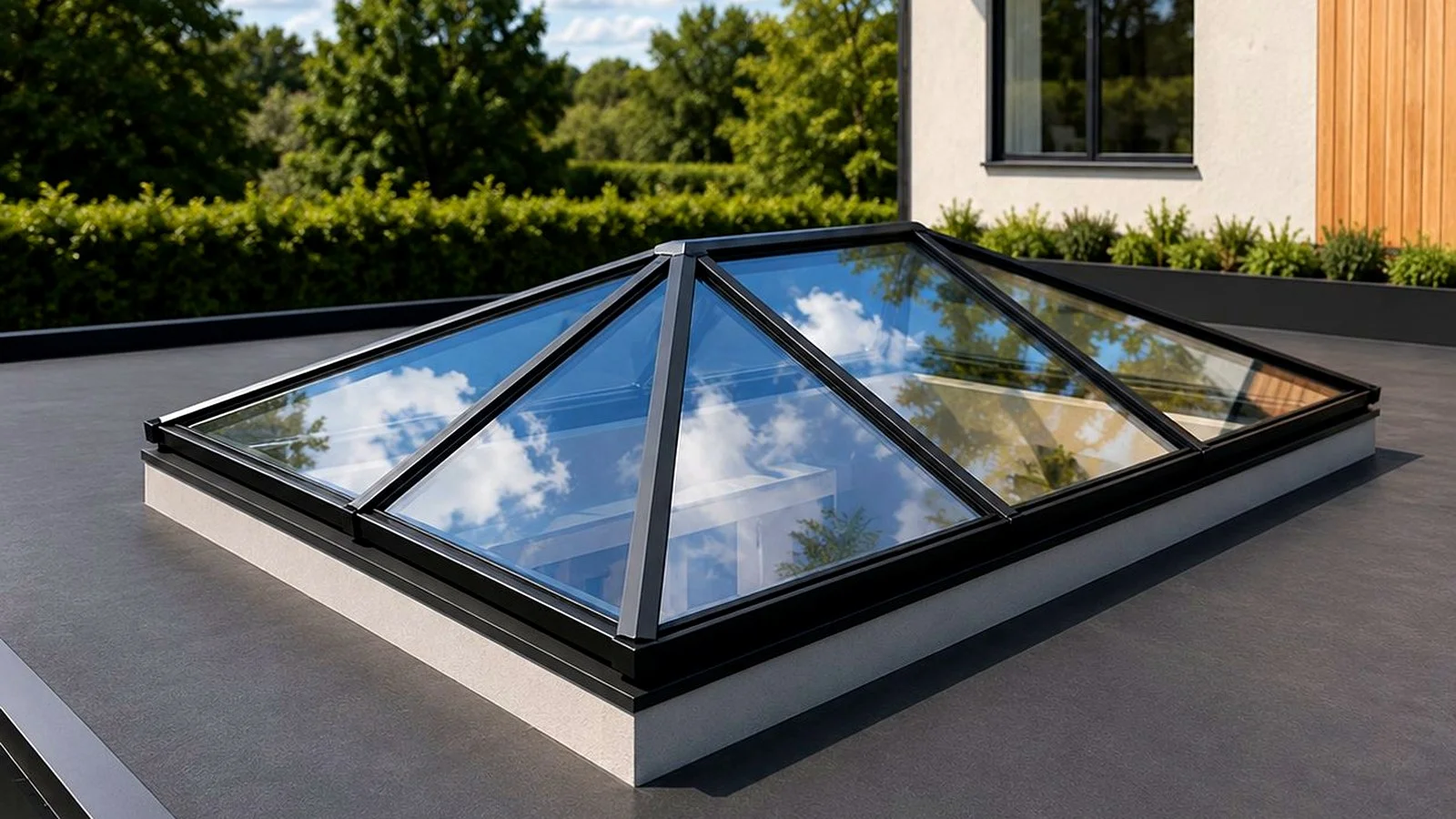
The height of the lantern above the roof plane, determined by the pitch of the glazed faces, affects both the interior volume of the lantern and the external profile. A steeper pitch produces a taller, more dramatic lantern internally and a more prominent profile externally. A shallower pitch creates a lower profile externally while still delivering the raised ceiling effect internally. Most standard lanterns use a pitch of approximately 25–35°.
For rooms with a lower ceiling height (2400mm or below), a shallower pitch lantern maintains more of the head height benefit inside the room. For rooms with a generous ceiling height (2700mm+), a steeper pitch can be fully appreciated.
Ceiling Height Requirements
A roof lantern needs ceiling height to work. In a room with a 2200mm ceiling, a roof lantern rises only marginally above the surrounding ceiling and delivers limited spatial benefit. The minimum useful ceiling height for a roof lantern is approximately 2400mm, at 2700mm or above, the lantern's spatial benefit is fully realised.
Multiple Lanterns
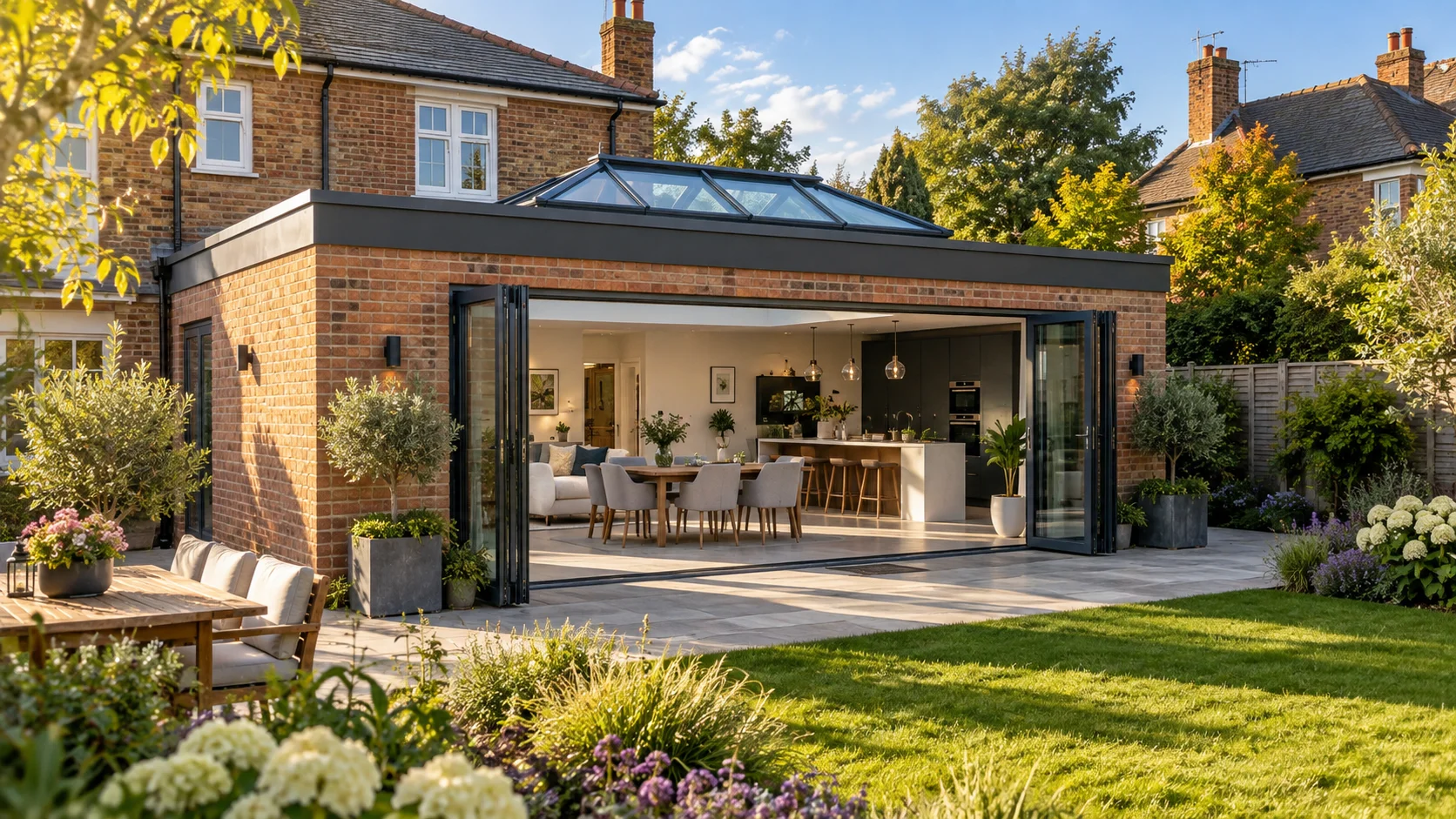
On very large extensions, 40m² or more, two smaller lanterns can be more effective than one very large one. Two 2m x 2m lanterns spaced evenly across a 7m-long extension deliver better light distribution than a single 2m x 4m lantern centred in the space. They also create a repeating architectural rhythm on the roofline that reads as considered rather than oversized.
Explore more
Author at Smartaview, writing about aluminium glazing, home improvements and the buying process.