Do Roof Lanterns Need Ventilation? A Practical Guide for UK Extensions
Does a roof lantern need to open? Learn how fixed lanterns, opening windows, extractors and solar-control glazing work together in a comfortable UK extension.
Short answer
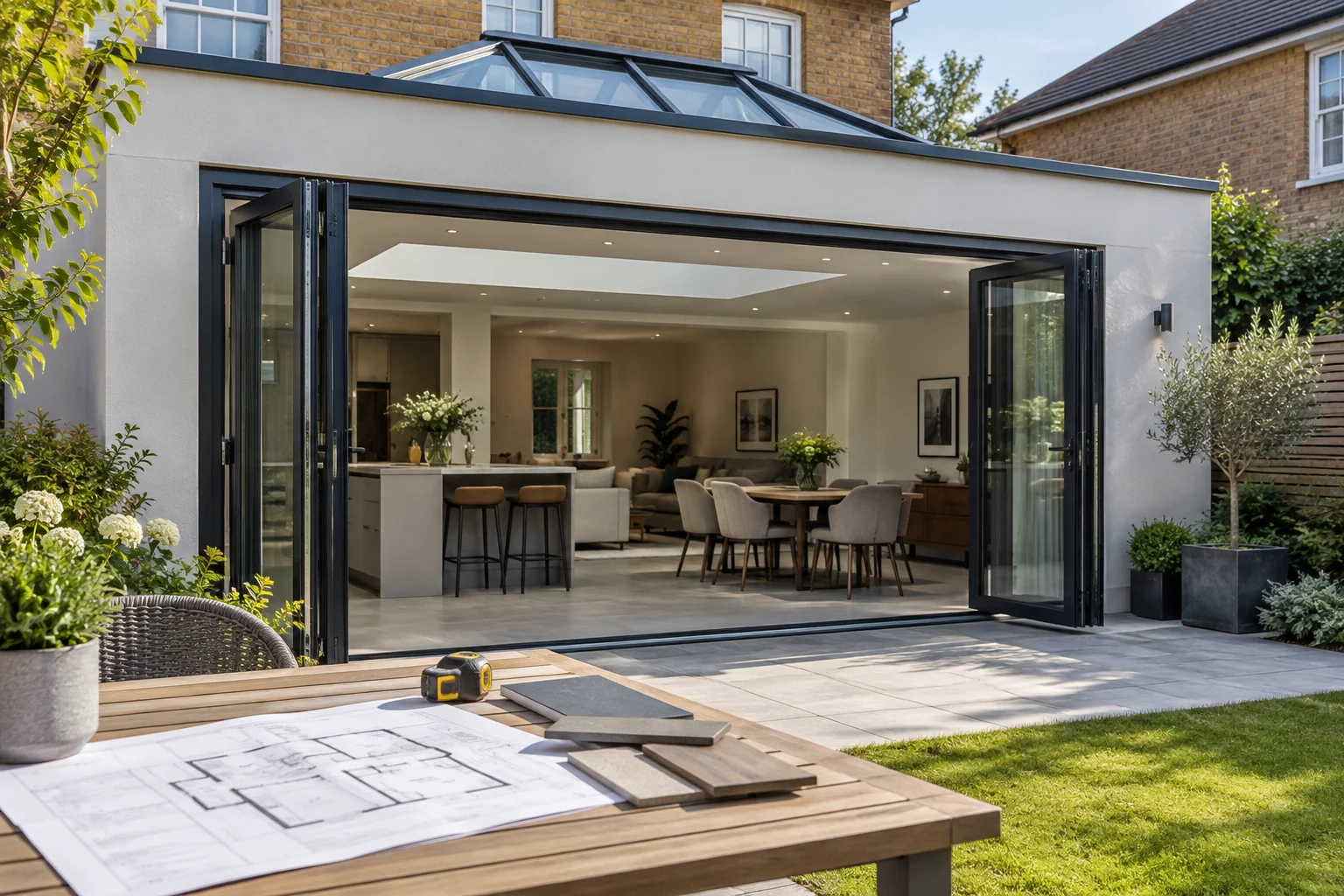
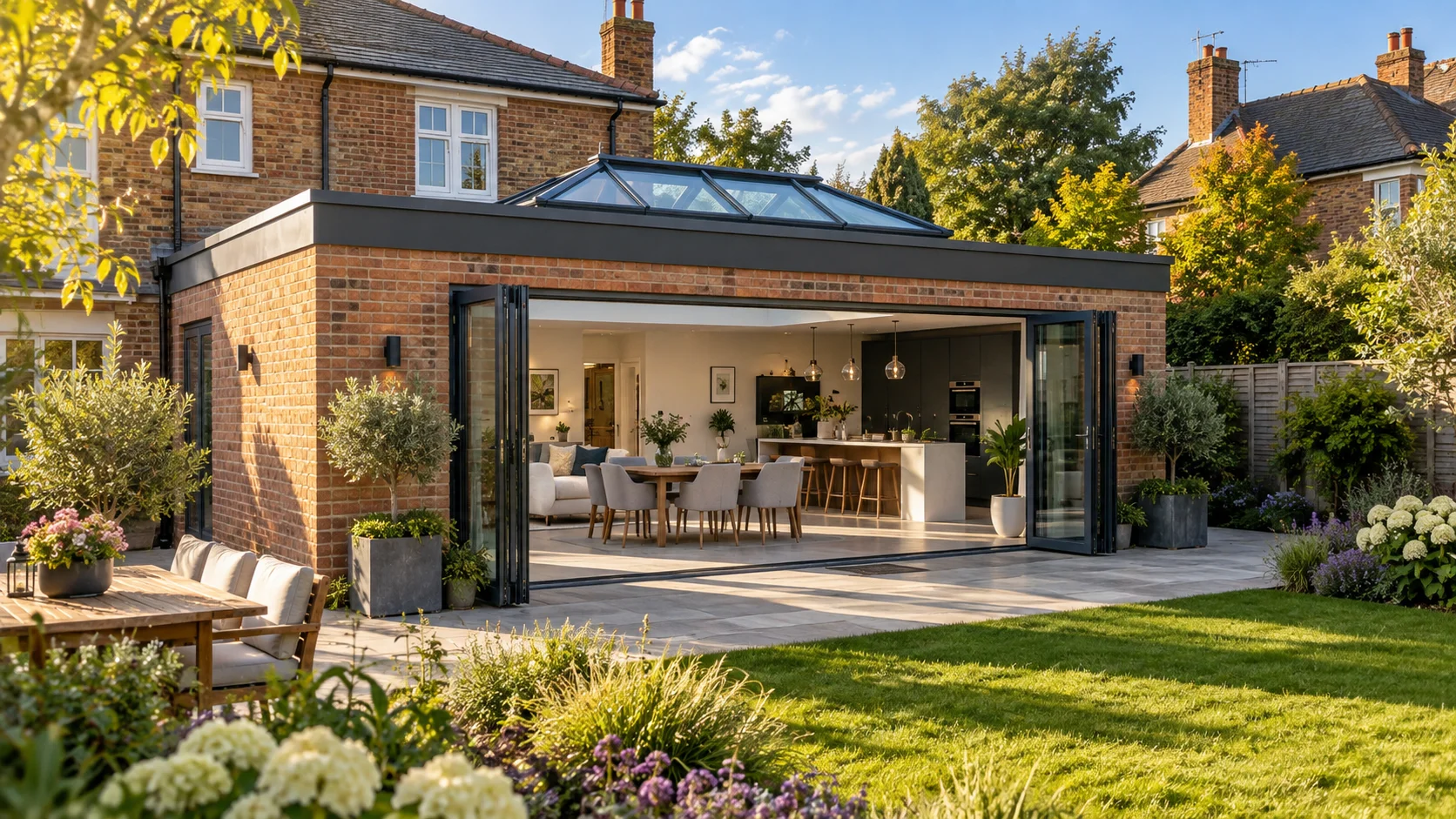
Most roof lanterns are fixed glazed structures: their job is to bring daylight into the room, not to act as the room's only source of ventilation. A well-designed extension can pair a fixed roof lantern with opening windows or doors, suitable extract ventilation and glazing chosen for the room's orientation.
Whether you need additional ventilation depends on how the room will be used, its size, the amount of glazing and the wider ventilation strategy for the property. A kitchen extension, for example, has different moisture and heat loads from a living room.
If you are still choosing the lantern itself, start with our aluminium roof lantern collection and configure the size, style, colour and glazing around your project.
A roof lantern and room ventilation do different jobs
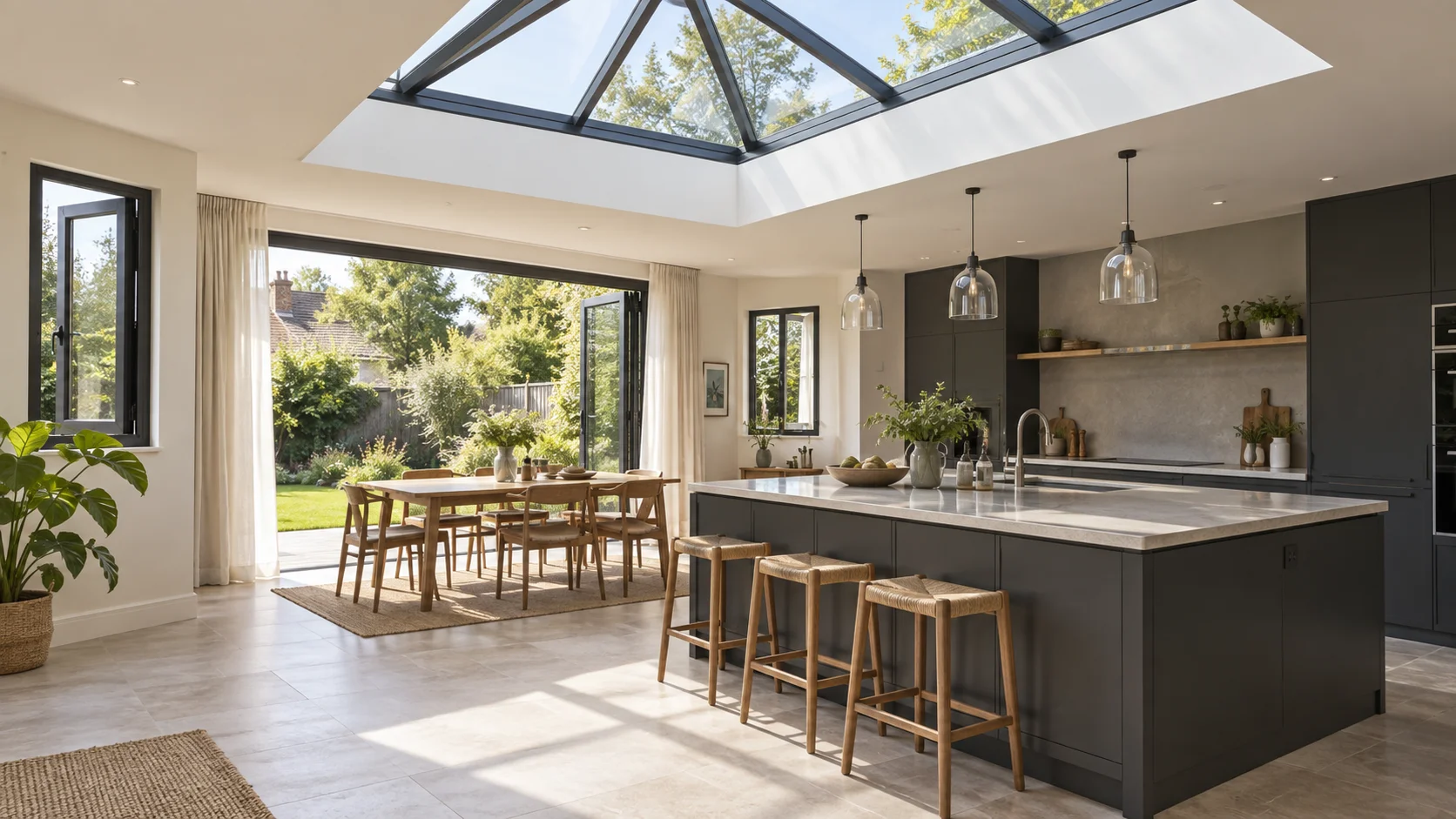
A roof lantern increases daylight from above and can make the centre of a deep extension feel more open. Ventilation replaces stale or humid indoor air with fresh air. Those functions are related, but they are not the same.
A fixed lantern can work well when ventilation is provided elsewhere. Common sources include:
- opening windows;
- bifold or sliding doors;
- background ventilation where specified;
- mechanical extract in kitchens and utility areas; and
- a designed whole-house ventilation system.
The right approach should be agreed with the project designer, builder or building-control professional. SmartaView supplies made-to-measure aluminium glazing but does not provide installation services.
Can an opening rooflight provide high-level ventilation?
In some designs, an opening rooflight is used separately from the roof lantern. Because warm air rises, a high-level opening can help release built-up heat when it is positioned and operated as part of the overall ventilation plan.
This does not mean every extension needs an opening unit. It gives the designer another option when planning air movement. Compare the practical differences in our guide to roof lanterns versus flat rooflights, then explore our aluminium roof lights if a flatter solution is more appropriate.
What about kitchens and condensation?
Cooking adds water vapour and heat to the room. An effective cooker hood or extract system is therefore important; opening a door after cooking is not a substitute for correctly designed extraction.
Condensation forms when humid air reaches a cold enough surface. Good ventilation helps manage indoor humidity, while thermally efficient glazing and well-insulated junctions reduce cold surfaces. Installation quality also matters.
For a fuller explanation, read roof lantern condensation: causes, prevention and solutions and our guide to roof-lantern U-values and energy efficiency.
Will a roof lantern make the extension too hot?
Ventilation is only one part of summer comfort. The lantern's size, room orientation, glass specification, shading and the area of other glazed doors and windows all affect heat gain.
South- and west-facing extensions can receive strong afternoon sun. In those situations, solar-control glazing may be more useful than simply making the lantern smaller. Opening doors and windows can help purge warm air, but the glazing choice should address unwanted heat before it enters the room.
See do roof lanterns make a room too hot? and the SmartaView glass-options guide before finalising the specification.
Five questions to answer before ordering
- What will the room be used for?
- Where are the opening windows and doors?
- What mechanical extraction or whole-house ventilation is planned?
- Which direction does the main glazing face?
- Has the installer or designer checked the complete roof build-up and ventilation strategy?
These questions make it easier to choose the lantern's proportions and glazing without asking one product to solve every comfort requirement.
Configure the lantern around the complete room
The best result comes from treating the lantern, doors, windows, insulation, extraction and orientation as one design. A fixed aluminium roof lantern can deliver abundant daylight while the rest of the room provides controlled ventilation.
When you have the structural opening dimensions, configure an aluminium roof lantern online. You can compare designs and build a specification around the size, finish and glazing your project needs.
Author at Smartaview, writing about aluminium glazing, home improvements and the buying process.