Roof Lantern vs Flat Roof Light: Which Should You Choose?
Roof lantern or flat roof light, both flood a room with natural light, but they deliver a different experience. Here's how to choose between them.
Both roof lanterns and flat roof lights bring natural light into an extension from above. But they do it differently, suit different architectural contexts, and deliver a different experience inside the room. Here's a direct comparison.
The Light Quality Difference
Flat roof lights deliver light efficiently and cleanly. The glazed panel faces upward and admits light that strikes its horizontal surface. In summer, when the sun is high, this is very effective, a large flat roof light on a clear June day floods a room with light. In winter, when the sun is low in the sky, a flat roof light captures less of the available light because the angle of incidence is shallow.
Roof lanterns have an advantage in winter. The angled glazed faces are oriented toward the horizon as well as the sky, capturing light from a lower sun angle. The result is a more consistent light quality across the year. If your extension is used heavily through winter, as most UK kitchens and living rooms are, this is a meaningful practical benefit.
The Architectural Difference
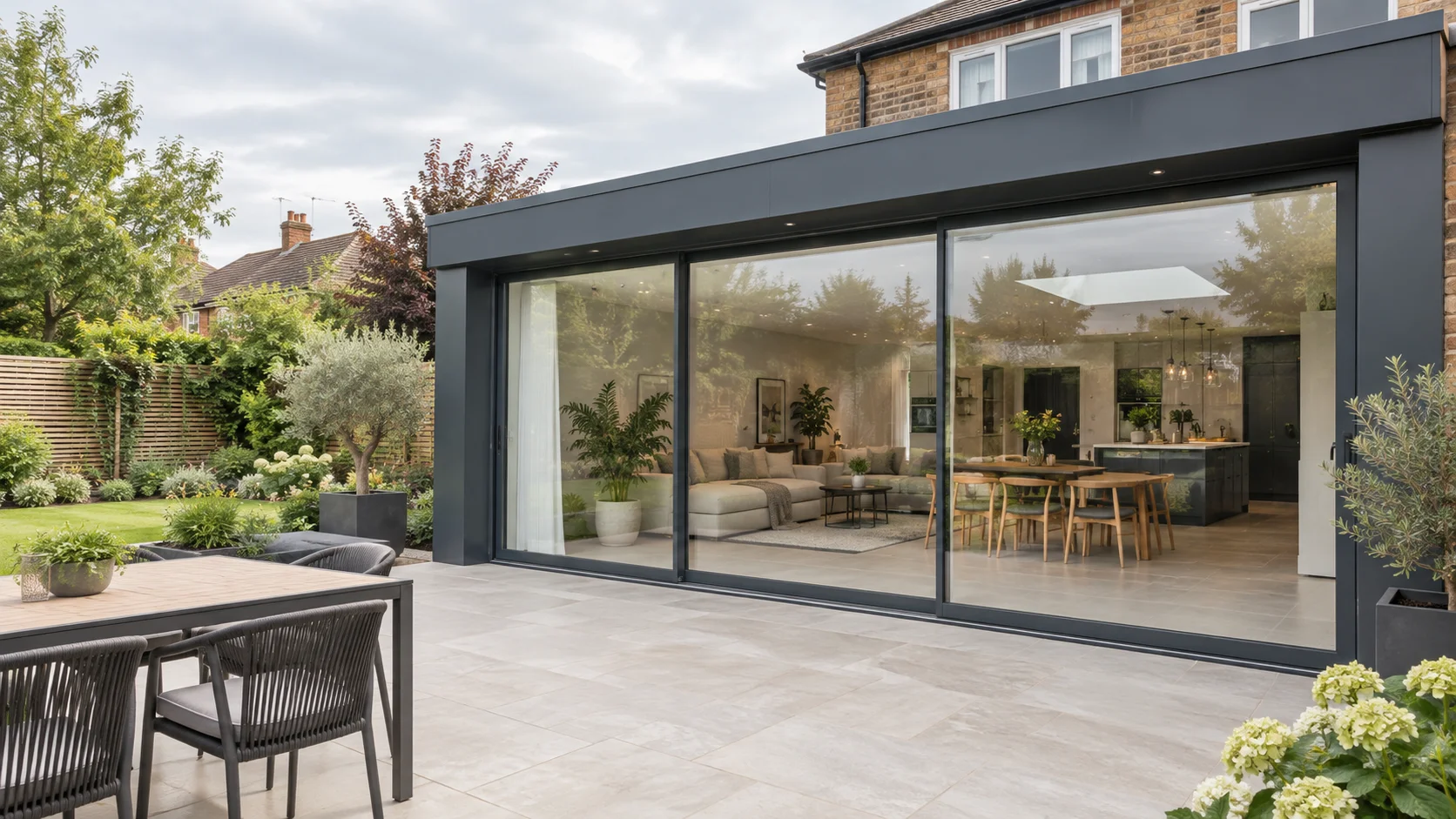
A flat roof light reads as minimal. The glass panel sits in the ceiling plane, maximising the uninterrupted expanse of ceiling while admitting light from above. The architecture around it remains primary.
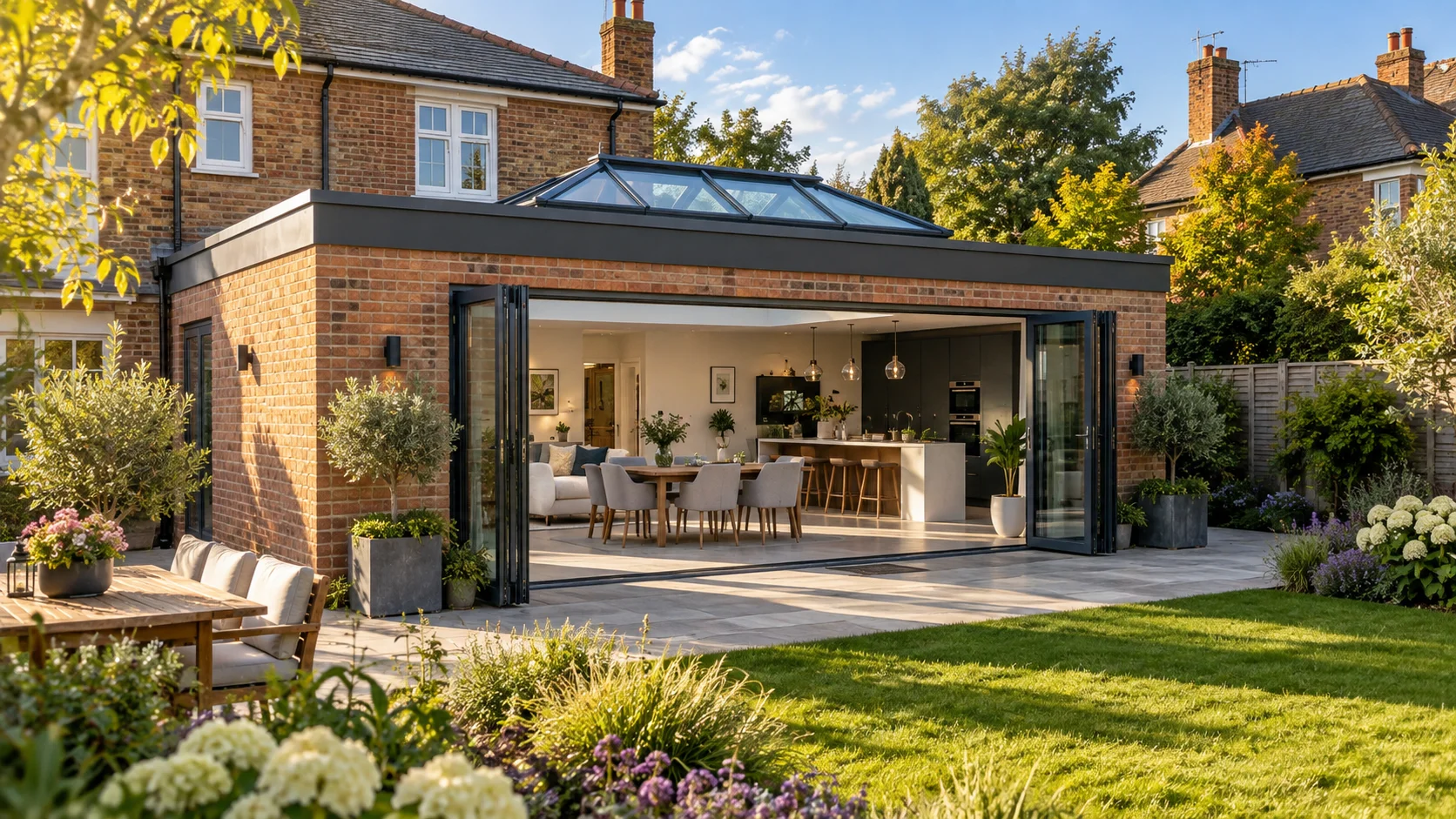
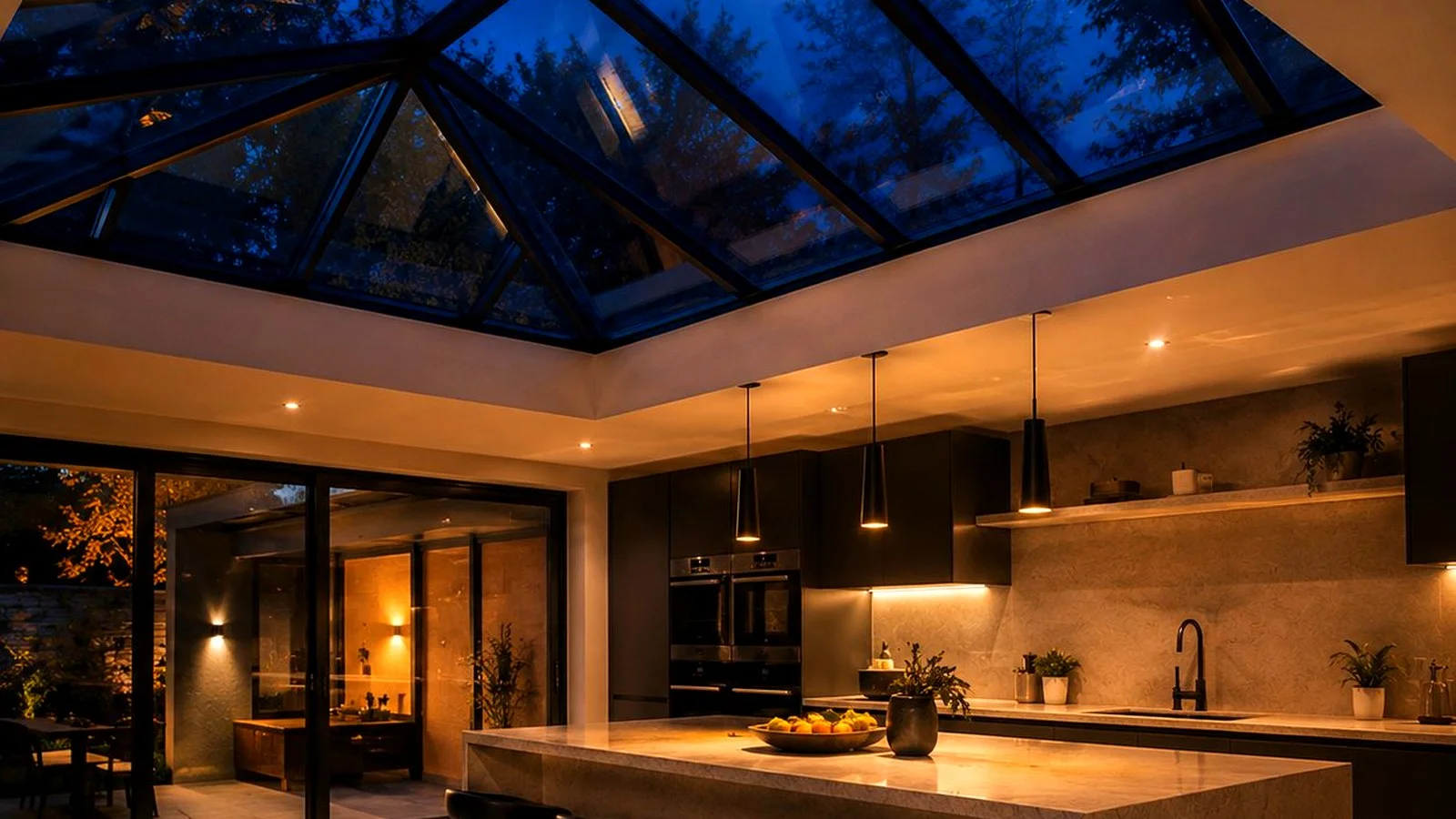
A roof lantern makes the ceiling a feature. The raised profile, the visible ridge, the volume of the lantern zone, these are architectural statements. The lantern is not hidden in the ceiling; it's celebrated as part of the design.
Neither is objectively better. It's a question of whether your extension's design calls for minimalism or for an architecturally expressed roof element.
Size and Room Scale
Flat roof lights can be very large, spanning significant proportions of the roof area, without visual imposition. A flat roof light of 2 x 3m is a lot of glass but a modest ceiling element.
Roof lanterns are more sensitive to scale. A lantern that's too large relative to the room reads as overwhelming. A good rule of thumb is that the lantern base should be no more than 40–50% of the room's ceiling area. For a 15m² extension, a lantern of 1.5 x 2m base is well-proportioned. For a 30m² extension, a lantern of 2.5 x 3m works well.
Cost Comparison
Flat roof lights are generally less expensive than lanterns for equivalent glazed area. A 1.5 x 1.5m flat roof light costs £900–£1,500 installed. A 1.5 x 1.5m base roof lantern costs £3,500–£5,500 installed. The lantern involves more complex manufacturing (the ridge, the sloped faces, the structural base frame) which accounts for the cost premium.
Maintenance
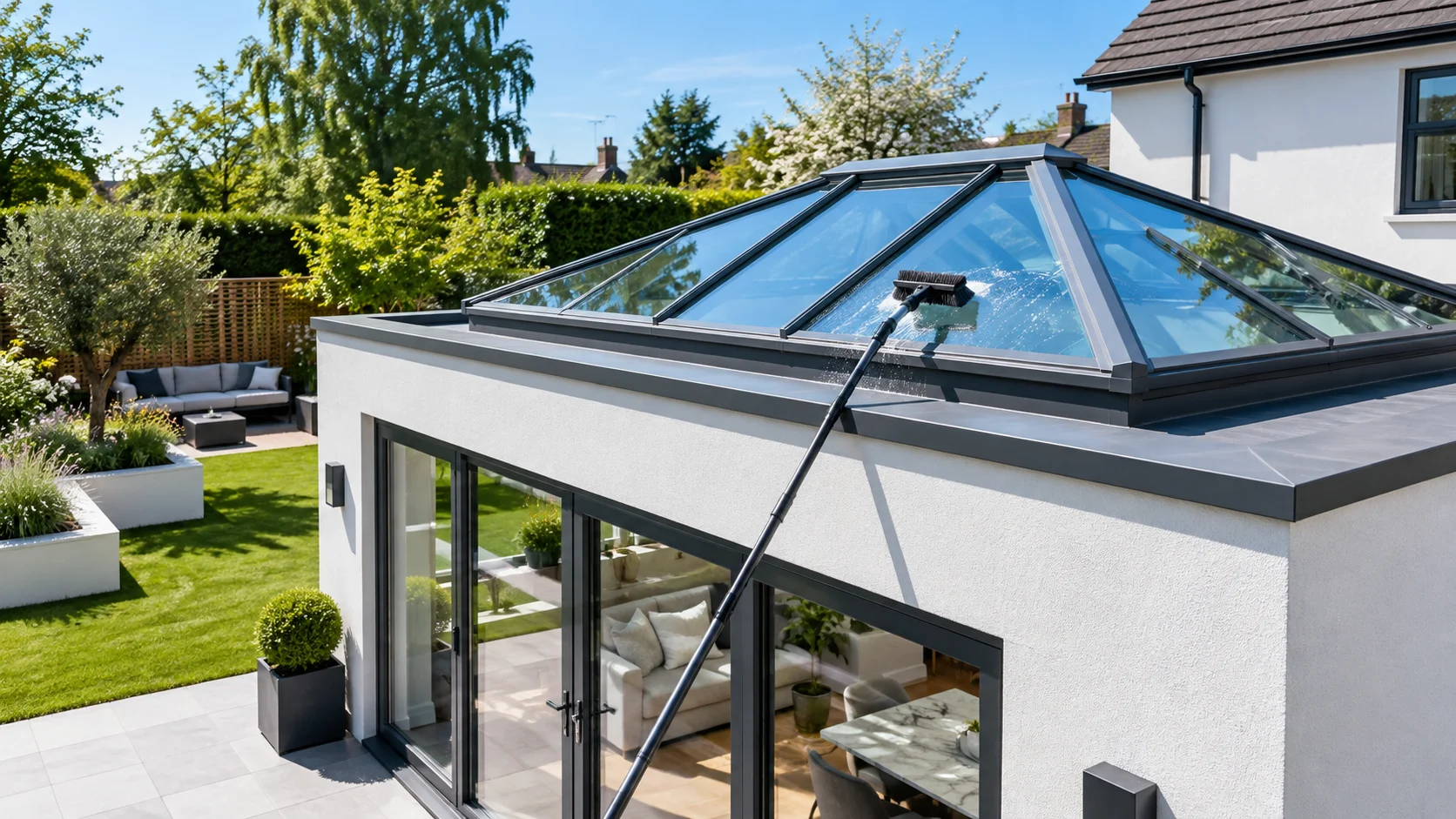
Flat roof lights are lower maintenance. The flush installation means there are no exposed vertical frame faces to accumulate debris, and the simpler form has fewer potential points of water ingress. Roof lanterns have more frame surfaces and more complex junctions to maintain. With quality aluminium construction and correct installation, this is manageable, but it's worth noting.
The Simple Decision Guide
Choose a flat roof light if: your architecture is contemporary and minimal, you want maximum glass for minimum visual imposition, or budget is a constraint. Choose a roof lantern if: your extension has an orangery or classical character, ceiling height allows it, you want the ceiling to be a design feature, or winter light quality is a priority.
Contact SmartaView, We'll Help You Choose the Right Option for Your Project and Budget
Explore more
Author at Smartaview, writing about aluminium glazing, home improvements and the buying process.