Self-Cleaning Roof Lights: Are They Worth the Extra Cost?
Self-cleaning glass for roof lights reduces maintenance significantly. Here's how the coating works, what it costs, and whether it's worth specifying.
Roof lights have an inherent maintenance challenge that vertical windows don't: they face upward, and anything that falls from the sky, rain, dust, pollen, bird droppings, autumn leaves, lands directly on them. For roof lights above a kitchen or living space, keeping the glass clean is an ongoing and sometimes difficult task. Self-cleaning glass exists to address this. Here's how it works and whether it's worth the cost.
How Self-Cleaning Glass Works
Self-cleaning glass uses a dual-action coating applied to the outer face of the glass at the manufacturing stage. The coating is composed of a thin layer of titanium dioxide, which is photocatalytic, activated by UV light from natural daylight.
The photocatalytic action
UV light activates the titanium dioxide coating, which breaks down organic material, dirt, pollen, biological matter, into smaller particles that sit loosely on the surface rather than bonding to the glass. This process happens continuously whenever the glass is exposed to daylight, including on cloudy days when UV still reaches the surface.
The hydrophilic action
The second property of the coating is hydrophilic, it causes water to sheet across the glass surface in a thin, even film rather than forming droplets. When it rains, water spreads evenly and carries the loosened particles off the glass, draining cleanly rather than leaving streak marks. This is the 'self-cleaning' mechanism, rain rinses the glass rather than leaving water marks.
What Self-Cleaning Glass Doesn't Do
It doesn't eliminate all cleaning. In periods of no rainfall, dust and debris accumulate, the photocatalytic breakdown is continuous but the rinsing action requires rain. In dry summer periods, a hose down once a month will maintain the glass in good condition. Self-cleaning glass also doesn't address internal glass surfaces, only the exterior coating is treated.
It also doesn't remove heavy soiling, tree sap, heavy bird fouling, or construction debris requires manual cleaning regardless of the coating. The benefit is in day-to-day maintenance reduction, not in eliminating occasional thorough cleaning.
How Much Does It Cost?
Self-cleaning glass typically adds £50–£150 per square metre to the glass cost, for a 1.5 x 1.5m roof light, that's approximately £100–£350 additional. Against the effort and cost of cleaning an inaccessible roof light by ladder several times a year, this is reasonable value for most homeowners.
Is It Worth It?
For roof lights that are difficult to access, over a single-storey extension where a ladder to the roof is the only option, self-cleaning glass is a very practical upgrade. It won't eliminate cleaning but it substantially reduces frequency. For most homeowners, the convenience is worth the modest additional cost.
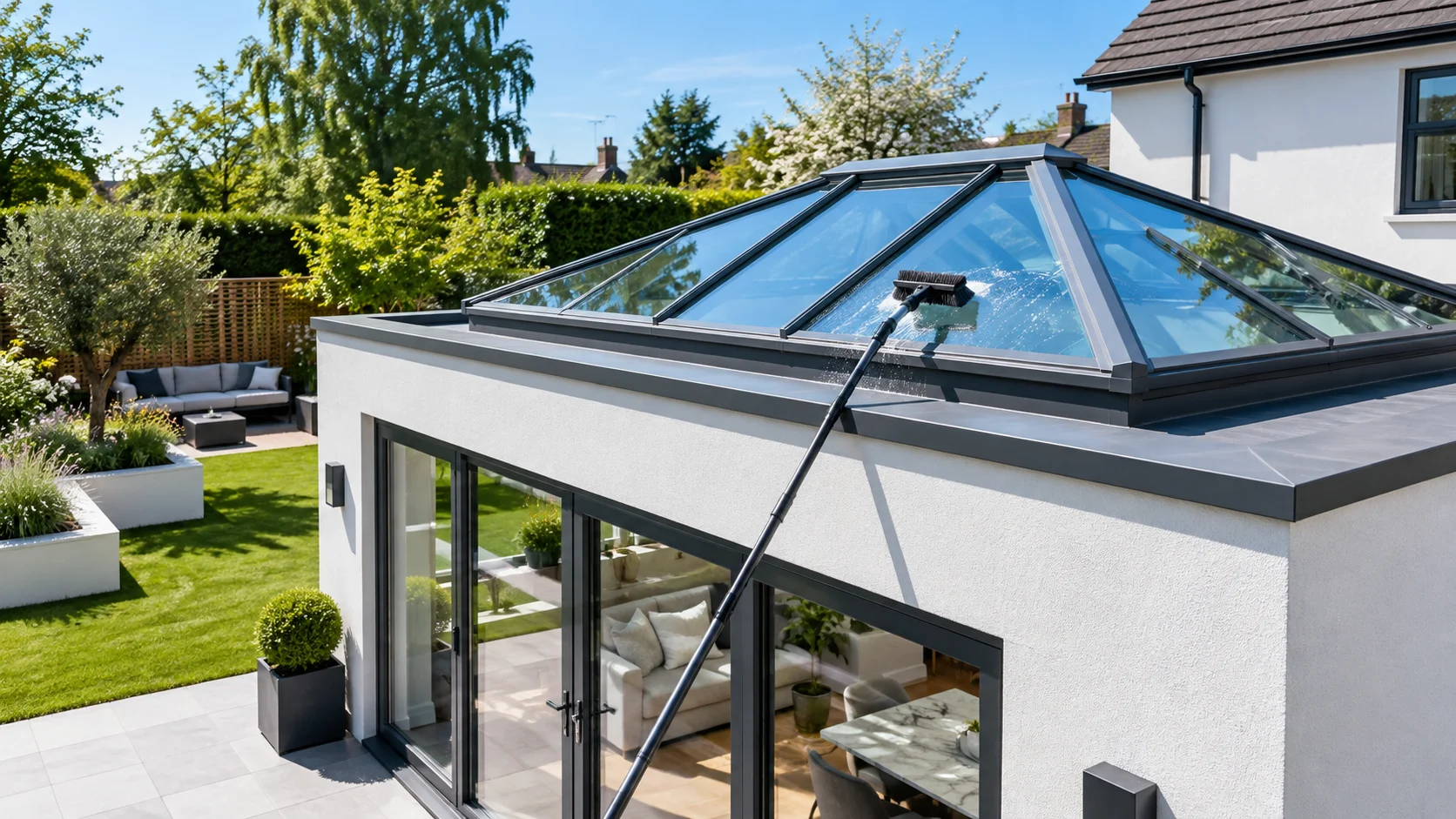
For easily accessible roof lights, a small unit in a flat-roof extension directly accessible from a first-floor window, the practical benefit is smaller. Standard glass cleaned every few months with a telescopic cleaner is a reasonable alternative.
Specifying Self-Cleaning Glass
Self-cleaning glass must be specified at the point of ordering, it cannot be added as a coating to existing glass. On Origin roof lights, self-cleaning glass is available as a factory-fitted option and is specified by confirming the glass build-up at order stage.
Explore more
Author at Smartaview, writing about aluminium glazing, home improvements and the buying process.