What Types of Roof Light Are There? A Complete Guide
Fixed, opening, lantern, walk-on, there are more types of roof light than most people realise. Here's a clear guide to every type and when to use each one.
When homeowners talk about wanting a 'roof light', they often have one specific image in mind, usually a flat glass panel in a ceiling. But the category is broader than that, and different types suit different projects, roof constructions, and design ambitions. Here's the complete guide to every type of roof light currently available in the UK market.
1. Fixed Flat Roof Lights
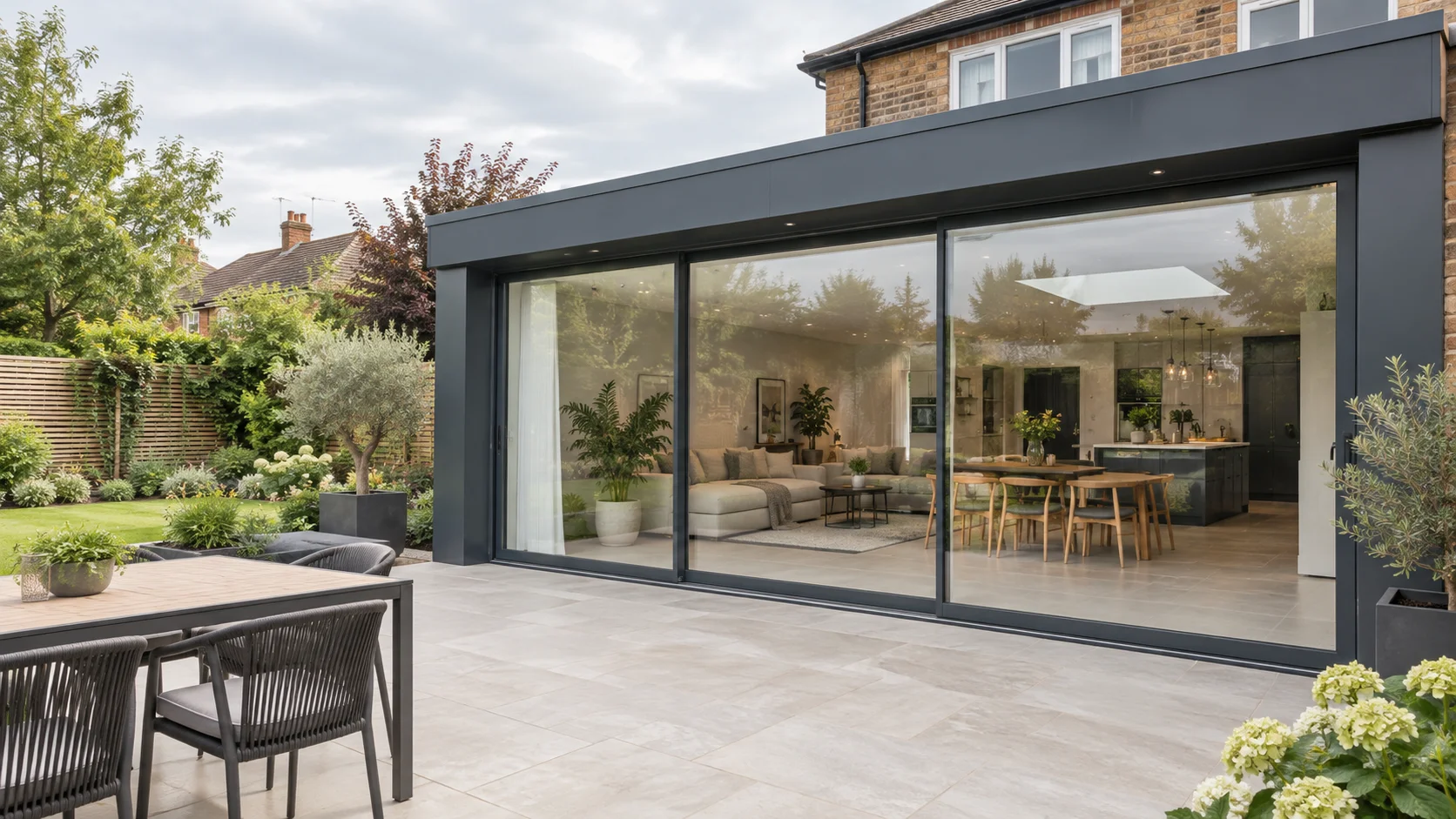
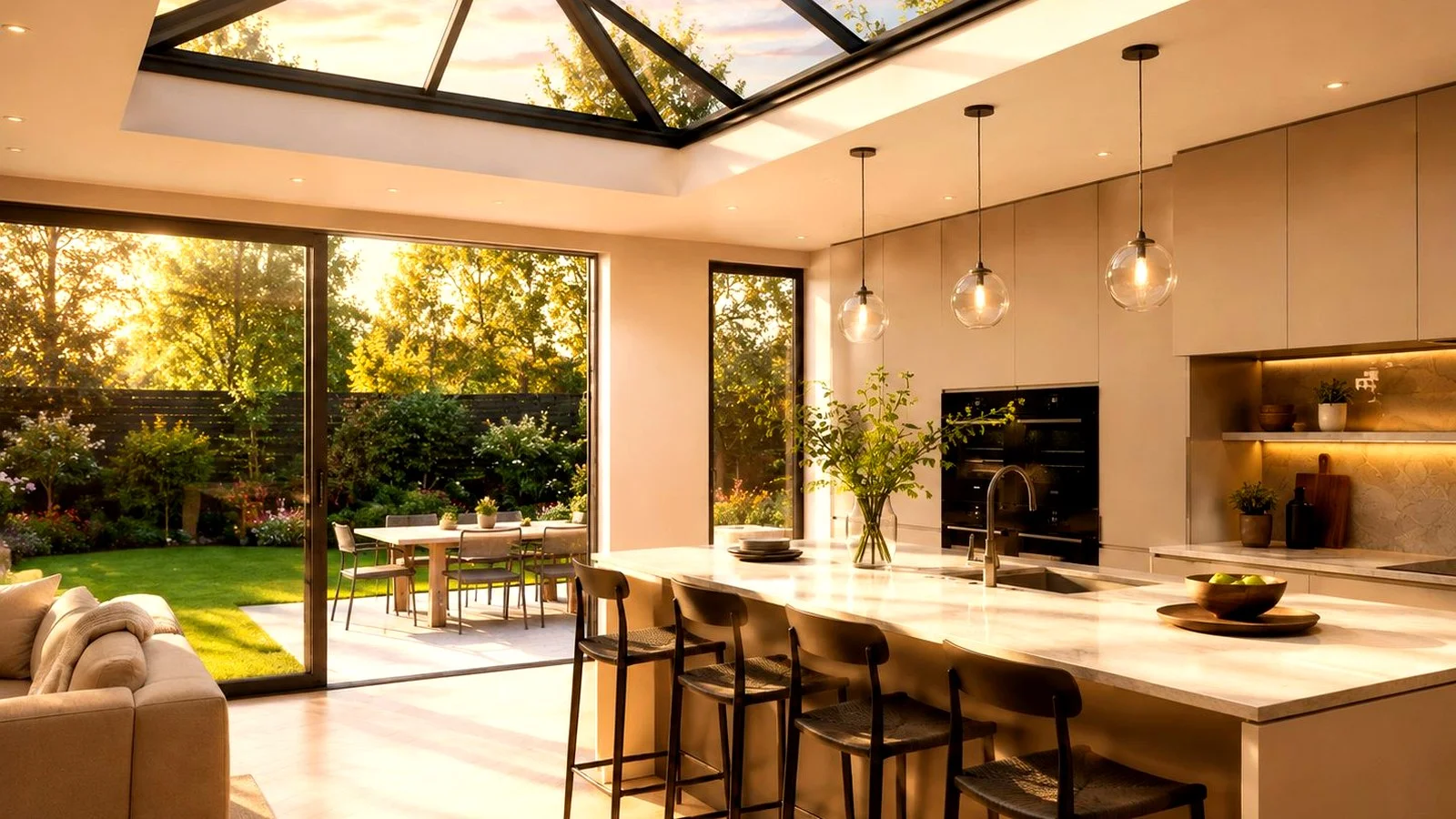
The most common type for flat-roof extensions and new builds. A fixed flat roof light is a sealed, non-opening glazed unit set flush or near-flush into the flat roof plane. Available in any size from small accent lights (600 x 600mm) to very large statement units (2000 x 3000mm+). Because there are no moving parts, fixed roof lights are straightforward to install and waterproof and are the clean, architectural choice for most contemporary extensions.
Best for: Single-storey flat-roof extensions, kitchen-diners needing overhead daylight, any situation where ventilation through the roof light is not required.
2. Opening Roof Lights
The same flat format as a fixed roof light, but with a mechanically or electrically operated opening panel. Opening roof lights are hinged at one side and lift to allow hot air to escape and fresh air to enter, exploiting the natural convective principle that warm air rises. The ventilation benefit in a kitchen or south-facing room is significant.
Electric versions can be operated by switch or remote control, and many systems include a rain sensor that automatically closes the light if rain begins while it's open. Best for: Kitchens where cooking steam requires ventilation, south-facing rooms prone to overheating in summer, bathrooms requiring natural ventilation.
3. Roof Lanterns
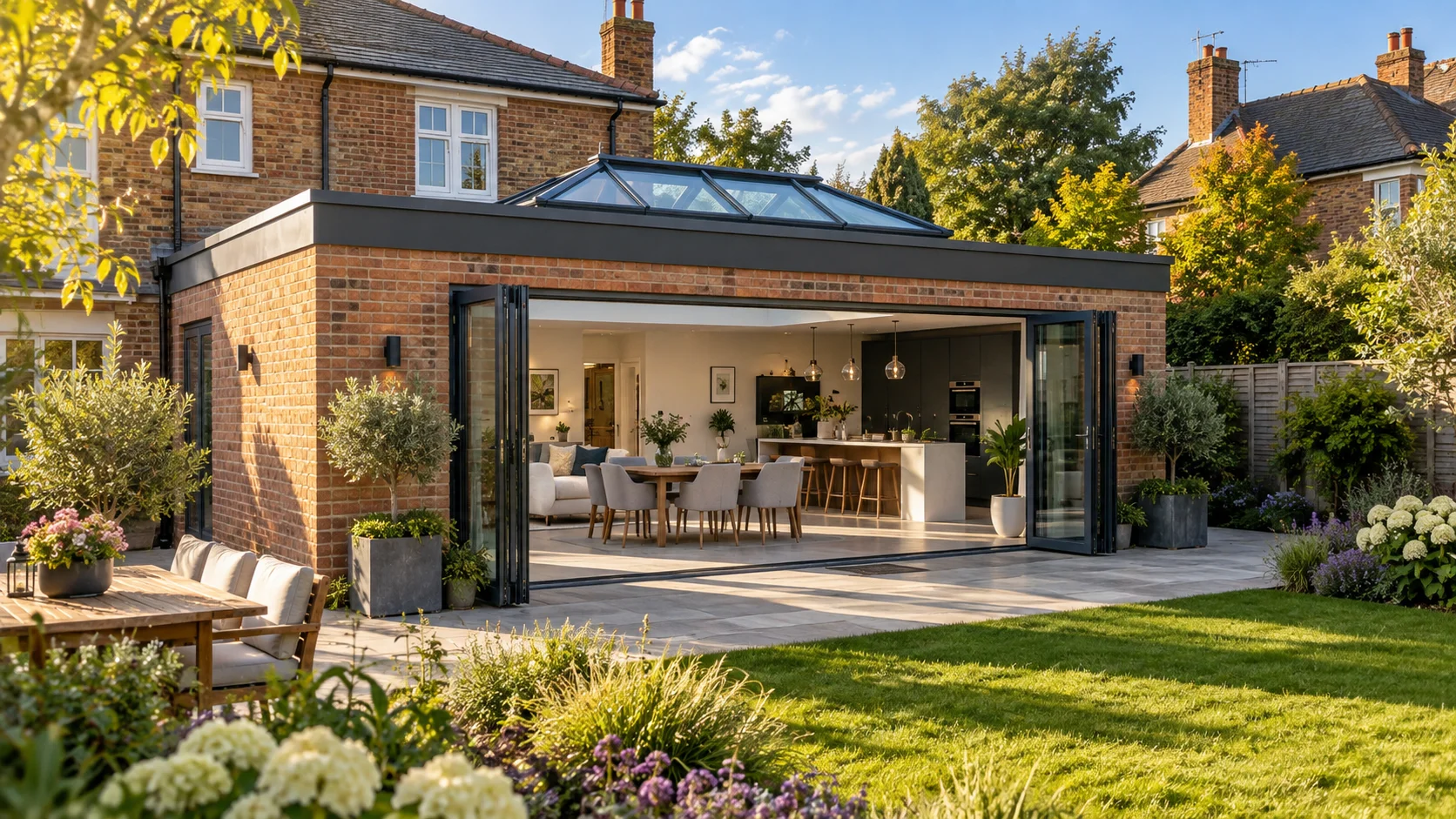
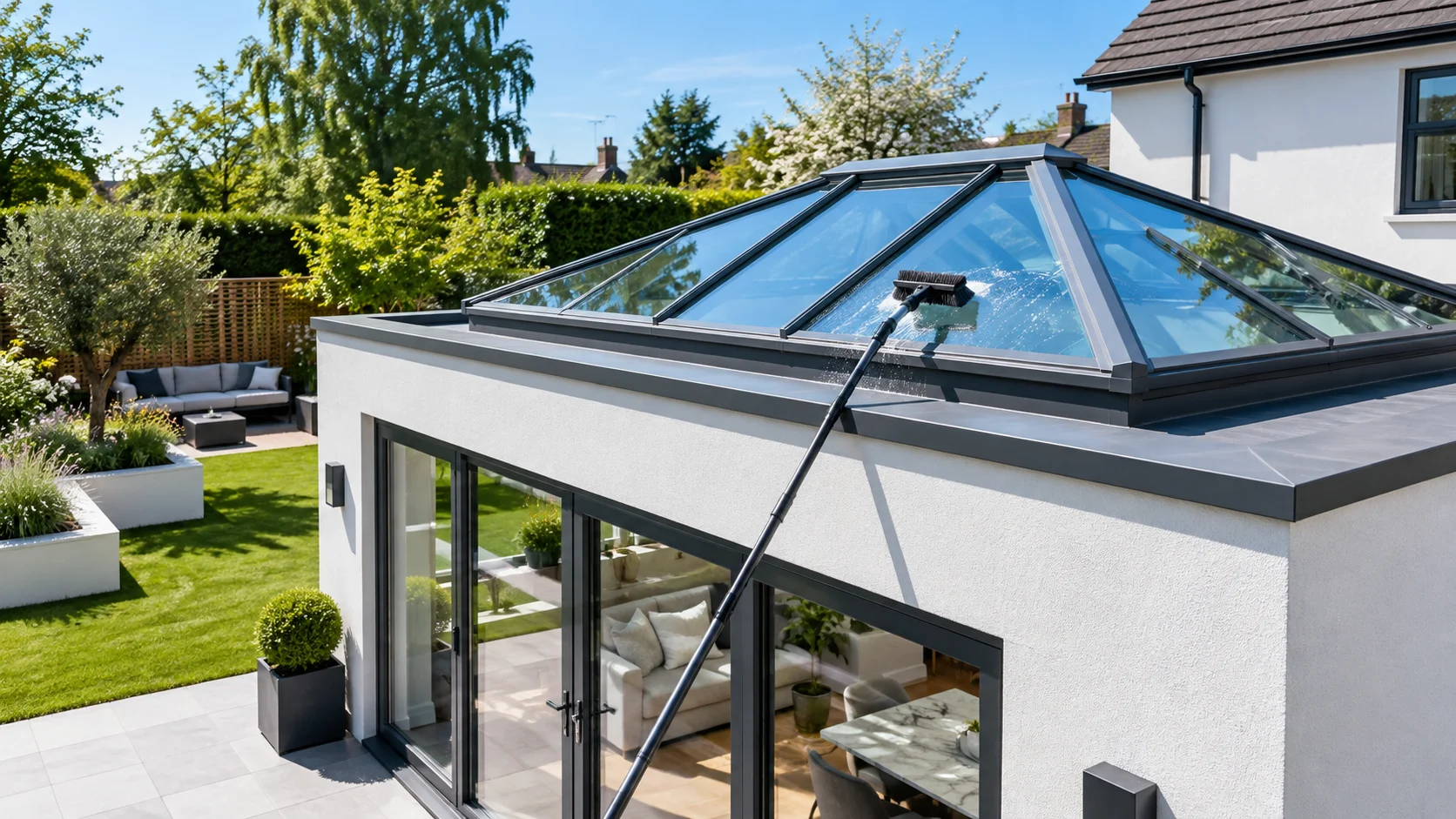
A roof lantern sits proud of the roof plane rather than flush with it. The structure rises upward, glazed on all faces, typically with a ridge profile, adding both volume and drama to the space below. Because the glazed faces are angled rather than horizontal, a lantern captures light across a wider arc of sky and continues to gather useful light from a low winter sun that a flat roof light would largely miss.
Best for: Orangery-style extensions, formal dining or living spaces where the ceiling is a design feature, rooms with generous ceiling height (2700mm+), projects where the rooflight is intended to be a visual centrepiece.
4. Walk-on Roof Lights
Structural glass units engineered to bear foot traffic, used in basement light-wells (where the roof light sits at ground level and admits light to a space below), in flat roofs that double as terraces, or in floor applications. Walk-on units use thick laminated structural glass and substantial aluminium framing. The cost is significantly higher than standard rooflights, and structural engineering input is required to specify correctly.
Best for: Basement conversions requiring daylight at ground level, roof terraces needing a glazed floor element, commercial or prestige residential projects.
5. Pitched Roof Lights (Skylights)
Designed for installation in sloping roofs, the traditional skylight format. Available in fixed and opening versions. The pitch of the roof creates a natural self-cleaning action and sheds rainwater effectively. Popular in loft conversions and on agricultural or rural buildings with traditional pitched roofs. Not typically used on flat-roof extensions.
6. Modular Roof Light Systems
For very large openings, entire ceilings of glass, modular systems allow multiple roof light units to be combined within a structural aluminium grid. The result is a ceiling that is predominantly glass, delivering maximum light into deep floor plans or very large spaces. Used on high-end residential projects and commercial builds.
Which Type Is Right for Your Project?
For most UK flat-roof extensions, a fixed or opening flat roof light is the right choice. If the design calls for drama and the ceiling height supports it, a lantern adds genuine architectural value. If ventilation is important, specify opening. If budget is a consideration, fixed flat roof lights deliver excellent value.
Contact SmartaView to Discuss Roof Light Options for Your Project, We'll Help You Specify Correctly
Explore more
Author at Smartaview, writing about aluminium glazing, home improvements and the buying process.