What Is Low-E Glass? How It Works and How Much It Saves
Low-E glass has an invisible coating that reflects heat back into the room. Here is how it works, what the U-values mean, and how much it actually saves.
Low-E, or low emissivity, glass is the single biggest upgrade you can make to a sealed unit, and it is invisible. A microscopically thin metal-oxide coating on the glass reflects heat back into the room instead of letting it escape. Here is what that actually does, and what it is worth.
How the coating works
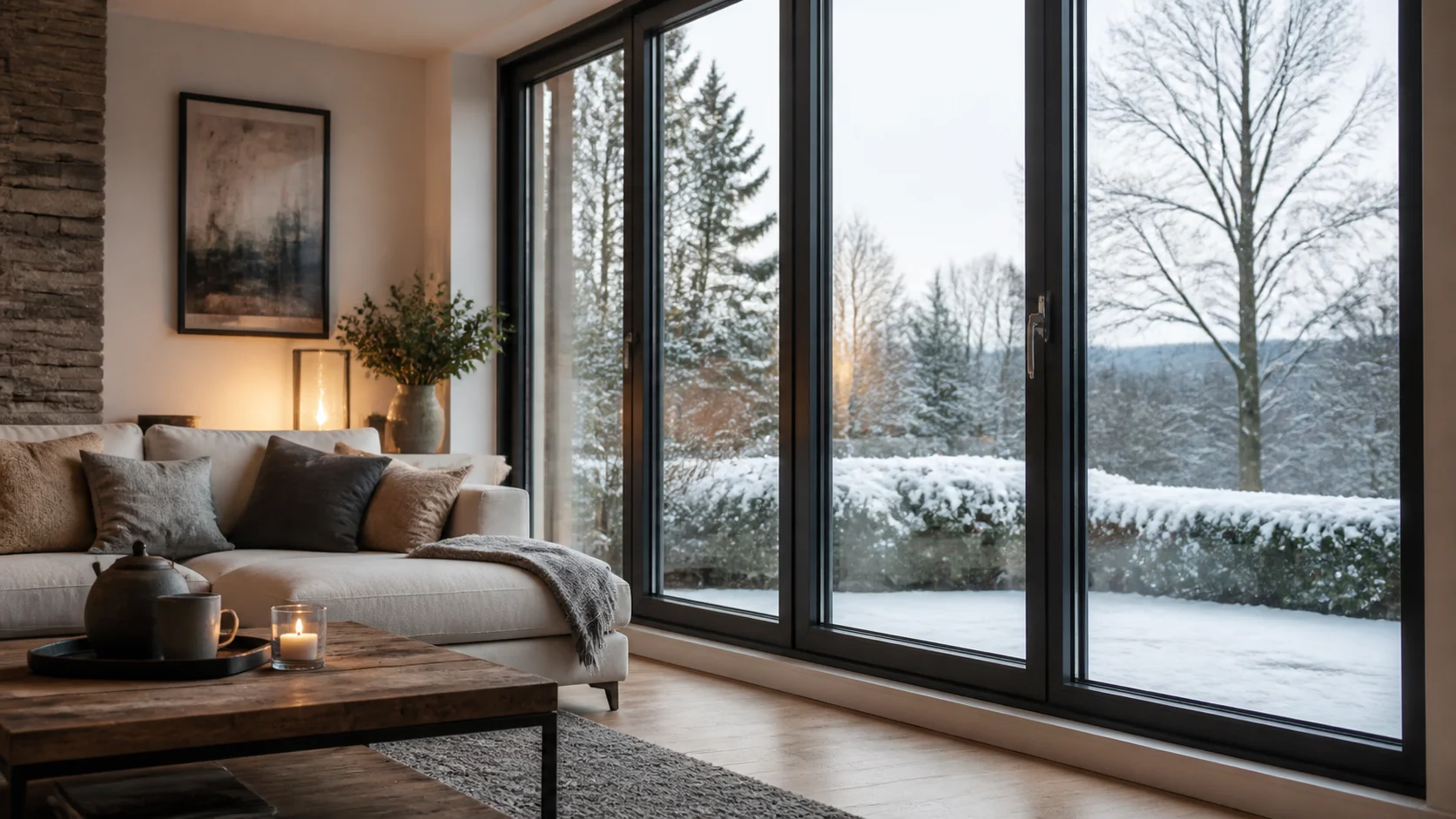
Heat from your radiators and from sunlight radiates around the room. Ordinary glass lets a lot of that heat pass straight back out. The Low-E coating reflects it inwards, so the warmth stays in the room for longer while daylight still passes through almost unchanged. It works in reverse in summer too, helping keep some solar heat out.
U-values in plain English
A U-value measures how much heat a material lets through - the lower the number, the better the insulation. A standard clear double glazed unit has a U-value of around 2.7. Add a Low-E coating and that drops to around 1.0, roughly reflecting half the heat back into the room. That is a large jump in performance from a coating you cannot even see.
Does it make the room darker?
Barely. A Clear / Low-E unit still transmits about 67% of visible light, so rooms stay bright. The coating is tuned to reflect heat, not light, which is why it has become the default choice for modern glazing.
When to always choose Low-E
- Any room you heat and want to keep warm
- North-facing rooms that never get much solar gain
- Replacing an old clear unit - upgrade while the glass is out
- Large expanses of glass where heat loss adds up quickly
What about triple glazing?
Triple glazing takes the same idea further with a third pane and two coated cavities, pushing U-values lower again. It is worth considering for very cold-facing rooms, new builds, or where noise is a factor. For most replacement jobs, a Clear / Low-E double unit is the sweet spot of cost and performance.
Upgrade to Low-E while the glass is out. Enter your size on the Clear / Low-E unit to see the price, cut to measure.
Author at Smartaview, writing about aluminium glazing, home improvements and the buying process.