Aluminium vs Composite vs uPVC Front Doors: Which Is Best?
A clear comparison of aluminium, composite and uPVC front doors on looks, security, lifespan and cost, so you can choose the right door with confidence.
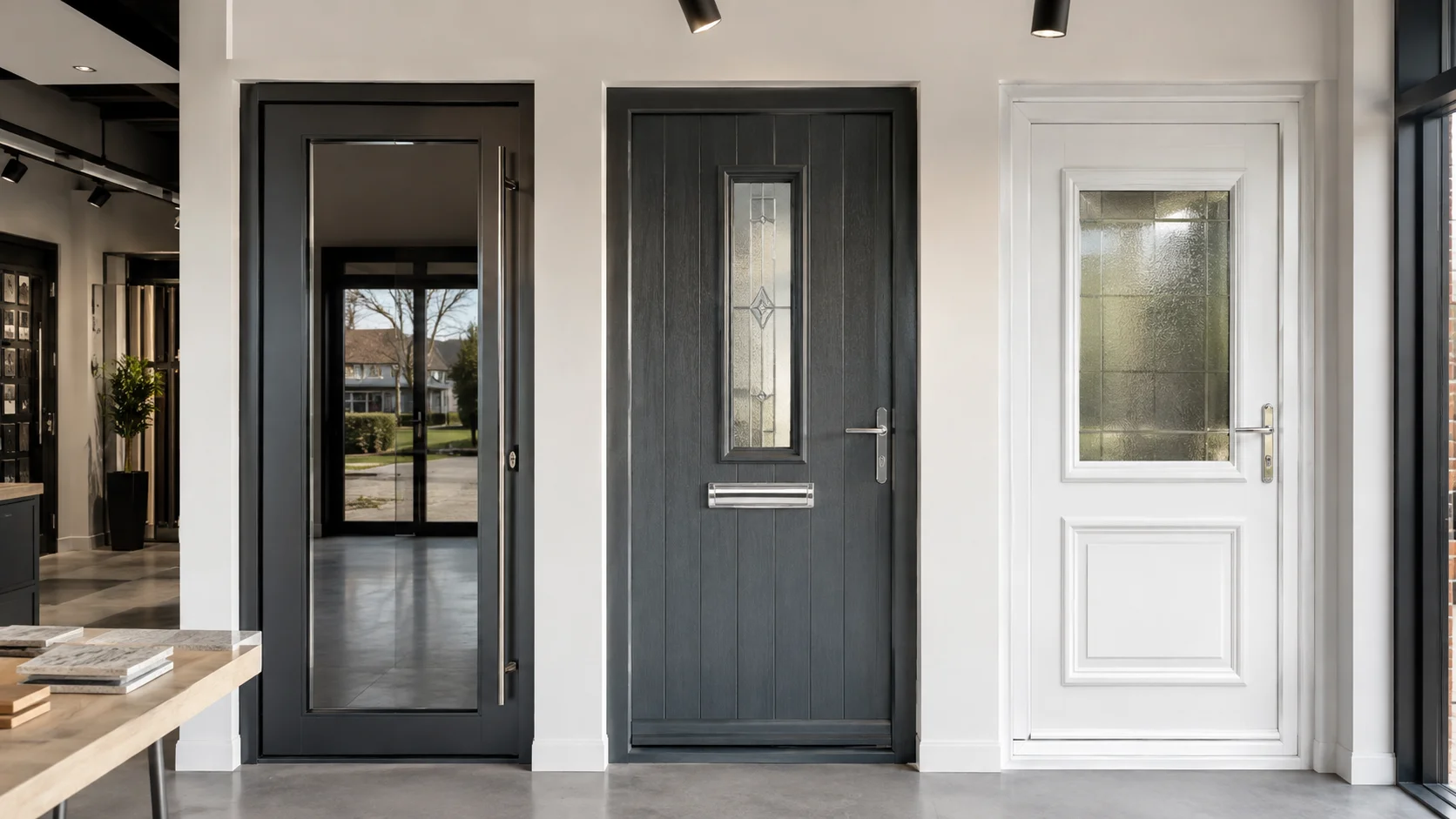
For the best combination of longevity, strength, slim modern looks and a finish that lasts, aluminium is the strongest all-round choice. Composite doors offer good insulation and a traditional timber-effect look at a mid price, while uPVC is the budget option that ages fastest. The right answer depends on your priorities, so here is how the three compare.
The three materials at a glance
| Factor | Aluminium | Composite | uPVC |
|---|---|---|---|
| Typical lifespan | 40 years plus | 30 to 35 years | 20 to 30 years |
| Warping in heat | Very resistant | Resistant | Can distort |
| Finish over time | Powder coat holds colour | Good, can fade | White can yellow |
| Slim, modern look | Best | Traditional | Chunky frames |
| Strength | Highest | High | Lowest |
| Up-front cost | Highest | Middle | Lowest |
Aluminium front doors
Aluminium is the premium choice. It is the strongest of the three, will not rot, rust or warp, and carries a marine-grade powder-coated finish that shrugs off rain, salt and UV for decades. Slim frames mean more glass and a cleaner, more contemporary look. It costs the most up front, but lasts the longest and holds its appearance, so the cost per year of service is often the lowest.
Best for: homeowners who want the longest-lasting, best-looking door and see it as a long-term investment in the home.
Composite front doors
A composite door blends several materials, usually with a solid core and a moulded skin, often styled to look like painted timber. It insulates well and suits traditional homes. The trade-offs are a chunkier, more conventional look and a finish that can fade over the years. It sits between uPVC and aluminium on both price and longevity.
Best for: period or traditional properties wanting a timber-look door without the upkeep of real wood.
uPVC front doors
uPVC is the budget option. It does a functional job and costs the least, but it is the softest of the three, its frames are the bulkiest, and white uPVC is well known for yellowing under UV. In heat it can distort more than the alternatives. It is a reasonable choice for a low-use or rarely seen entrance, less so for a main front door you look at daily.
Best for: tight budgets, side or rear doors, or short-term needs.
So which should you choose?
If budget is the only priority, uPVC wins on day one. If you want a timber look on a traditional home, composite is worth a look. But if you want the door that lasts longest, looks sharpest and still performs in twenty years, aluminium is the clear best all-rounder. It is the door you fit once.
Compare aluminium door styles and see your exact price online in minutes. Built on the premium Origin system, 10-year guarantee, free UK mainland delivery on all orders. Explore the range at smartaview.com.
Frequently asked questions
Which front door material is best?
Aluminium is the best all-rounder for longevity, strength, slim looks and a lasting finish. Composite suits traditional homes, and uPVC is the budget choice.
Is aluminium better than composite?
Aluminium lasts longer, is stronger and offers slimmer, more modern frames. Composite gives a timber-effect look at a lower price but tends to be chunkier and can fade.
Why is uPVC the cheapest?
uPVC is a plastic that is inexpensive to produce. It works well for the price but is softer, bulkier and ages faster than aluminium or composite.
Do aluminium doors look modern?
Yes. Slim aluminium frames maximise glass and give a clean, contemporary appearance, while a wide colour range suits both modern and period homes.
Related reading
Author at Smartaview, writing about aluminium glazing, home improvements and the buying process.