How Secure Are Aluminium Front Doors? PAS 24 and Multipoint Locking Explained
Aluminium front doors are among the most secure you can buy, with rigid frames, multipoint locking and PAS 24 testing. Here is what actually keeps intruders out.
Aluminium front doors are among the most secure doors you can fit. The strength comes from three things working together: a rigid metal frame that resists force, a multipoint locking system that bolts the door in several places at once, and testing to PAS 24, the UK security standard used to verify a door can withstand a determined break-in attempt.
Security is the one area where a front door has to do more than look good. Here is what genuinely keeps a door shut when someone is trying to open it.
Why does the material matter for security?
A lock is only as strong as the door around it. Aluminium is inherently rigid, far more so than plastic, so it resists the flexing and prying that intruders rely on. A would-be burglar cannot simply lever the frame away from the lock, because the metal does not give. That structural strength is the foundation everything else is built on.
What is multipoint locking?
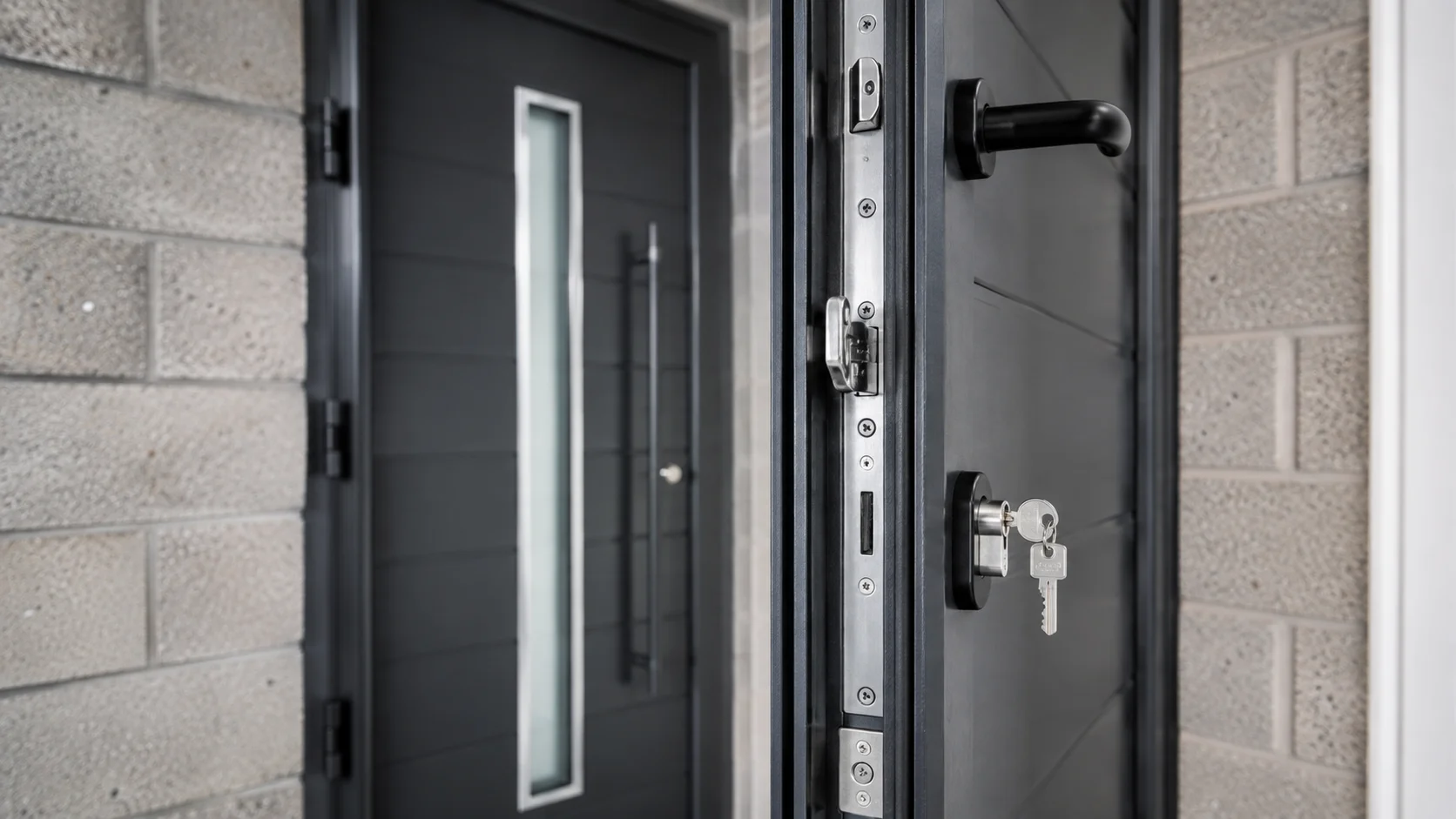
A standard latch holds a door at one point. A multipoint lock engages several bolts up and down the door frame when you lift the handle and turn the key, typically a combination of hooks, deadbolts and rollers. That spreads the load across the whole door, so force applied at any single spot is resisted by the entire locking system rather than one weak point. It is the difference between a door held by one hand and a door held by five.
What does PAS 24 mean?
PAS 24 is the recognised UK security standard for doors and windows. To pass, a door has to survive a series of tests that mimic real break-in methods, including mechanical loading, manipulation of the lock and hardware, and repeated force. When a door is tested to PAS 24, you have independent evidence it can stand up to a genuine attempt, not just a marketing claim.
What about the glass and the cylinder?
Two details finish the picture. Glazed doors use toughened or laminated glass that is far harder to break through than ordinary glass. And the lock cylinder, the part a key turns, should be a quality unit resistant to snapping and picking, since the cylinder is a favourite target. A secure door pairs a strong body with strong glass and a strong cylinder.
Are aluminium doors more secure than uPVC?
All else being equal, the rigid aluminium frame gives it an edge, because it resists prying and flexing better than plastic. Both can be secure when specified with good locking, but aluminium starts from a stronger base.
Choose a front door that protects as well as it looks. SmartaView aluminium front doors are built on the premium Origin system with multipoint locking, priced live online, with free UK mainland delivery on all orders. See the range at smartaview.com.
Frequently asked questions
Are aluminium front doors secure?
Yes. A rigid aluminium frame, multipoint locking and testing to PAS 24 make aluminium among the most secure front door options available.
What is multipoint locking?
A locking system that bolts the door to the frame at several points at once, spreading force across the whole door rather than a single latch.
What is PAS 24?
The UK security standard for doors and windows. A door tested to PAS 24 has passed a series of tests simulating real break-in attempts.
Is the glass in a glazed door secure?
Glazed doors use toughened or laminated glass, which is far more resistant to breaking than ordinary glass, paired with a snap-resistant lock cylinder.
Related reading
Author at Smartaview, writing about aluminium glazing, home improvements and the buying process.