Aluminium vs Composite Front Doors: Which Is Better in 2026?
Aluminium and composite front doors both offer security, insulation and low maintenance, but they differ significantly in design freedom, lifespan and cost. Compare both materials to decide which is right for your home.
Aluminium and composite are two of the most popular materials for premium front doors in the UK. Both provide strong security, good thermal performance and far less maintenance than a traditional timber entrance door.
However, they are constructed differently, suit different architectural styles and sit at different price points.
Composite doors are often chosen for their insulated core, traditional appearance and comparatively accessible cost. Aluminium doors appeal to homeowners looking for slimmer profiles, greater design flexibility and a more architectural finish.
This guide compares aluminium and composite front doors across the areas that matter most, including security, insulation, durability, maintenance, appearance and long-term value.
What Is a Composite Front Door?
A composite door is manufactured using several different materials rather than one solid piece of timber or plastic.
The precise construction varies between manufacturers, but a typical composite door may contain:
-
An insulated foam, timber or engineered core
-
A glass-reinforced plastic outer skin
-
A uPVC or composite frame
-
Internal reinforcement
-
Decorative moulded panels
-
Double or triple glazed units
Composite doors were developed to reproduce the appearance of timber while reducing the problems associated with natural wood, such as swelling, warping, rotting and regular repainting.
Most composite doors are selected from a manufacturer’s established range of panel designs, colours, glazing patterns and hardware.
What Is an Aluminium Front Door?
An aluminium front door uses extruded aluminium profiles to create the frame and structural elements of the entrance system.
The door panel may be formed from insulated aluminium sections, contain large glazed areas or combine solid panels with decorative detailing.
Modern residential aluminium doors use thermally broken frames. A less conductive material separates the internal and external aluminium sections, reducing heat transfer through the metal.
Aluminium systems can usually be configured with:
-
Solid or glazed panels
-
Full-height vision panels
-
Single or double doors
-
Fixed side lights
-
Overlights above the entrance
-
Contemporary or traditional detailing
-
A broad selection of powder-coated colours
This makes aluminium particularly suitable for bespoke entrances and contemporary architecture.
Security: Which Material Is Better?
Both aluminium and composite front doors can provide excellent security when they are properly specified, manufactured and installed.
The material alone does not determine whether a door is secure. The complete system must be considered, including:
-
The strength of the frame
-
The door panel construction
-
The multi-point locking mechanism
-
The security cylinder
-
The hinges and locking keeps
-
The glass and glazing-retention method
-
The way the frame is fixed into the building
Aluminium Door Security
Aluminium provides a strong and stable structure that resists twisting, swelling and deformation.
Its strength allows locks, hinges and keeps to be secured into substantial frame sections. Quality aluminium doors may also include reinforced panels, multi-point locking and laminated security glass.
Composite Door Security
A quality composite door can also be highly secure. The dense door core, reinforced frame and multi-point lock provide resistance against common forms of attack.
However, composite door quality varies considerably. Cheaper products may use weaker skins, less substantial frames or lower-specification locks and cylinders.
The Verdict on Security
Aluminium has an inherent structural-strength advantage, but a security-tested composite door can still provide excellent protection.
Look for independent testing such as PAS 24 and confirm that it applies to the exact door design, lock, cylinder and glazing specification you are ordering.
Some doors may also carry Secured by Design accreditation, a police-backed initiative promoting products designed to reduce crime.
Thermal Performance: Which Keeps More Heat In?
Composite doors traditionally held an advantage in thermal efficiency because their foam or engineered core naturally provides a high level of insulation.
Modern aluminium doors have narrowed that gap considerably through thermally broken frames, insulated panels and improved glazing.
Composite Door Thermal Performance
A composite door with a thick insulated core and limited glazing can achieve very strong thermal performance.
The panel itself contains relatively little conductive material, helping reduce heat transfer through the entrance.
Aluminium Door Thermal Performance
Modern aluminium entrance doors use a thermal break to interrupt the path between the cold exterior and warm interior.
Solid aluminium door panels may also contain insulation, while glazed sections use double or triple sealed units with low-emissivity coatings and warm-edge spacer bars.
The Verdict on Thermal Efficiency
At comparable quality levels, both materials can provide suitable thermal performance for modern UK homes.
Composite may retain an advantage in heavily insulated, mostly solid designs. However, a high-quality thermally broken aluminium door can perform extremely well and meet the requirements of a modern renovation or new-build project.
Ask for the whole-door U-value of the exact design being quoted. Do not rely on the best figure achieved by a different panel or glazing configuration.
Design Freedom: Aluminium Has the Advantage
This is one of the clearest differences between the two materials.
Composite Door Designs
Composite doors are generally selected from an existing range of moulded panels.
You can normally personalise:
-
The panel style
-
The external colour
-
The glazing pattern
-
The handle and letter plate
-
The frame and side-panel arrangement
This provides plenty of choice for most conventional entrances, but the underlying door shape and panel design remain based on the manufacturer’s collection.
Aluminium Door Designs
Aluminium provides greater freedom over the proportions and overall entrance layout.
Depending on the system, you may be able to specify:
-
Very large door panels
-
Full-height or narrow vertical glazing
-
Flush panel designs
-
Minimal visible frames
-
One or two side lights
-
An overlight above the door
-
Unusual entrance-screen proportions
-
Long bar handles or recessed hardware
This makes aluminium the stronger option for architect-designed homes, wide entrances and projects where the front door is intended to be a major visual feature.
Traditional vs Contemporary Appearance
The better material will partly depend on the style of your property.
Composite Doors for Traditional Homes
Composite doors are particularly effective at reproducing traditional timber-panel designs.
They work well with:
-
Victorian and Edwardian properties
-
Cottages
-
Traditional suburban homes
-
Properties requiring moulded panel detailing
-
Entrances using decorative or patterned glass
Woodgrain-effect skins can provide a more traditional appearance without the maintenance requirements of natural timber.
Aluminium Doors for Contemporary Homes
Aluminium is especially well suited to:
-
Modern rendered properties
-
New-build homes
-
Architect-designed renovations
-
Homes with aluminium windows or bifold doors
-
Entrances featuring large panes and slim frames
Flat panels, dark powder-coated colours and long bar handles create the clean, architectural appearance commonly associated with premium aluminium entrances.
Aluminium can also produce traditional designs, but composite often provides a more convincing solution where moulded timber-style detailing is the priority.
Colour and Finish Options
Both materials are available in a wide range of colours, but their finishes differ.
Composite Door Finishes
Composite doors generally use a coloured or woodgrain-effect surface skin.
Popular finishes include:
-
White
-
Black
-
Anthracite grey
-
Navy blue
-
Chartwell green
-
Red
-
Oak and other timber effects
The precise range is determined by the door manufacturer.
Aluminium Door Finishes
Aluminium is usually powder-coated, providing access to an extensive palette of standard and bespoke colours.
Depending on the product, options may include:
-
RAL colour finishes
-
Matt, satin or textured surfaces
-
Metallic and bronze-inspired finishes
-
Different colours internally and externally
-
Enhanced coatings for coastal environments
Aluminium therefore provides the greater level of colour customisation, particularly where the entrance needs to match windows, bifolds or other architectural metalwork.
Durability and Expected Lifespan
Both materials are designed to outlast a basic uPVC door, but aluminium generally has the stronger long-term durability case.
Composite Door Lifespan
A quality composite door can provide many years of reliable service.
Over time, however, some products may experience:
-
Fading or discolouration
-
Movement between different materials
-
Expansion or contraction of the panel
-
Cracking or damage to the external skin
-
Problems with seals, hinges or locking hardware
The likelihood of these problems depends heavily on manufacturing quality and exposure to weather and sunlight.
Aluminium Door Lifespan
Aluminium does not rot, swell or warp. Its underlying structure remains stable through changes in temperature and humidity.
A quality powder-coated finish should also remain presentable for many years without requiring repainting.
Handles, seals, hinges and locks may eventually need adjustment or replacement, but the aluminium frame and panel structure should have a long service life.
The Verdict on Durability
For long-term structural stability, aluminium generally has the advantage.
A premium composite door can still be extremely durable, but aluminium is less dependent on several different materials continuing to move and age at the same rate.
Maintenance Requirements
Both aluminium and composite doors are low-maintenance compared with timber.
Routine maintenance for either material normally includes:
-
Cleaning the door and frame with warm water and mild detergent
-
Keeping drainage openings clear
-
Checking weather seals for damage
-
Lubricating locks and hinges using approved products
-
Correcting alignment problems before they worsen
Composite surfaces may become faded or scratched over time, depending on their quality and exposure.
Powder-coated aluminium generally retains a more consistent appearance and does not require painting or surface treatment.
Aluminium therefore has a slight advantage, although both options are straightforward to care for.
Cost: Composite Doors Are Usually Cheaper
Composite doors normally have the lower initial purchase price.
The final cost of either material depends on:
-
The overall dimensions
-
The manufacturer and product range
-
The panel design
-
The amount and type of glass
-
The security hardware
-
The colour and finish
-
The handle and accessories
-
Whether side lights or overlights are included
-
The installation requirements
A conventional composite front door may cost significantly less than a bespoke aluminium entrance system.
However, a large premium composite entrance with side panels, specialist glazing and upgraded hardware can cost more than a relatively simple aluminium door.
Compare complete specifications rather than assuming one material will always fit within a particular price bracket.
Which Offers Better Long-Term Value?
Composite doors usually provide better short-term value for buyers whose priority is securing a quality entrance at a lower initial cost.
Aluminium may offer stronger long-term value where the homeowner benefits from:
-
A longer expected service life
-
Greater resistance to movement and deterioration
-
A finish that requires little cosmetic maintenance
-
A bespoke design suited precisely to the property
-
Visual coordination with aluminium windows and doors
The appropriate calculation is not simply the purchase price. Consider how long you expect to remain in the property and whether the entrance design contributes meaningfully to the appearance and value of the home.
Which Is Better for a Coastal Property?
Coastal properties expose entrance doors to salt, moisture and strong winds.
Both composite and aluminium doors can be used successfully, provided the chosen product is suitable for the location.
For aluminium, ask whether an enhanced or marine-grade powder coating is recommended. Hardware should also be selected for resistance to corrosion.
Composite doors avoid exposed structural metal across much of the panel, but their locks, hinges and other hardware remain vulnerable if unsuitable components are used.
In either case, more frequent cleaning may be required to remove salt deposits and preserve the finish.
Which Is Better for a Period Property?
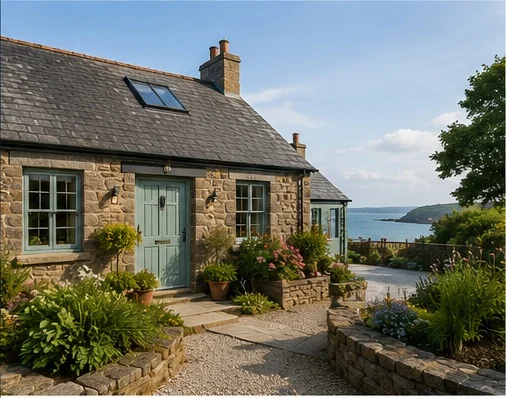
Composite doors often provide the simpler solution for a period home because they are readily available with traditional panel arrangements, decorative glazing and timber-effect surfaces.
Aluminium can still work well where the project deliberately combines old and new architecture or where the entrance has been redesigned as a contemporary feature.
For listed buildings and properties in conservation areas, obtain the relevant planning or conservation advice before changing the material, proportions or appearance of an entrance door.
Which Is Better for a Modern Home?
Aluminium generally has the advantage in contemporary properties.
It allows for:
-
Larger entrance doors
-
Slimmer frame sections
-
Full-height glazing
-
Long architectural handles
-
Flush and minimal panel designs
-
Matching finishes across windows and garden doors
A composite door can still suit a modern home, particularly where a simple flush panel is available. However, aluminium usually provides greater freedom to create a genuinely bespoke entrance.
Questions to Ask Before Choosing
Whether you are considering aluminium or composite, ask the supplier to confirm:
-
What is the whole-door U-value?
-
Has the precise door been independently security tested?
-
Which lock and cylinder are included?
-
Is the glass toughened, laminated or both?
-
What guarantee applies to the frame, panel, glass and hardware?
-
How should the door be maintained?
-
Are the internal and external colours independently selectable?
-
Is the threshold appropriate for the required accessibility and exposure?
-
Who is responsible for the final measurements and installation?
Clear written answers make it much easier to compare products accurately.
The Verdict: Aluminium or Composite?
Choose an aluminium front door if you prioritise:
-
Contemporary architectural design
-
Slim frames and large glazed areas
-
Extensive colour and configuration choices
-
Long-term structural stability
-
Coordination with other aluminium products
-
A highly personalised entrance
Choose a composite front door if you prioritise:
-
A lower initial cost
-
Strong insulation from a solid core
-
Traditional moulded panel designs
-
Timber-effect finishes
-
A straightforward replacement for a conventional entrance
Neither material is automatically better for every home. The right door is the one that suits the property, satisfies your security and thermal requirements and provides an acceptable balance between initial cost and expected lifespan.
Explore Aluminium Front Doors
Explore SmartaView’s aluminium door range and compare available entrance designs, colours, glazing and hardware options.
Review the complete specification rather than selecting on appearance alone. The frame, panel, lock, glass, threshold and installation must all work together to create a secure, efficient and durable entrance.
Further reading
- Aluminium Front Doors: Why More Homeowners Are Making the Switch
- How to Choose the Perfect Front Door for Your Home
- How Long Do Aluminium Doors Last? A Realistic Lifespan Guide
Planning a home improvement? SmartaView makes premium aluminium glazing you can price online, with free UK mainland delivery. Browse the range or speak to our team for tailored advice.
Author at Smartaview, writing about aluminium glazing, home improvements and the buying process.