Aluminium Front Doors: Why More Homeowners Are Making the Switch
Aluminium front doors combine strength, slim profiles, extensive design freedom and low maintenance. Discover why more UK homeowners are choosing aluminium over traditional timber, uPVC and composite doors.
Your front door performs two important roles. It protects the main entrance to your home, but it also creates the first impression visitors receive when they arrive.
For many years, timber, uPVC and composite doors dominated the UK residential market. Aluminium was more commonly associated with commercial buildings or contemporary architectural projects.
That has changed. Advances in thermal performance, powder-coated finishes and residential door design have made aluminium one of the most desirable materials for modern entrance doors.
Here is why more homeowners are making the switch and what you should consider before choosing one for your property.
Why Are Aluminium Front Doors Becoming More Popular?
The growing popularity of aluminium entrance doors is being driven by a combination of design, durability and performance.
Homeowners increasingly want a front door that:
-
Feels strong and secure
-
Complements contemporary architecture
-
Requires little ongoing maintenance
-
Can be personalised beyond a limited range of standard designs
-
Provides suitable thermal and weather performance
-
Continues looking good for many years
Aluminium is particularly well suited to these requirements because it combines structural strength with considerable design flexibility.
Greater Design Freedom
One of the biggest attractions of aluminium is the freedom it gives homeowners, architects and designers.
Composite doors are generally manufactured using a defined collection of moulded panels. You select a door style, colour and glazing arrangement from the options offered by the manufacturer.
Aluminium entrance doors can offer much greater flexibility. Depending on the selected system, the door can be designed with:
-
A completely solid panel
-
A small vision panel
-
Full-height glazing
-
Multiple glass sections
-
Fixed side panels
-
An overhead glazed panel
-
A single or double-door arrangement
-
Contemporary, traditional or industrial-inspired detailing
This makes aluminium particularly attractive for unusual openings and design-led renovations where a standard door would feel restrictive.
Slimmer, Cleaner Frame Profiles
Aluminium is strong relative to its weight. This allows manufacturers to create slimmer frame and glazing sections without sacrificing the structural stability required for an external entrance door.
Slimmer profiles can provide:
-
A cleaner, more architectural appearance
-
Larger areas of glass
-
More natural light within the hallway
-
A less bulky appearance around side lights and overlights
This works especially well with rendered exteriors, modern brickwork, timber cladding and properties using matching aluminium windows or rear doors.
Aluminium Front Doors Are Strong
A front door is one of the most frequently used and security-sensitive parts of a home. The material must withstand repeated use, changing weather conditions and attempts at forced entry.
Aluminium is naturally strong and dimensionally stable. Unlike timber, it does not swell or shrink as moisture and temperature levels change.
It also provides a solid structure into which locks, hinges, keeps and handles can be securely fitted.
The strength of the frame alone does not guarantee a secure entrance, but it provides an excellent foundation for a properly designed door system.
Security Features to Look For
A high-quality aluminium front door may include several security features working together.
These can include:
-
Multi-point locking
-
Security-rated lock cylinders
-
Strong hinges with protection against removal
-
Robust aluminium panels and frames
-
Laminated or toughened safety glass
-
Secure glazing retainers
-
Reinforced locking keeps
Look for independent testing such as PAS 24 where this is required for your project.
Some products may also hold Secured by Design accreditation. This is a police-backed initiative promoting products designed to reduce the risk of crime.
Always check whether the security certification applies to the exact door design, lock, glass and configuration you are ordering.
Are Aluminium Front Doors Thermally Efficient?
Older aluminium doors developed a reputation for feeling cold because aluminium conducts heat efficiently.
Modern residential doors address this using a thermal break. This separates the internal and external sections of the aluminium frame with a less conductive material.
The thermal break reduces heat transfer through the frame and helps keep the internal surface warmer during winter.
The complete thermal performance of an entrance door depends on:
-
The construction of the aluminium frame
-
The insulation within the door panel
-
The amount and type of glass
-
The quality of the perimeter seals
-
The threshold design
-
The quality of the installation
Ask for the whole-door U-value of the precise design being quoted. A largely solid door may perform differently from the same frame containing a full-height glass panel.
Double or Triple Glazing
Where an aluminium entrance door includes glass, the sealed glazing unit forms part of its thermal, security and acoustic performance.
Quality double glazing will be suitable for many UK homes. Triple glazing may be worth considering where:
-
The entrance faces north
-
The door contains a substantial amount of glass
-
The property is in a cold or highly exposed location
-
Improved sound insulation is required
-
The wider building is targeting enhanced energy performance
For security, laminated glass may be specified on one or more panes. Unlike ordinary toughened glass, laminated glass remains held together by an internal layer when broken, making it more difficult to create an opening.
Long-Term Durability
A properly specified aluminium entrance door can provide decades of useful service.
The aluminium frame itself will not:
-
Rot
-
Warp
-
Swell through moisture exposure
-
Require regular repainting
-
Split in the way timber can
As with any door, individual components such as weather seals, handles, cylinders and hinges may eventually require adjustment or replacement.
However, the underlying aluminium structure should remain stable when it has been correctly manufactured, coated and installed.
Low Maintenance
Aluminium entrance doors are relatively easy to maintain.
Routine care normally involves:
-
Washing the frame with warm water and mild detergent
-
Cleaning the glass as required
-
Keeping drainage openings clear
-
Checking the weather seals periodically
-
Lubricating locks and hinges using approved products
-
Having any alignment problems corrected promptly
Avoid abrasive pads, harsh chemicals and solvent-based cleaners because these may damage the powder-coated finish.
Always follow the manufacturer’s maintenance instructions, particularly where compliance is required to preserve a product guarantee.
Extensive Colour Options
Aluminium doors are normally powder-coated. The selected powder is applied to the prepared metal and cured to create a durable finished surface.
Popular entrance-door colours include:
-
Anthracite grey
-
Jet black
-
White
-
Navy blue
-
Dark green
-
Bronze and metallic-inspired tones
-
Muted contemporary neutrals
Some systems are available in a large selection of recognised RAL colours, while others offer a more focused manufacturer colour palette.
Dual-colour finishes may also be available. This allows you to choose one colour for the outside of the door and another for the internal face.
For example, the exterior could match anthracite aluminium windows while the inside is finished in white to suit a lighter hallway.
Hardware Can Completely Change the Appearance
The handle, knocker, letter plate and other hardware can transform the character of an aluminium front door.
Depending on the system, options may include:
-
Long bar handles
-
Traditional lever handles
-
Recessed or flush pulls
-
Round or offset handles
-
Integrated letter plates
-
Traditional knockers or contemporary door furniture
Common hardware finishes include matt black, brushed stainless steel, polished chrome, bronze and colour-matched powder coating.
The hardware should be selected for performance as well as appearance. A large pull handle may look impressive, but an appropriate internal lever or thumb turn may still be needed to operate the locking system conveniently.
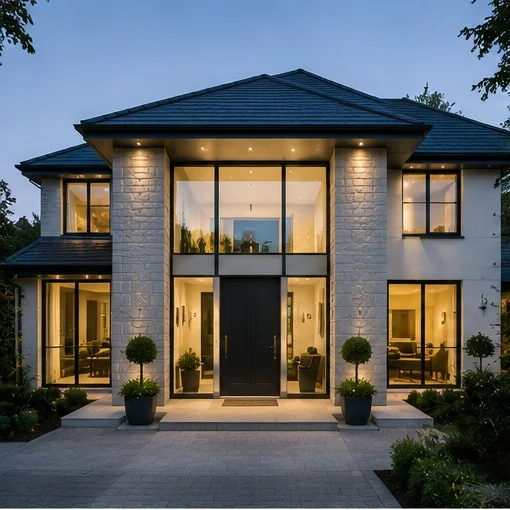
Side Lights and Overlights
An aluminium front door does not have to be treated as a single isolated panel.
Fixed glazing can be incorporated alongside or above the door to form a complete entrance screen.
Side lights can:
-
Bring more natural light into a dark hallway
-
Fill a wider entrance opening
-
Create a more substantial and balanced frontage
-
Provide symmetry around the main door
An overlight can be useful where the opening is particularly tall or where the architecture calls for a more generous entrance.
Clear, tinted, frosted, patterned or obscured glass may be available depending on the system and desired level of privacy.
Contemporary and Traditional Designs
Aluminium is often associated with very modern front doors, but the material can suit a wider range of properties.
Contemporary Homes
For modern rendered or clad properties, aluminium works well with:
-
Flat door panels
-
Long vertical handles
-
Dark or muted frame colours
-
Full-height or narrow vertical glazing
-
Minimal visible hardware
Period and Traditional Properties
For older homes, aluminium doors may use:
-
Panelled detailing
-
Traditional lever handles
-
More decorative glazing
-
Softer heritage-inspired colours
-
Symmetrical side-light arrangements
The most successful design is one that respects the proportions and character of the property rather than selecting a door in isolation.
Aluminium vs Composite Front Doors
Composite and aluminium doors can both provide good thermal performance, security and weather resistance when properly specified.
The main differences are usually found in their construction, appearance and design flexibility.
Composite Doors
Composite doors generally offer:
-
A lower initial price
-
Strong thermal performance from an insulated core
-
Traditional moulded panel styles
-
A broad selection of established standard designs
Aluminium Doors
Aluminium doors generally offer:
-
Slimmer and more architectural profiles
-
Greater freedom over glazing and entrance-screen layouts
-
A strong and stable frame
-
Extensive powder-coated colour choices
-
A particularly clean contemporary appearance
Neither material is automatically right for every property. Aluminium tends to appeal most where design flexibility, slim profiles and longevity justify the higher initial investment.
Aluminium vs Timber Front Doors
A quality timber front door can provide warmth, character and traditional craftsmanship that other materials do not fully replicate.
However, timber generally requires more maintenance. Depending on its exposure and finish, it may need periodic painting, staining or sealing to protect it from moisture and sunlight.
Aluminium offers a more consistent low-maintenance finish and greater resistance to swelling and warping.
Timber may remain the best aesthetic choice for certain listed, conservation or strongly traditional properties. Aluminium is often better suited to homes prioritising minimal maintenance and contemporary design.
What Does an Aluminium Front Door Cost?
Aluminium front doors generally cost more than standard uPVC and many composite alternatives.
The final price will depend on:
-
The overall door dimensions
-
The chosen aluminium system
-
The panel and glazing design
-
The frame colour and finish
-
The handle and hardware specification
-
The locking system and cylinder
-
Whether side lights or an overlight are included
-
The threshold and accessibility requirements
-
Delivery and installation complexity
A simple single door will cost less than a complete entrance screen containing substantial glazing and bespoke hardware.
When comparing quotations, make sure each supplier has included the same glass, locking, colour, threshold and accessory specification.
Threshold and Accessibility Options
The threshold is an important part of the entrance-door design. It affects accessibility, weather protection and the transition between the external path and internal floor.
A lower threshold may make access easier for wheelchairs, pushchairs and people with reduced mobility.
However, weather performance, drainage and the external ground level must be considered carefully.
Before ordering, confirm:
-
The finished internal floor height
-
The external paving level
-
The direction in which rainwater will drain
-
Whether a drainage channel is required
-
The level of weather exposure at the entrance
A visually flush threshold should be planned as part of the building detail rather than treated only as a door option.
What Should You Check Before Ordering?
Before approving an aluminium front-door order, ask for a written specification confirming:
-
The exact door range and system
-
The manufacturing width and height
-
The opening direction and hinge side
-
The panel and glazing design
-
The internal and external colours
-
The handle and accessory finishes
-
The lock and security-cylinder specification
-
The security standard achieved
-
The whole-door U-value
-
The threshold arrangement
-
The applicable product guarantee
Check every detail carefully. Bespoke aluminium entrance doors are manufactured specifically for the approved specification, so changes may be difficult once production begins.
Is an Aluminium Front Door Right for Your Home?
An aluminium front door is likely to be a strong choice if you value:
-
Clean, slim and architectural design
-
Extensive colour and hardware choices
-
A strong and stable frame
-
Low ongoing maintenance
-
Large or unusual glazing arrangements
-
A coordinated appearance with other aluminium doors and windows
A composite door may remain more appropriate where the initial budget is the main concern or where a standard traditional panel style provides exactly the required appearance.
The right front door should suit the architecture of the property, meet your security and thermal requirements and continue working reliably through years of daily use.
Explore Aluminium Front Doors
Explore SmartaView’s aluminium door range and compare the available colours, glazing arrangements, hardware and entrance configurations.
Consider the complete door rather than the panel design alone. Frame construction, glass, locks, threshold details and installation all contribute to the appearance and performance of the finished entrance.
Further reading
- Aluminium vs Composite Front Doors: Which Is Better in 2026?
- How to Choose the Perfect Front Door for Your Home
- RAL Colours for Aluminium Doors: A Complete Guide
Planning a home improvement? SmartaView makes premium aluminium glazing you can price online, with free UK mainland delivery. Browse the range or speak to our team for tailored advice.
Author at Smartaview, writing about aluminium glazing, home improvements and the buying process.