Aluminium vs Timber Internal Doors: Which Is Better for a Modern Home?
Aluminium and timber internal doors can both look excellent, but they create very different interiors. Here is an honest comparison of light, maintenance, stability and design.
Aluminium and timber are both established materials for internal doors, but they solve different design problems.
Timber brings warmth, natural grain and a familiar traditional appearance. Aluminium creates slimmer lines, larger areas of glass and a cleaner architectural finish. The better choice depends on the property, the opening and what you want the door to do.
For modern glazed doors and room dividers, aluminium usually offers the stronger combination of light, stability and low maintenance. Here is why.
Slimmer frames mean more glass
The most visible difference is the frame.
Aluminium is strong relative to its weight, so it can form slim door sections while supporting substantial glass panels. A glazed timber door normally needs broader stiles and rails to remain stable.
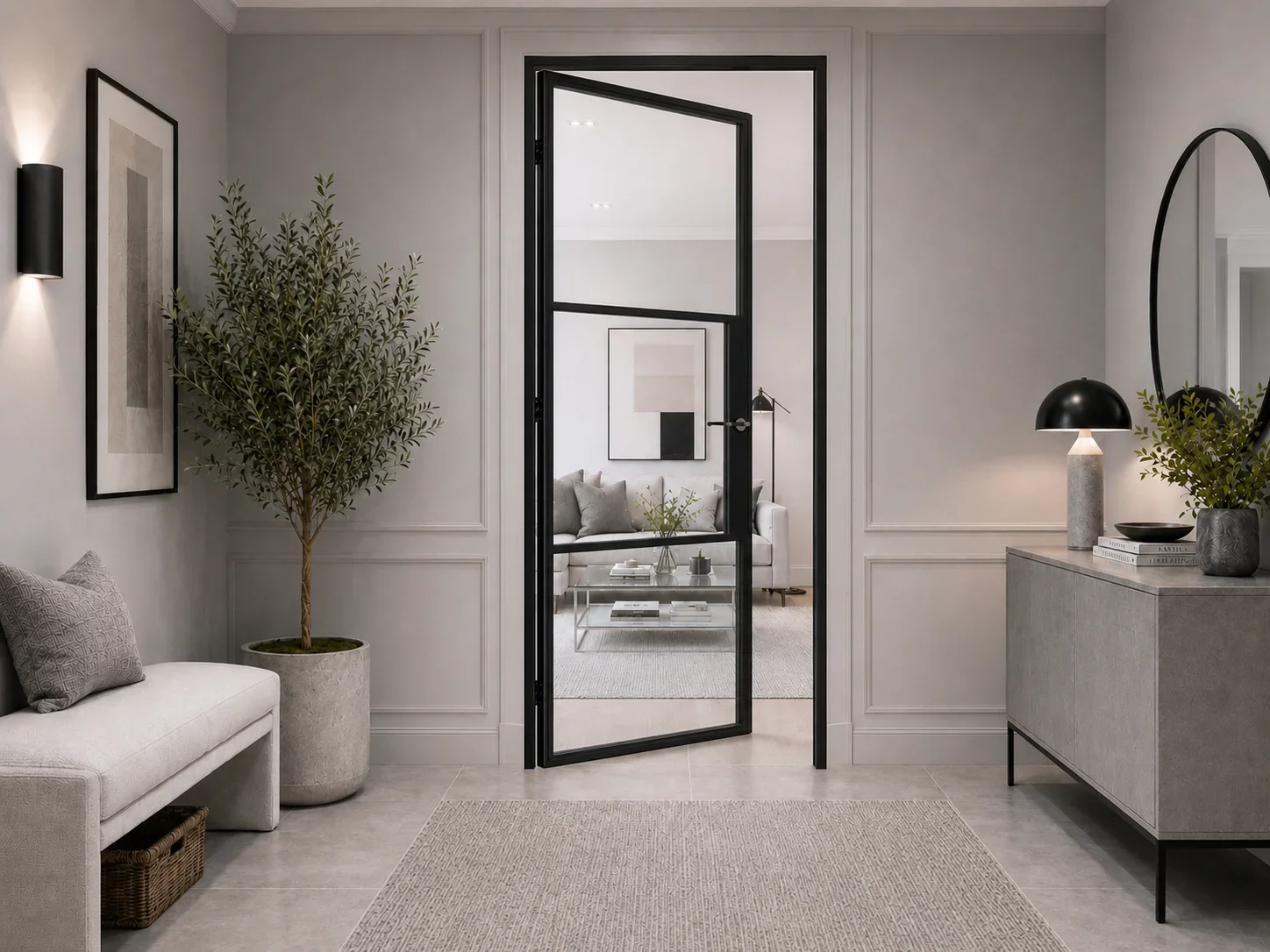
Those extra millimetres matter. Slim aluminium sightlines allow more daylight to pass between rooms and make the divider feel lighter. That is particularly useful between a kitchen and dining room, a hallway and living room, or a home office and the rest of the house.
Timber can still be attractive, but it usually creates a heavier visual boundary.
Aluminium stays stable
Wood responds naturally to changes in moisture and temperature. It can expand, contract, twist or swell, particularly in rooms with changing humidity.
That movement may cause a timber door to bind in the frame during wetter months or leave a larger gap when conditions become dry. Well-made and properly finished timber reduces the risk, but it cannot remove the material's natural movement completely.
Aluminium is dimensionally stable under normal indoor conditions. It does not absorb moisture, swell or shrink in the same way. A correctly manufactured and installed aluminium door should therefore retain its alignment more consistently.
Maintenance is simpler
A powder-coated aluminium frame normally needs little more than occasional cleaning with a soft cloth and mild soapy water.
Timber may require repainting, staining or refinishing as its surface wears. Chips and scratches can expose the material beneath, while moisture can affect an inadequately protected edge.
If you like the ritual and character of maintaining natural timber, that may not be a disadvantage. If you want a door that asks very little of you, aluminium is the easier option.
Which material gives more design freedom?
Aluminium internal doors can be configured as single doors, French doors, sliding doors, pivot doors or wider glazed screens. Decorative horizontal and vertical bars can create anything from a simple contemporary grid to a heritage-inspired steel look.
Clear glass maximises the sense of connection. Reeded, satin or frosted glass can add privacy while still allowing light to move through the home. Acoustic laminated options may also be available where sound control matters.
Timber offers its own freedom through different species, stains, mouldings and panel styles. It is especially effective where a project calls for a solid door, visible grain or traditional joinery.
Is aluminium always better than timber?
No material wins every comparison.
Choose timber when natural grain, traditional detailing or a solid opaque door is central to the scheme. Choose aluminium when your priorities are slim sightlines, a high proportion of glass, dimensional stability and low maintenance.
For a modern glazed room divider, aluminium is usually the more practical long-term choice. It keeps the frame visually quiet so the light, view and proportions of the rooms do the talking.
The verdict
Aluminium internal doors are generally better suited to contemporary glazed openings because they are slimmer, more stable and easier to maintain than traditional timber frames. Timber remains a strong aesthetic choice for period joinery and solid doors, but it cannot match aluminium's combination of minimal framing and lasting stability.
Configure a made-to-measure aluminium internal door and compare the available layouts, finishes and glass options with live pricing at SmartaView aluminium internal doors.
Frequently asked questions
Do aluminium internal doors feel cold?
Internal doors do not face the weather in the way an external door does. Their role is primarily to divide rooms, manage light and support the interior design.
Can aluminium internal doors provide privacy?
Yes. Reeded, satin, frosted and other obscured glass options can diffuse the view while allowing daylight through.
Are aluminium internal doors made to measure?
SmartaView internal doors are manufactured to the dimensions and specification selected for the project. Measure carefully because bespoke products cannot normally be returned for a change of mind.
Plan your internal door project
Explore our clear, reeded and satin glass comparison and made-to-measure internal door guide. Before ordering, follow our measuring guide and confirm the exact dimensions for your chosen configuration. If you need help choosing, contact SmartaView with your project details.
Next steps for your project
At SmartaView, we can help you configure aluminium internal doors to suit your needs. Explore aluminium internal doors and see your options, or chat with our team on WhatsApp if you would like help choosing.
For an accurate order, use our measuring guide and confirm the exact finished dimensions required for your chosen product. Share your project details, preferred finish, delivery postcode and intended timescale with our team. Any rough dimensions are for initial guidance only, not manufacture.
SmartaView supplies the products only and does not provide installation. Confirm measurements and suitability with the person responsible for fitting before ordering.
Author at Smartaview, writing about aluminium glazing, home improvements and the buying process.