RAL Colours for Aluminium Doors: A Complete Guide
From anthracite grey and black to softer neutrals and dual-colour finishes, this guide explains how RAL colours work and how to choose the right finish for your aluminium doors.
One of the biggest advantages of aluminium doors is the amount of choice available when selecting the frame colour.
Unlike uPVC and many composite products, which are usually offered in a relatively limited collection of standard finishes, powder-coated aluminium can be produced in an extensive range of colours.
This gives you the freedom to coordinate bifold doors, sliding doors, entrance doors and windows with the architecture of your home. However, having more choice can also make the decision more difficult.
Should you choose anthracite grey or black? Should the inside and outside match? Will the colour look the same in direct sunlight? And what does the RAL number actually mean?
This guide explains how the RAL colour system works, introduces some of the most popular colours for aluminium doors and covers the practical details to consider before approving your finish.
What Is a RAL Colour?
RAL is a widely used colour-matching system that assigns a reference number to a defined colour.
It is used across architecture, manufacturing, powder coating, paint production and construction to help different companies communicate colour requirements more accurately.
For example:
-
RAL 7016 refers to Anthracite Grey
-
RAL 9005 refers to Jet Black
-
RAL 9016 refers to Traffic White
-
RAL 7030 refers to Stone Grey
Using a recognised reference is more reliable than describing a colour simply as “dark grey” or “warm white”, which different suppliers may interpret differently.
However, a RAL number does not guarantee that every finished product will appear completely identical. The material, coating type, gloss level, surface texture, production process and lighting can all affect how the colour is perceived.
How Are Aluminium Doors Coloured?
Aluminium doors are normally finished using powder coating rather than conventional liquid paint.
The general process involves:
-
Preparing and cleaning the aluminium surface
-
Applying a dry powder electrostatically
-
Heating the coated aluminium in an oven
-
Curing the powder into a durable finished surface
A quality powder-coated finish provides:
-
Consistent colour across the frame
-
Resistance to everyday weather exposure
-
A surface that does not require routine repainting
-
A broad selection of colours and textures
-
A clean architectural appearance
The durability of the finish still depends on the quality of the aluminium preparation, coating process and ongoing maintenance.
Are All RAL Colours Available on Every Door?
No. Although the RAL system contains a very large selection of colours, the exact options available will depend on the door system and manufacturer.
A product may be offered with:
-
A core range of popular colours
-
An extended collection available for an additional charge
-
Special-order RAL colours
-
Textured or metallic finishes that do not correspond directly to a standard RAL reference
-
Restrictions on dual-colour or rapid-delivery orders
Some colours may also have longer manufacturing lead times because they are not included in the manufacturer’s regular production schedule.
Always confirm colour availability, finish type, additional cost and expected lead time for the exact product you intend to order.
RAL 7016 Anthracite Grey
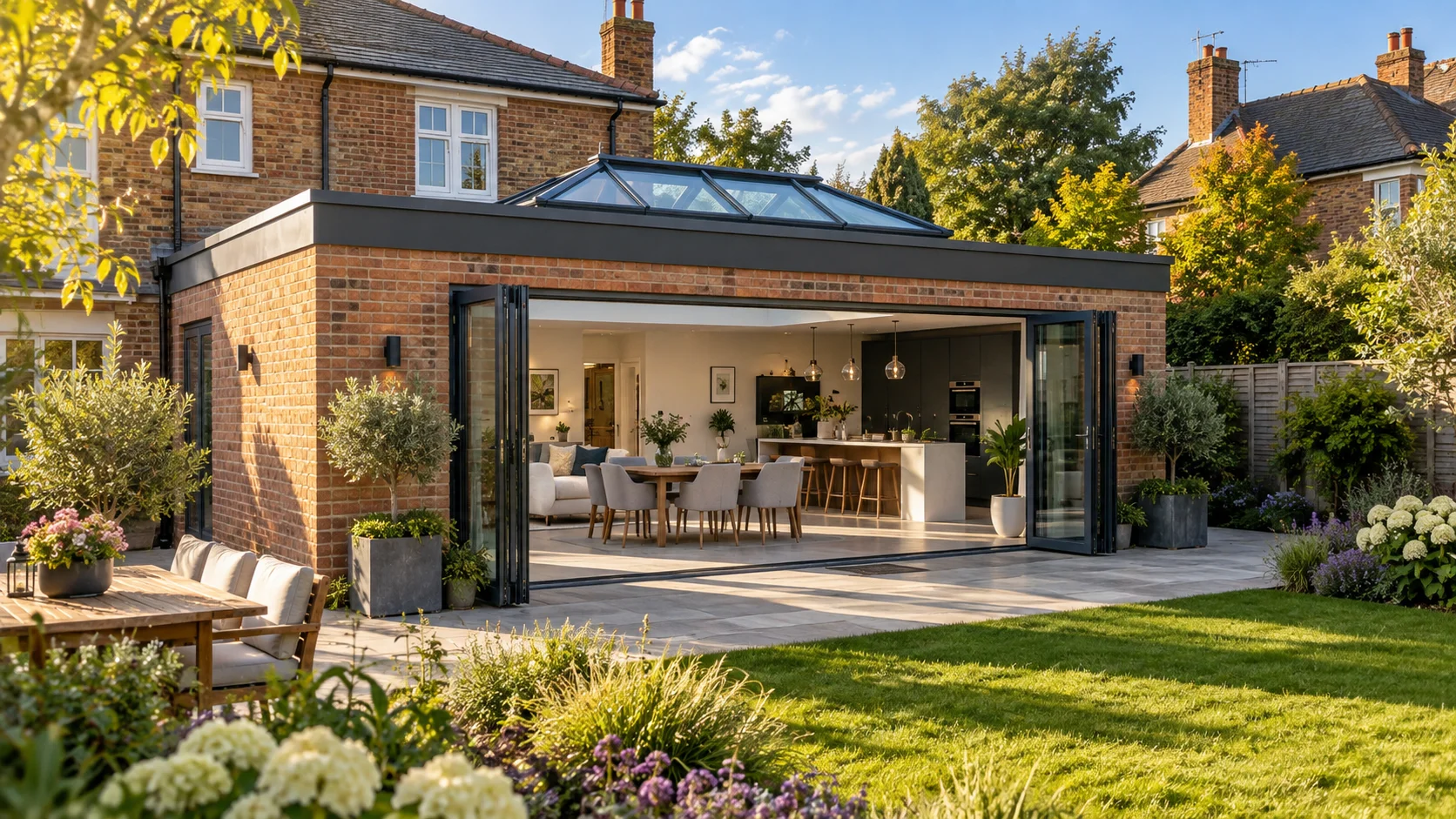
Anthracite Grey is one of the most popular aluminium frame colours in the UK.
It is a deep charcoal grey with a cooler appearance than many softer architectural greys. It creates a strong outline around the glass without producing quite as much contrast as pure black.
RAL 7016 works particularly well with:
-
White or pale render
-
Red or buff brick
-
Natural timber cladding
-
Stone elevations
-
Slate and dark roof finishes
-
Contemporary extensions
It is often selected for bifold and sliding doors because the dark frame visually recedes against the glass, helping the glazed area feel larger.
Anthracite grey is a relatively safe choice when you want a contemporary result without committing to the sharper appearance of jet black.
RAL 9005 Jet Black
Jet Black creates a bold and highly architectural appearance.
It provides strong contrast against pale render, brick and internal walls, making every frame and sightline clearly visible.
Black aluminium doors work particularly well in:
-
Minimal contemporary homes
-
Industrial and steel-look interiors
-
Properties using black gutters, fascia or roofline details
-
Extensions containing black kitchen hardware or lighting
-
Homes with matching black aluminium windows
Black is more visually dominant than anthracite grey. This can be a benefit where the frames are intended to form part of the design, but it may feel heavy in a small room containing several dark-framed doors and windows.
Dark colours can also reveal dust, dried rain marks and pollen more readily than some mid-tone finishes, particularly in strong sunlight.
RAL 9016 Traffic White
Traffic White is a clean, bright white commonly used for architectural frames and building products.
It works well where the doors need to coordinate with:
-
White-rendered properties
-
Existing white windows
-
Traditional elevations
-
Light internal walls and ceilings
-
Coastal-inspired interiors
White frames reflect more light than dark finishes and can feel less dominant when viewed from inside the room.
However, white aluminium may require more frequent cleaning in urban environments or locations exposed to road dirt, algae and airborne pollution.
RAL 9010 Pure White
RAL 9010 Pure White is slightly warmer than the brighter RAL 9016 Traffic White.
It may coordinate more naturally with:
-
Warm white internal paint
-
Traditional plaster and joinery
-
Period properties
-
Cream or stone-coloured exteriors
-
Interiors using warmer neutral finishes
The difference between two white shades can be more noticeable than expected when they are placed directly beside one another.
If the door needs to match existing windows, render or internal joinery, compare physical samples rather than relying only on the colour name.
Softer and Warmer Greys
Anthracite is not the only grey available. Softer greys can provide a more understated appearance and often work particularly well with rural, Scandinavian-inspired and traditional architecture.
RAL 7030 Stone Grey
Stone Grey is lighter and warmer than Anthracite Grey. It can complement natural stone, timber and softer interior palettes without creating a strong dark outline around the glazing.
RAL 7032 Pebble Grey
Pebble Grey is a light, warm neutral that sits between grey and beige. It may suit properties using pale brick, limestone, cream render or natural-toned cladding.
RAL 7044 Silk Grey
Silk Grey is another pale neutral that can create a soft, minimal frame finish.
It works well where white would feel too stark but a dark grey would be visually dominant.
Lighter greys can also blend more subtly into a planted garden setting, allowing the glass and surrounding landscape to remain the main features.
Dark Grey Alternatives
Several dark greys provide alternatives to RAL 7016.
RAL 7021 Black Grey
Black Grey sits between anthracite and jet black. It creates a deep architectural finish without appearing quite as absolute as RAL 9005.
RAL 7024 Graphite Grey
Graphite Grey is another dark, contemporary option. Depending on the coating and lighting, it may appear slightly softer or more neutral than Anthracite Grey.
These differences can be subtle on a colour chart but much more noticeable across a complete set of doors.
Always view the colours at a useful scale before deciding.
Green Aluminium Doors
Green finishes can work particularly well with rural homes, garden-facing doors and properties using natural materials.
Depending on the architecture, suitable colours may include:
-
Muted olive greens
-
Deep forest greens
-
Grey-green architectural tones
-
Traditional heritage-inspired greens
A muted green can coordinate with planting and timber cladding more naturally than anthracite or black.
For an entrance door, a deeper green can provide character without appearing excessively bright or trend-led.
Availability varies significantly between manufacturers, so check whether your preferred green is part of the standard or special-order range.
Blue Aluminium Doors
Blue is most commonly used for aluminium entrance doors, although it can also create a distinctive finish for windows and garden doors.
Dark navy and grey-blue colours tend to be easier to coordinate with brick, render and stone than bright primary blues.
Blue may be especially effective where the property has:
-
Coastal architecture
-
Pale render
-
Warm red brick
-
Grey slate or zinc roof details
-
Matching blue-grey joinery
Because blue can appear very different under bright sun and a grey UK sky, physical samples are particularly important.
Bronze and Metallic Finishes
Bronze, copper, champagne and gunmetal-inspired finishes have become increasingly popular for design-led aluminium products.
They introduce warmth that is not present in black and grey frames and can complement:
-
Red brick
-
Natural stone
-
Timber cladding
-
Brass or bronze internal hardware
-
Period and Art Deco-inspired interiors
Not every metallic or bronze finish has a direct RAL equivalent. Many are proprietary powder-coat colours with their own manufacturer reference.
Metallic finishes can also change noticeably depending on viewing angle and lighting, so they should always be assessed using a coated metal sample.
What Is a Dual-Colour Finish?
A dual-colour finish allows the internal and external faces of an aluminium frame to be produced in different colours.
One of the most common combinations is:
-
Anthracite grey externally
-
White internally
This allows the exterior of the doors to coordinate with dark windows, roof details and contemporary materials while the internal face works with light walls and ceilings.
Other useful combinations include:
-
Black externally with warm grey internally
-
Dark green externally with white internally
-
Bronze externally with a neutral internal finish
-
Grey externally with black internally for an industrial-style interior
Dual-colour frames may cost more and require a longer manufacturing lead time than a single-colour product.
They may also affect the available hinge, seal and hardware colours, so review how the complete door will look rather than considering only the main aluminium profiles.
Should the Inside and Outside Match?
Matching internal and external colours creates a consistent finish and is often the simplest option.
This works particularly well where:
-
The same dark colour suits both the exterior and interior
-
The frames are intended to form a visible architectural feature
-
Internal hardware and cabinetry already use similar finishes
-
The project uses a deliberately limited material palette
Dual colour may be more suitable where the exterior and interior have very different design requirements.
For example, anthracite grey may coordinate with external roofline details while appearing too dark against a traditional cream kitchen.
There is no requirement for the two sides to match. The correct decision is the one that makes the doors feel connected to both environments.
Should Doors and Windows Be the Same Colour?
Matching aluminium doors and windows can create a coherent appearance across the property.
This is especially effective where several products are visible on the same elevation, such as:
-
Bifold doors with adjoining kitchen windows
-
Sliding doors beneath a gable window
-
A front door with nearby casement windows
-
Roof lights viewed alongside rear garden doors
However, matching the RAL reference alone may not produce a perfect visual match.
Differences can be caused by:
-
Different manufacturers or powder suppliers
-
Matt, satin, gloss or textured finishes
-
Different aluminium preparation and coating processes
-
The angle and orientation of each surface
-
The age and condition of existing products
-
Normal variation between production batches
If an exact match is important, use the same manufacturer, colour reference and finish specification where possible.
Why the Same RAL Colour Can Look Different
A RAL colour is a defined reference, but our perception of that colour changes according to its surroundings.
The same coated aluminium sample may look:
-
Lighter in direct sunlight
-
Darker beneath an overhang
-
Cooler beside blue-grey stone
-
Warmer beside red brick or timber
-
More reflective in a smooth finish
-
Softer in a textured or matt finish
Large areas of colour can also feel much stronger than a small printed swatch.
This is why choosing from a screen or brochure alone is risky. Screens are affected by brightness, calibration and surrounding colours, while printed brochures cannot reproduce powder coating precisely.
Matt, Satin, Gloss or Textured?
The finish level can affect the appearance almost as much as the RAL number.
Matt Finish
Matt finishes provide a low-reflection, contemporary appearance.
They tend to make dark colours appear softer and are popular for modern bifold, sliding and entrance doors.
Satin Finish
Satin finishes provide a moderate amount of reflection and sit between matt and gloss.
They can be easier to clean than very textured surfaces while avoiding the highly reflective appearance of a gloss coating.
Gloss Finish
Gloss finishes reflect more light and can make colours appear brighter and more intense.
They may suit traditional or decorative entrance doors but are less commonly selected for minimal contemporary glazing.
Textured Finish
Textured powder coatings provide a tactile surface and can give aluminium a more substantial architectural appearance.
They may also disguise light dust, fingerprints and small surface marks more effectively than a completely smooth finish.
However, textured surfaces can collect dirt within their fine pattern and may require a different cleaning approach.
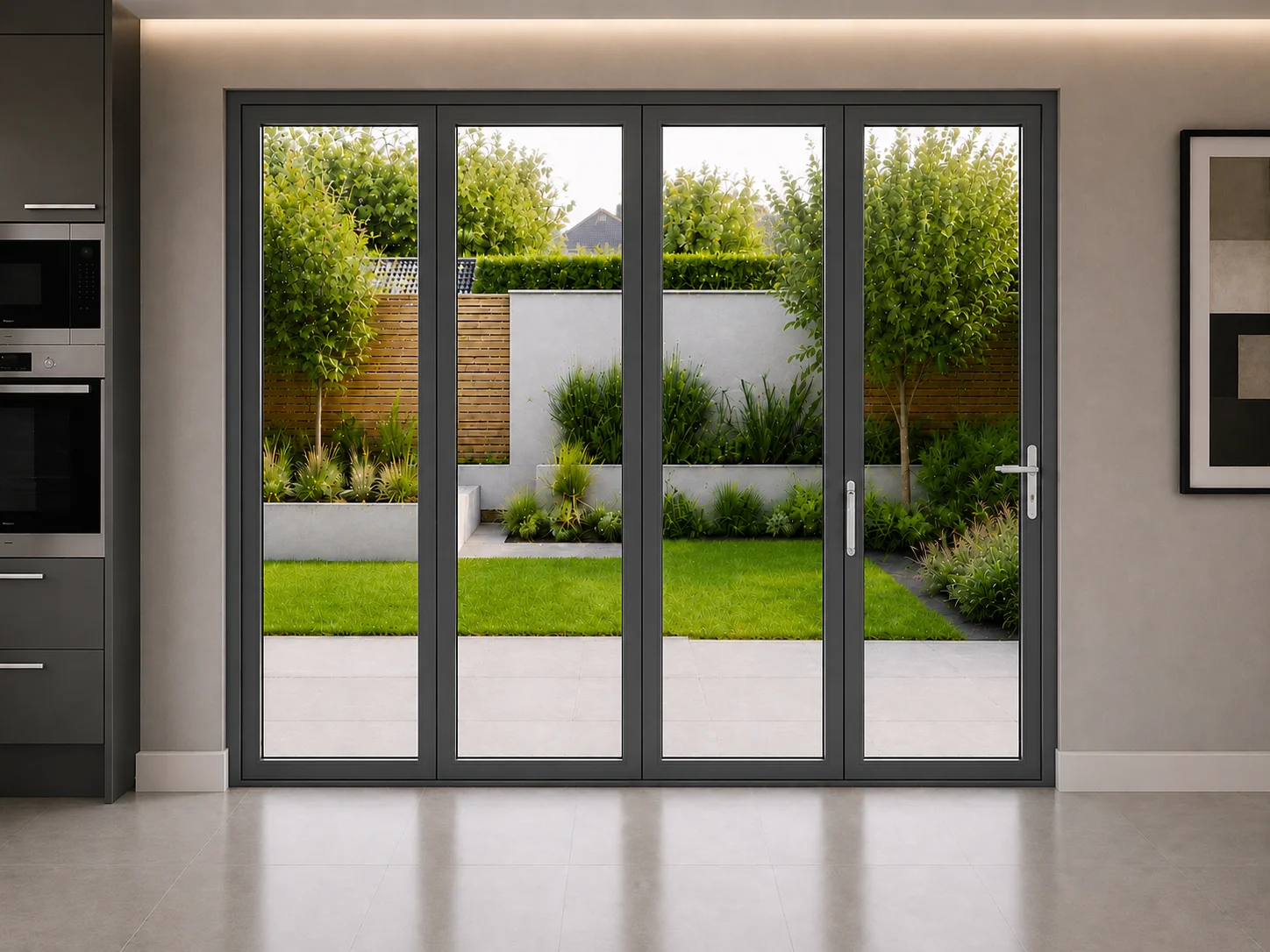
Choosing a Colour for Bifold Doors
Bifold doors contain several individual panels, so their frame colour is repeated across multiple vertical sections.
Dark colours tend to make these sightlines visually recede against the glass, particularly when the room beyond is also relatively dark.
When choosing a bifold-door colour, consider:
-
The number of panels and resulting sightlines
-
The colour of neighbouring windows
-
The external render, brick or cladding
-
The internal walls, flooring and kitchen finishes
-
How the stacked panels will look when open
-
The colour of the hinges, handles and door catches
Anthracite grey and black remain popular because they emphasise the slim aluminium construction and coordinate with a broad range of contemporary materials.
Choosing a Colour for Sliding Doors
Sliding doors normally contain fewer but larger panels than bifolds.
Their frame colour is therefore concentrated around the outer frame and the vertical meeting sections.
Dark colours can make slim meeting stiles appear especially discreet against the glass, reinforcing the minimal appearance of the doors.
Lighter colours may be more appropriate where:
-
The room has pale traditional finishes
-
The property uses existing white windows
-
The doors face a shaded elevation
-
A softer, less graphic appearance is preferred
Because sliding panels can be large, pay attention to the frame colour’s relationship with the surrounding wall when the doors are both open and closed.
Choosing a Colour for an Aluminium Front Door
An entrance door provides an opportunity to select a more distinctive colour than you might choose for an entire elevation of windows.
Possible approaches include:
-
Matching the door to the aluminium windows
-
Using a contrasting colour as a focal point
-
Choosing a traditional green, blue or warm neutral
-
Using bronze or metallic finishes for a premium entrance
-
Selecting different internal and external colours
Also consider how the colour works with the handle, letter plate, knocker, side lights and surrounding frame.
A dark door with a long stainless-steel bar handle creates a very different effect from the same door fitted with black hardware.
Consider the Direction the Doors Face
The orientation of the doors affects how the colour appears throughout the day.
South-Facing Doors
South-facing frames receive stronger direct sunlight. Colours may appear brighter and warmer, and dust or dried rain marks may be more visible.
North-Facing Doors
North-facing frames receive cooler and more indirect light. Dark grey colours can appear almost black, while pale greys may take on a cooler blue tone.
East-Facing Doors
East-facing doors receive stronger light in the morning and softer light later in the day.
West-Facing Doors
West-facing doors can receive warm, low-angle afternoon and evening sunlight, which may bring out warmer undertones within grey, green and bronze finishes.
Move the colour sample around the proposed opening and look at it at different times of day.
Choosing Colours for Brick, Render and Cladding
Red Brick
Red brick works well with anthracite grey, black, bronze, deep green and warm grey.
Very cool blue-greys may contrast sharply with warmer bricks, so test the combination carefully.
Buff or Pale Brick
Pale brick can coordinate with anthracite, black, stone grey, pebble grey and muted greens.
White Render
White render provides a neutral background for almost any frame colour.
Black and anthracite create strong contrast, while pale grey and white provide a softer result.
Coloured Render
When matching coloured render, compare physical samples. Two colours that look similar on screen can clash when viewed together at full scale.
Timber Cladding
Natural timber works well with dark grey, black, bronze, warm grey and muted green.
Consider how the timber will weather over time. Fresh cedar may appear warm and orange, while aged cladding can become silver-grey.
Stone
Use the undertone within the stone as a guide. Warm limestone often suits bronze, pebble grey and warmer whites, while slate and blue-grey stone coordinate naturally with graphite and anthracite finishes.
Think About the Interior as Well as the Exterior
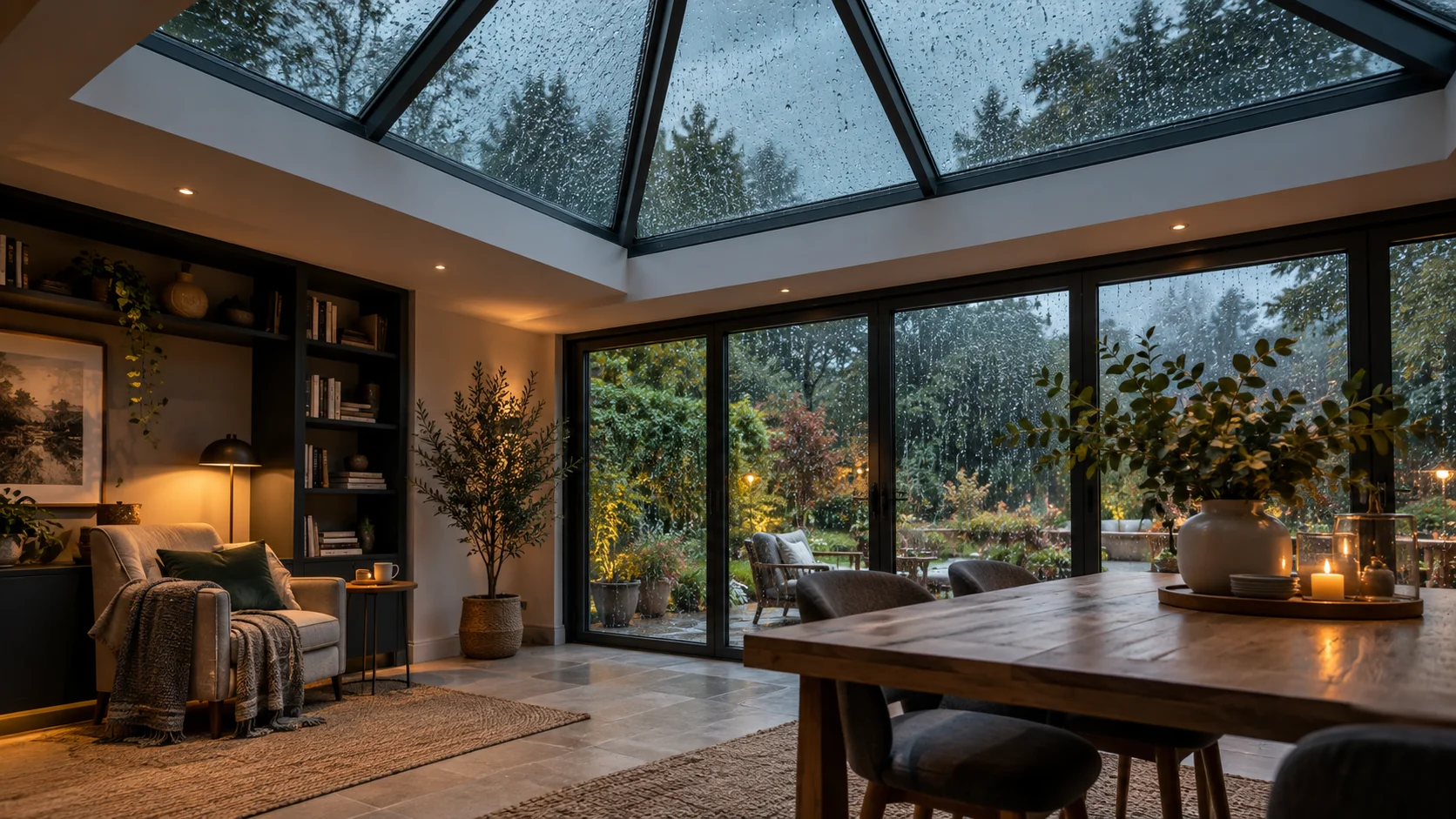
Garden doors are usually viewed from inside the home far more often than from the garden.
Before choosing the frame colour, consider:
-
The kitchen cabinet colour
-
Worktops and splashbacks
-
Internal wall paint
-
Flooring
-
Light fittings
-
Handles and other metal finishes
-
Internal glazed doors and partitions
Black frames may look excellent beside black kitchen hardware but feel disconnected from a traditional cream interior.
Similarly, white frames may blend into pale walls but provide less architectural definition than a darker colour.
Where one colour cannot satisfy both environments, a dual-colour frame may provide the best solution.
Colour Consistency Across a Larger Project
If your renovation includes several aluminium products, create a written finish schedule before ordering.
Record:
-
The RAL or manufacturer colour reference
-
The coating manufacturer where known
-
The gloss level
-
Whether the surface is smooth or textured
-
The internal colour
-
The external colour
-
The hardware and hinge colours
Use the same written specification when ordering bifolds, sliders, windows, entrance doors and roof glazing.
Simply writing “anthracite grey” is not enough. One supplier may interpret this as RAL 7016 matt, while another may use a textured proprietary finish with a noticeably different appearance.
Can New Aluminium Match Existing Frames?
It may be possible to achieve a close match, but an exact match is not always realistic.
Existing frames may have changed slightly through:
-
Years of ultraviolet exposure
-
Weathering and pollution
-
Repeated cleaning
-
Differences between the original and current powder batches
The original product may also use a proprietary colour rather than a standard RAL powder.
Where possible, identify the original manufacturer, colour code and finish specification. Then compare a current coated sample directly against the existing frame.
If a perfect match cannot be achieved, choosing an intentional contrasting colour may look better than using a near-match that appears accidental.
Colour, Cost and Lead Time
Popular colours are often included within the standard price and manufacturing schedule.
Special-order colours may involve:
-
An additional coating charge
-
A minimum order value
-
A longer lead time
-
Restrictions on urgent or replacement orders
-
Additional cost for dual-colour production
Do not assume that every RAL colour costs the same or can be supplied within the same period.
Confirm these details before finalising the wider construction programme.
Does a Dark Colour Make Aluminium Doors Hot?
Dark surfaces absorb more solar energy than pale surfaces, so black and dark grey frames can become warmer in direct sunlight.
Aluminium door systems are designed to operate across changing external temperatures, but the product still needs to be manufactured and installed within its permitted dimensions and tolerances.
The colour of the relatively narrow frame sections will normally have less effect on room temperature than:
-
The size and orientation of the glass
-
The glass specification
-
External shading
-
Ventilation
-
The insulation of the surrounding building
For south and west-facing rooms, solar-control glazing is generally a more important overheating consideration than the aluminium frame colour.
Coastal and Exposed Locations
Properties near the coast may expose aluminium frames to salt, wind and moisture.
Ask whether the selected product requires:
-
An enhanced or marine-grade powder-coating specification
-
Corrosion-resistant hardware
-
More frequent cleaning
-
Specific maintenance to preserve the guarantee
The chosen colour does not remove the need for regular cleaning. Salt deposits should be washed away before they accumulate around joints, drainage channels and hardware.
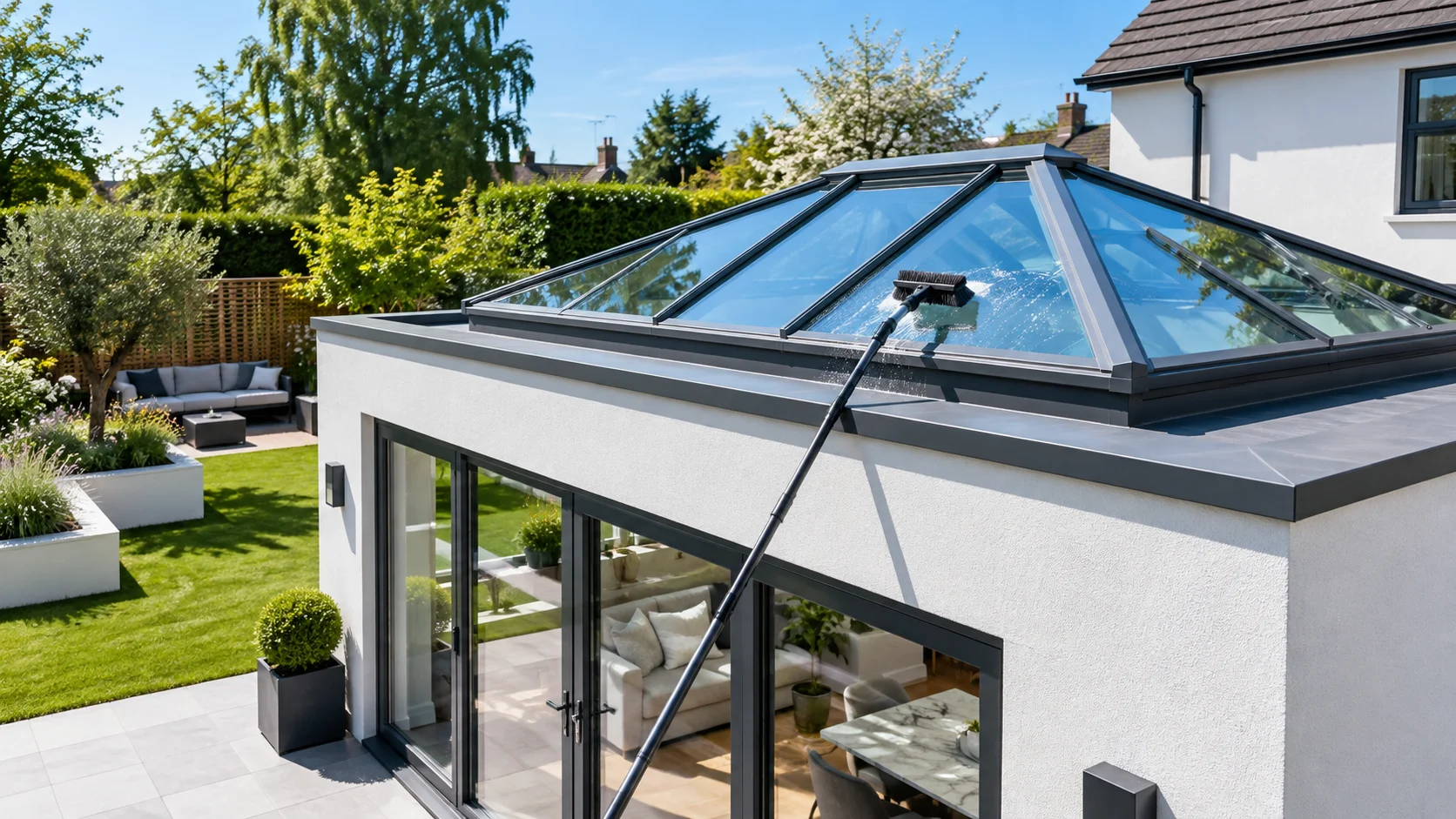
How to Maintain Powder-Coated Aluminium
Powder-coated aluminium is low-maintenance, but routine cleaning helps protect its appearance.
General maintenance should include:
-
Washing frames with clean warm water
-
Using a mild, non-abrasive detergent where required
-
Cleaning with a soft cloth or sponge
-
Rinsing away soap residue
-
Removing bird droppings, tree sap and other deposits promptly
-
Cleaning more frequently in coastal and industrial locations
Avoid:
-
Abrasive pads
-
Strong solvents
-
Acidic or alkaline cleaners
-
Metal scrapers
-
Unapproved polishing compounds
Always follow the cleaning instructions provided for the specific product and finish.
Common Colour-Selection Mistakes
Choosing from a Screen
Phone and computer displays do not reproduce powder-coated colours accurately.
Looking Only at a Small Paper Swatch
A colour can appear much stronger across a full set of doors than it does on a small chart.
Ignoring the Finish Level
RAL 7016 matt and RAL 7016 gloss may look like two noticeably different colours.
Forgetting the Interior
A frame that looks excellent against the external render may feel too dark or cool inside the room.
Assuming Every Anthracite Grey Matches
Different manufacturers may use different powders, textures and gloss levels even when describing the finish using the same colour name.
Not Considering Existing Products
New doors should be assessed alongside windows, roofline materials, gutters, cladding and other visible metalwork.
Choosing a Trend Without Considering the Property
A fashionable black frame may not suit every cottage, period home or traditional interior.
The colour should support the architecture rather than compete with it.
How to Choose Your Final Colour
Before approving the finish:
-
Shortlist two or three colours rather than comparing dozens at once.
-
Request coated aluminium samples, not only printed colour cards.
-
Check the exact matt, satin, gloss or textured finish.
-
Hold each sample against the external brick, render or cladding.
-
View it beside the internal wall, flooring and kitchen finishes.
-
Look at the sample in sun, shade and overcast daylight.
-
Compare it with existing windows and metalwork.
-
Confirm the colour of handles, hinges, seals and accessories.
-
Check whether dual colour is available.
-
Confirm any additional cost or manufacturing lead time.
Do not approve a bespoke door colour until you are confident that you understand how the complete product will look from both inside and outside.
Which Aluminium Door Colour Is Best?
There is no single colour that works for every home.
Anthracite grey remains popular because it is versatile, contemporary and relatively easy to coordinate. Black creates a stronger architectural statement, while white and softer greys suit lighter and more traditional surroundings.
Greens, blues, bronze and metallic finishes can introduce more personality, particularly on entrance doors and design-led projects.
The best colour is the one that relates successfully to:
-
The age and style of the property
-
The external building materials
-
The internal finishes
-
Existing windows and doors
-
The surrounding landscape
-
Your long-term preferences
A carefully chosen finish should still feel appropriate after current colour trends have moved on.
Explore Aluminium Door Colours
Explore SmartaView’s aluminium door range to compare available products, configurations and finishes.
Colour availability varies between door systems, so review the options for the exact bifold, sliding, entrance or internal door you are considering. Where possible, request a physical sample before approving the final specification.
Further reading
- Aluminium Door Colours That Age Well: A Long-Term Guide
- Aluminium Front Doors: Why More Homeowners Are Making the Switch
- Why Aluminium Internal Doors Are Becoming a Design Statement
Choosing a colour? See SmartaView's colours & finishes guide, then browse the range and price your doors online. Need a hand? Speak to our team.
Author at Smartaview, writing about aluminium glazing, home improvements and the buying process.