Bifold Doors with Integrated Blinds: Everything You Need to Know
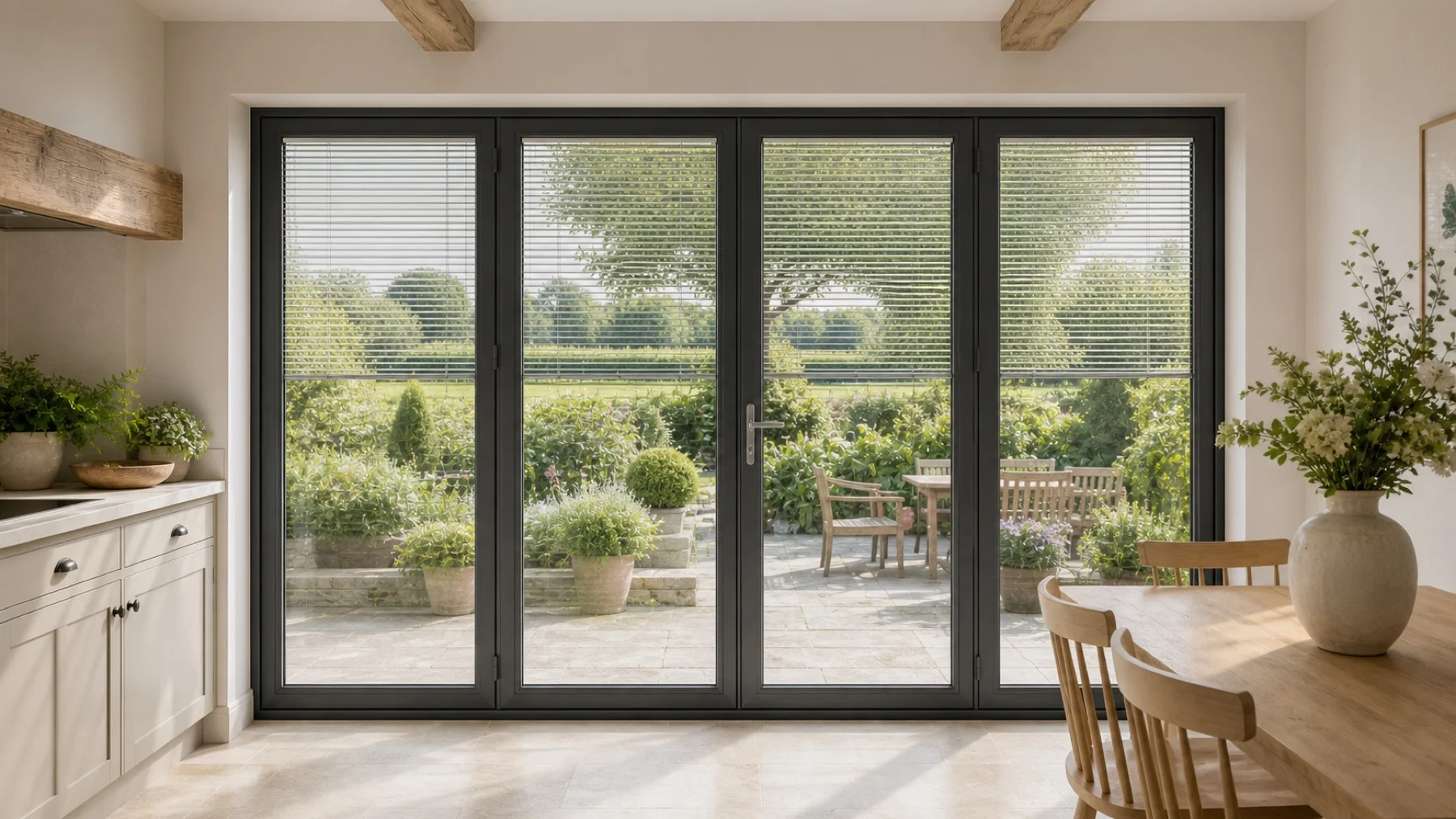
Integrated blinds sit safely between the panes of glass, giving you effortless privacy and light control without interfering with your bifold doors. Discover how they work, their benefits and whether they are worth the additional cost.
If you have ever tried to fit curtains or conventional blinds around bifold doors, you will understand why integrated blinds are so appealing. Standard window coverings can obstruct the opening, catch against the folding panels or take away from the clean appearance of the doors.
Integrated blinds solve these problems by placing the blind inside the sealed glass unit itself. They move with each bifold panel, remain protected from dust and damage, and allow you to control privacy and sunlight without adding separate tracks, brackets or fabric to the room.
What Are Integrated Blinds?
Integrated blinds are venetian-style blinds positioned between the panes of a double or triple glazed unit. Because the blind sits inside the sealed glass cavity, none of its slats, cords or operating components are exposed within the room.
The blinds are normally controlled using a magnetic slider or wand attached to the surface of the glass. Depending on the system, this allows you to:
-
Raise and lower the blind
-
Tilt the slats to control light
-
Close the slats for greater privacy
Some premium systems may also be available with motorised or remote-controlled operation, although the available controls will depend on the selected door and glazing specification.
Why Do Integrated Blinds Work So Well with Bifold Doors?
The folding action of a bifold door makes conventional window coverings difficult to use. Each panel folds back against the next, so anything attached to the internal face of the door can interfere with the hinges, handles or neighbouring panels.
A single roller blind positioned above the complete opening can also be impractical. It must be raised fully before the doors can be opened and may require a substantial cassette across the top of a wide aperture.
Integrated blinds avoid these issues because each blind is contained within its individual glass unit. When the bifold panels move, the blinds move with them. Nothing hangs in front of the doors, and there are no loose cords or fabric panels to manage.
The Main Benefits of Integrated Blinds
Easy Privacy Control
Integrated blinds allow you to adjust the angle of the slats, reducing the view into your home without completely blocking natural light.
This can be particularly useful where bifold doors face a neighbouring property, public footpath, road or overlooked garden. You can maintain a bright room while creating a greater sense of privacy.
Reduced Glare and Solar Gain
Large areas of glazing can allow significant sunlight into south and west-facing rooms. During summer, this can lead to glare on televisions and computer screens or cause the room to become uncomfortably warm.
Partially closing the blind slats can reduce direct sunlight and help control heat build-up. Integrated blinds should not be treated as a replacement for suitable solar-control glazing, but the two options can work together effectively.
A Clean, Uncluttered Appearance
Because the blinds sit within the glass, there are no visible brackets, rails, curtain poles or fabric folds around the door opening.
This creates a clean and minimal appearance that works particularly well with modern aluminium bifold doors. The frames and glass remain the main visual feature rather than the window covering.
No Dusting Required
Conventional venetian blinds collect dust quickly, and cleaning every individual slat can be time-consuming. Integrated blinds remain protected inside the sealed glass unit, so dust, grease and fingerprints cannot reach them.
You only need to clean the inner and outer glass surfaces in the same way you would clean standard bifold door glazing.
Protected from Damage
Traditional blinds can be damaged by children, pets, furniture or repeated contact with the doors. Integrated blinds are protected by glass on both sides, making them particularly practical for busy family homes.
They also avoid exposed cords, which can make them a more convenient option in homes with young children.
Can Integrated Blinds Be Added Later?
Integrated blinds should ideally be specified when the bifold doors are ordered. They are manufactured as part of the sealed glass unit and cannot simply be inserted into an existing pane after installation.
It may be possible to upgrade existing bifold doors by replacing their complete sealed glass units with new units containing integrated blinds. However, compatibility must be checked carefully, and replacing several glass units can be considerably more expensive than specifying the blinds from the outset.
If you think you may want integrated blinds, make the decision before confirming your final door specification.
How Much Do Integrated Blinds Cost?
The additional cost depends on the size and number of glass units, the blind colour, the operating mechanism and the chosen glazing specification.
As a broad guide, integrated blinds may add approximately £150 to £300 per bifold panel. A three-panel bifold could therefore cost roughly £450 to £900 more than the equivalent doors with standard glass.
These figures should only be treated as an indication. Oversized panels, specialist glass, motorised controls and unusual colours may increase the cost.
Although the initial price is higher, integrated blinds remove the need to purchase and install a separate curtain or blind system after the doors have been fitted.
Are There Any Limitations?
They Usually Do Not Provide Complete Blackout
Integrated blinds can significantly reduce daylight, but most systems do not create complete darkness. Small amounts of light can remain visible around the edges of the blind and between the slats.
This is rarely a problem in kitchens, dining rooms or living spaces, but it may make integrated blinds less suitable for bedrooms or media rooms where complete blackout is required.
Repairs Can Be More Involved
The blind mechanism is protected within the glass, which reduces the risk of damage. However, if a sealed mechanism does develop a fault, accessing it is more complicated than repairing a conventional blind.
Depending on the fault and the glazing system, the complete sealed glass unit may need to be repaired or replaced.
There May Be Fewer Style Choices
Integrated blind ranges normally offer a selection of neutral colours such as white, black, grey, silver and cream. However, they do not provide the same choice of fabrics, textures and patterns available with conventional curtains and blinds.
Every Panel Has Its Own Blind
Each glazed bifold panel normally contains its own blind. This gives you flexible control, but it also means the blinds may need to be adjusted individually unless a linked or motorised system is available.
Which Blind Colour Should You Choose?
The blind colour should complement both the aluminium frame and the interior of the room.
-
White or cream creates a light, neutral appearance and reflects more daylight into the room.
-
Grey works well with anthracite and other contemporary frame colours without appearing too dark.
-
Black creates a bold architectural look but may absorb more heat and make the glazing appear visually heavier.
-
Silver provides a clean, modern finish that pairs well with metallic hardware.
Remember that the blind will be visible from both inside and outside when closed. Consider how the chosen colour will look against both your interior finishes and the exterior of your property.
Are Integrated Blinds Worth It?
For many bifold door installations, integrated blinds are worth the additional cost. They are particularly useful where privacy, glare or summer heat are concerns and where maintaining a clean, uncluttered appearance is important.
They are especially worth considering for:
-
South or west-facing bifold doors
-
Homes overlooked by neighbours or a public area
-
Open-plan kitchens with limited room for curtains
-
Family homes where exposed blinds could be damaged
-
Minimal interiors where visible blind fittings would detract from the design
If you need complete blackout, want decorative fabric window coverings or are working to a strict initial budget, a separate blind or curtain system may be more suitable.
Explore Bifold Door Options with SmartaView
SmartaView’s aluminium bifold doors are available with a range of glazing, colour, threshold and configuration choices.
When configuring your doors, consider integrated blinds alongside the glass specification, panel arrangement and direction of opening. Making these decisions together will help ensure the complete system works properly for your room, lifestyle and preferred appearance.
Further reading
- Are Aluminium Bifold Doors Worth It? An Honest Assessment
- How Wide Can Bifold Doors Be? Sizes, Panels & What's Possible
- Open Plan Living: How the Right Doors Change Everything
Ready to see your price? Explore SmartaView's aluminium bifold doors and get an instant online price — free UK mainland delivery, no quote forms. Prefer to talk it through? Speak to our team.
Author at Smartaview, writing about aluminium glazing, home improvements and the buying process.