How to Choose the Right Roof Light for Your Extension
Roof lights can transform an extension, but there are real differences between types, sizes, and specs. Here's how to choose the right one before you order.
A roof light is one of the most effective ways to bring natural light into a single-storey extension, often more effective than additional windows, because light from above is daylight without the harsh directionality of a side-facing window. But roof lights vary significantly in type, performance, and suitability for different applications. Here's how to choose correctly.
The Main Types of Roof Light
Flat Roof Lights (Fixed)
The most common choice for modern flat-roof extensions. A fixed flat roof light sits flush or near-flush with the roof plane, maximising light without requiring operational hardware. Available in any size and double or triple glazed. These are the clean, architectural choice and suit most contemporary single-storey extensions well.
Opening Roof Lights
Flat roof lights with an electrically or manually operated opening panel. The ventilation benefit is significant, warm air rises and exits through the open panel, reducing the need for mechanical ventilation in kitchens and bathrooms. The mechanism adds cost and a slightly larger frame profile. For kitchens, bathrooms, and garden rooms, the ventilation benefit makes opening rooflights worth considering seriously.
Roof Lanterns
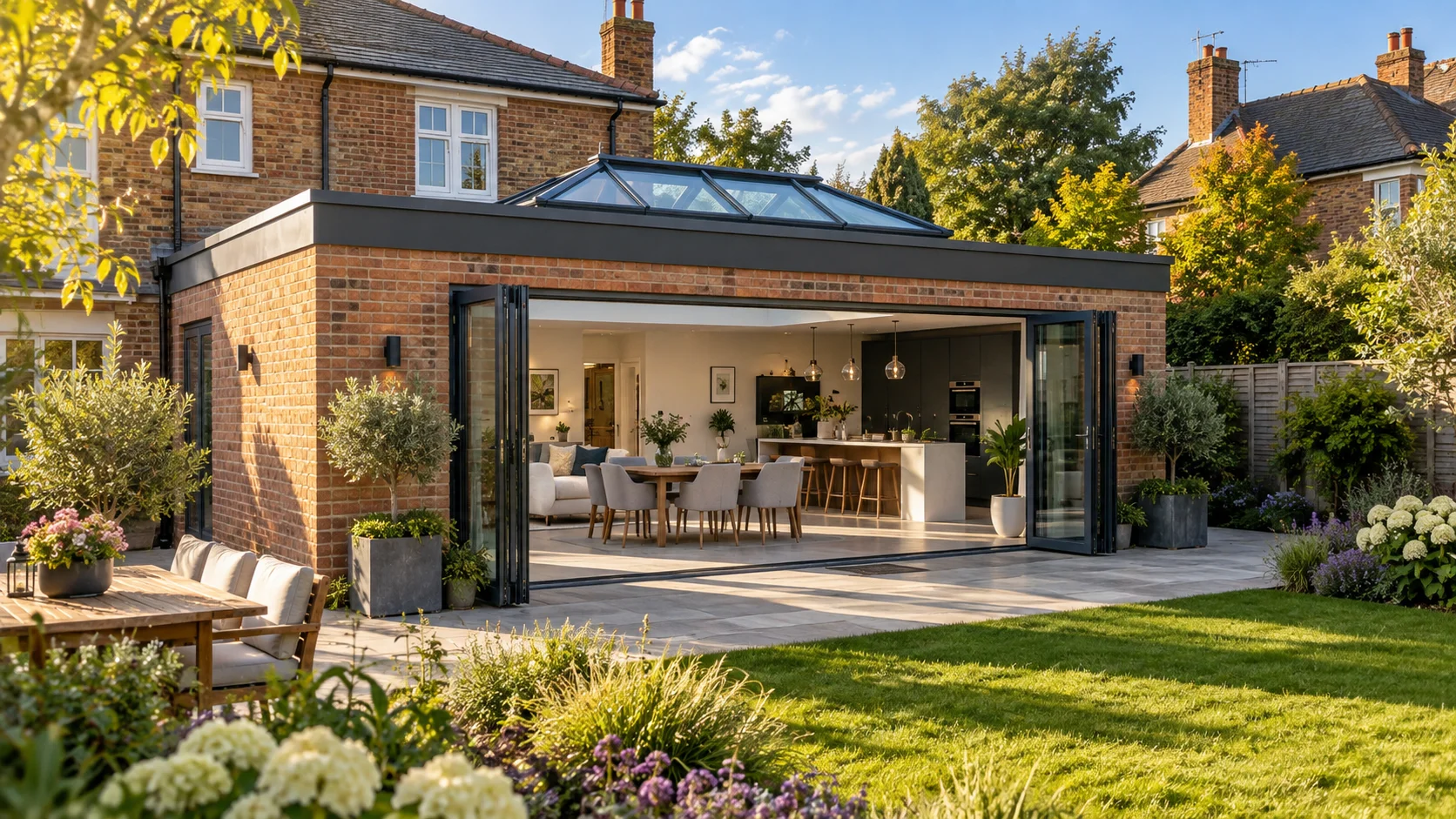
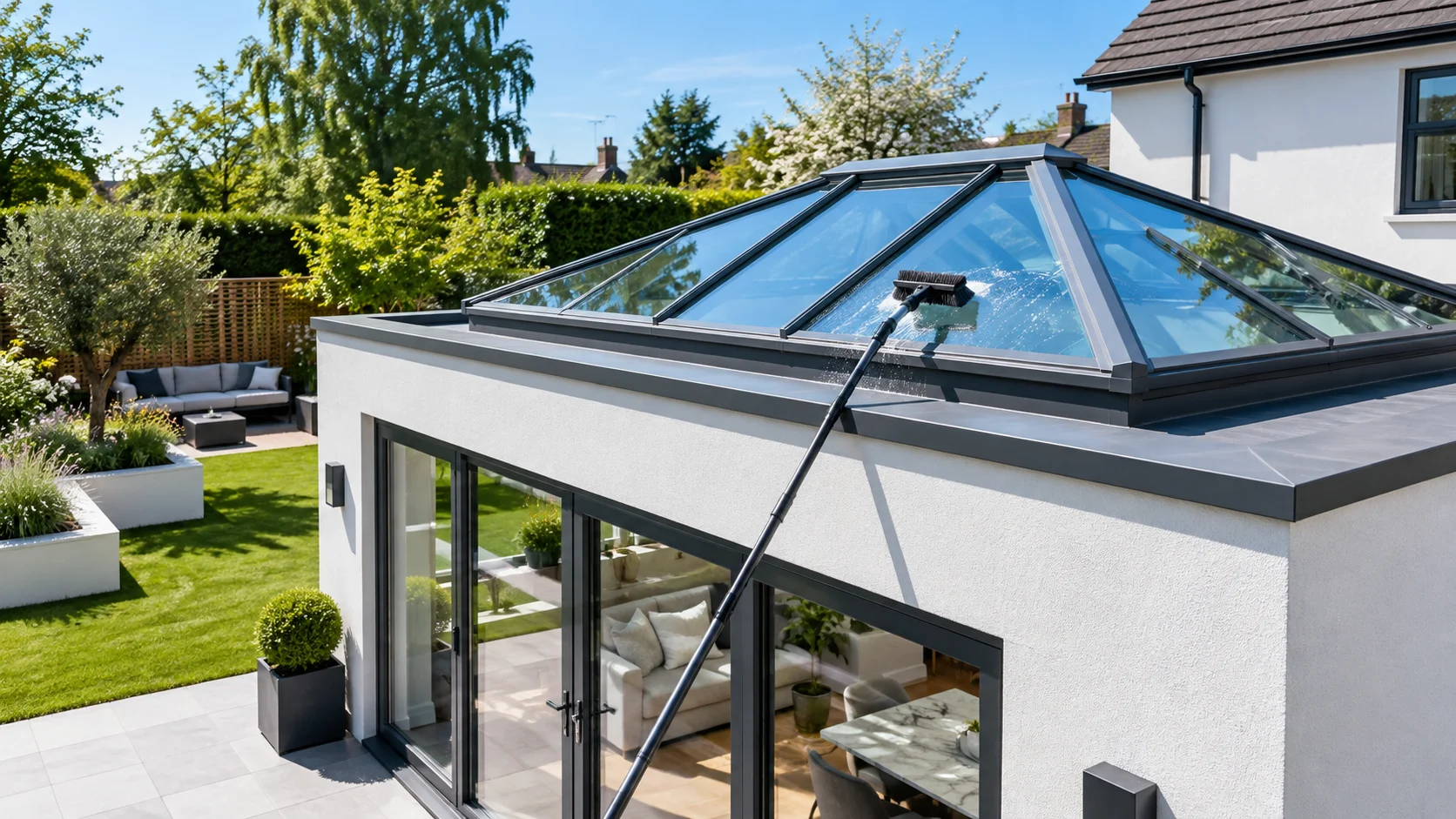
A ridge lantern sitting proud of the roof plane, glazed on all four faces with a pitched profile. Roof lanterns deliver more light than a flat rooflight of equivalent base footprint (because of the angled glazing faces) and add significant architectural drama. More expensive than flat rooflights of equivalent size, they suit orangery-style extensions and rooms where the ceiling detail is a design feature.
Walk-on Roof Lights
Structural glass units designed to be walked on, used in basement light-wells, flat roofs that double as terraces, or ground-level applications. Significantly more expensive and require structural engineering input, but allow light to reach spaces that conventional rooflights cannot serve.
Size: Bigger Is Usually Better
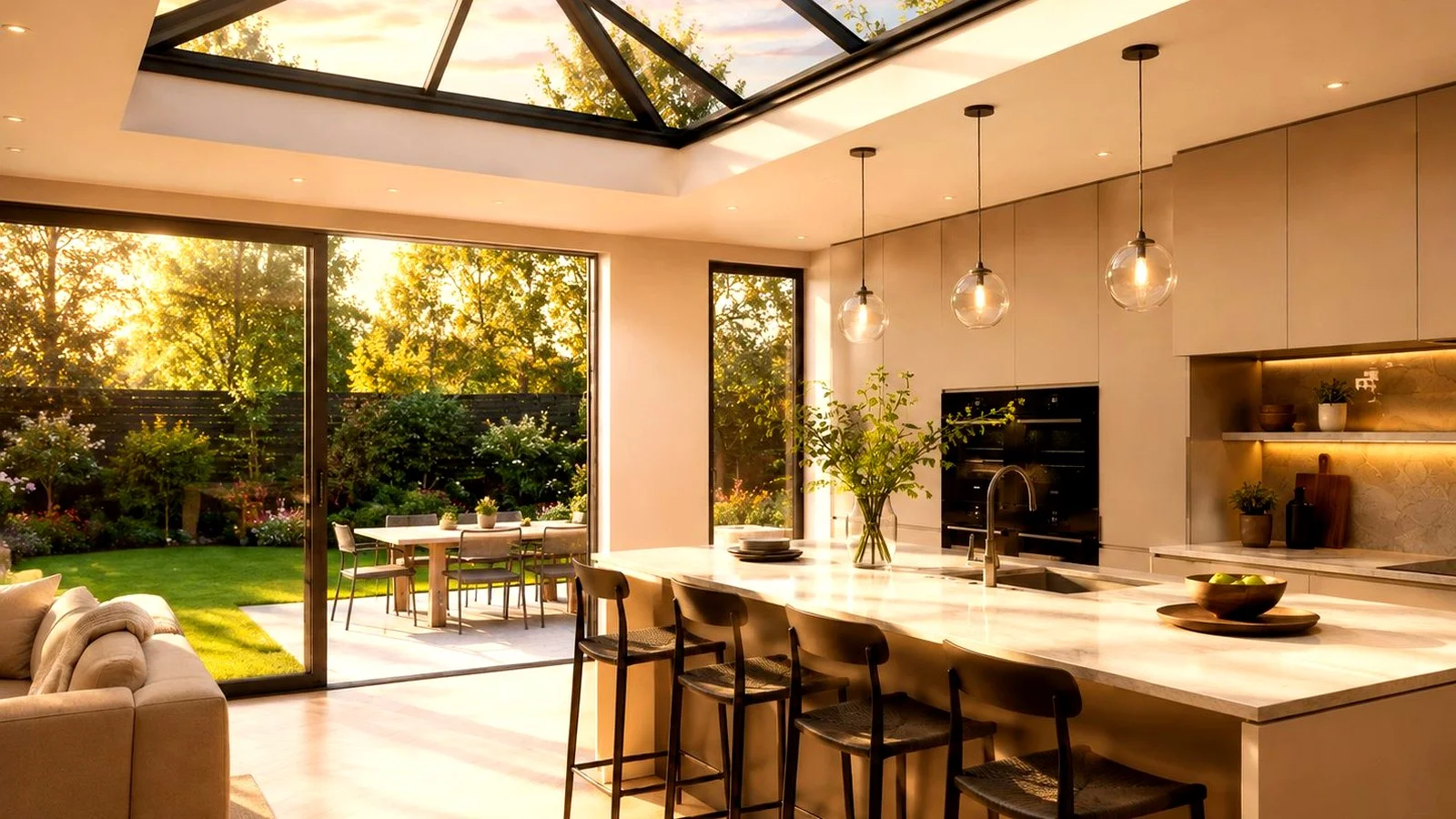
A common mistake is under-sizing the roof light. Daylight through glass is less intense than it appears in showroom conditions, an extension that feels flooded with light through a 1000mm x 1000mm rooflight in summer will feel dim and grey on a November afternoon. A general rule: the roof light area should be at least 15% of the floor area of the room it serves, and 20–25% gives a reliably light result year-round.
Glazing Performance
Roof lights are subject to more solar gain than vertical windows, being horizontal, they face the sky and receive direct sun for much of the day in summer. Specify self-cleaning glass with a solar control coating as standard. This reduces heat build-up, keeps the glass cleaner between cleans, and reduces the risk of the room overheating. Low-e coatings improve thermal performance in winter. For year-round extensions in the UK, both are worth having.
Frame Material
Aluminium is the dominant frame material for quality roof lights, strong enough for large spans, precision-formed for slim sightlines, and available in any RAL colour for design coherence with door frames and window frames. Thermally broken aluminium frames prevent cold condensation on the inner frame face and reduce heat loss in winter.
Installation and Structural Considerations
Any roof light requires a kerb or upstand built from the roof structure, properly waterproofed and detailed at the junction. This is not a DIY operation, improper installation is the cause of virtually all roof light leaks. Ensure your installer is experienced specifically with the type and brand of roof light you're specifying.
Talk to SmartaView About Origin Roof Lights for Your Extension Project
Explore more
Author at Smartaview, writing about aluminium glazing, home improvements and the buying process.