Do Roof Lights Add Value to Your Home?
Roof lights are one of the most cost-effective ways to add light and value to a home. Here's what the evidence says and how to maximise your return.
Natural light is one of the most consistently valued features in UK property. Multiple surveys of estate agents and buyers confirm it, buyers pay more for bright homes, and a dark extension is one of the most commonly cited disappointments when viewing properties. Roof lights, by delivering daylight from above, are one of the most direct ways to address this.
The Evidence on Value
VELUX has commissioned several studies on the relationship between natural light and property value in the UK, their findings consistently show that well-lit properties achieve higher sale prices and sell faster than comparable darker properties. While roof lights are one element of a wider natural light strategy, their contribution is measurable.
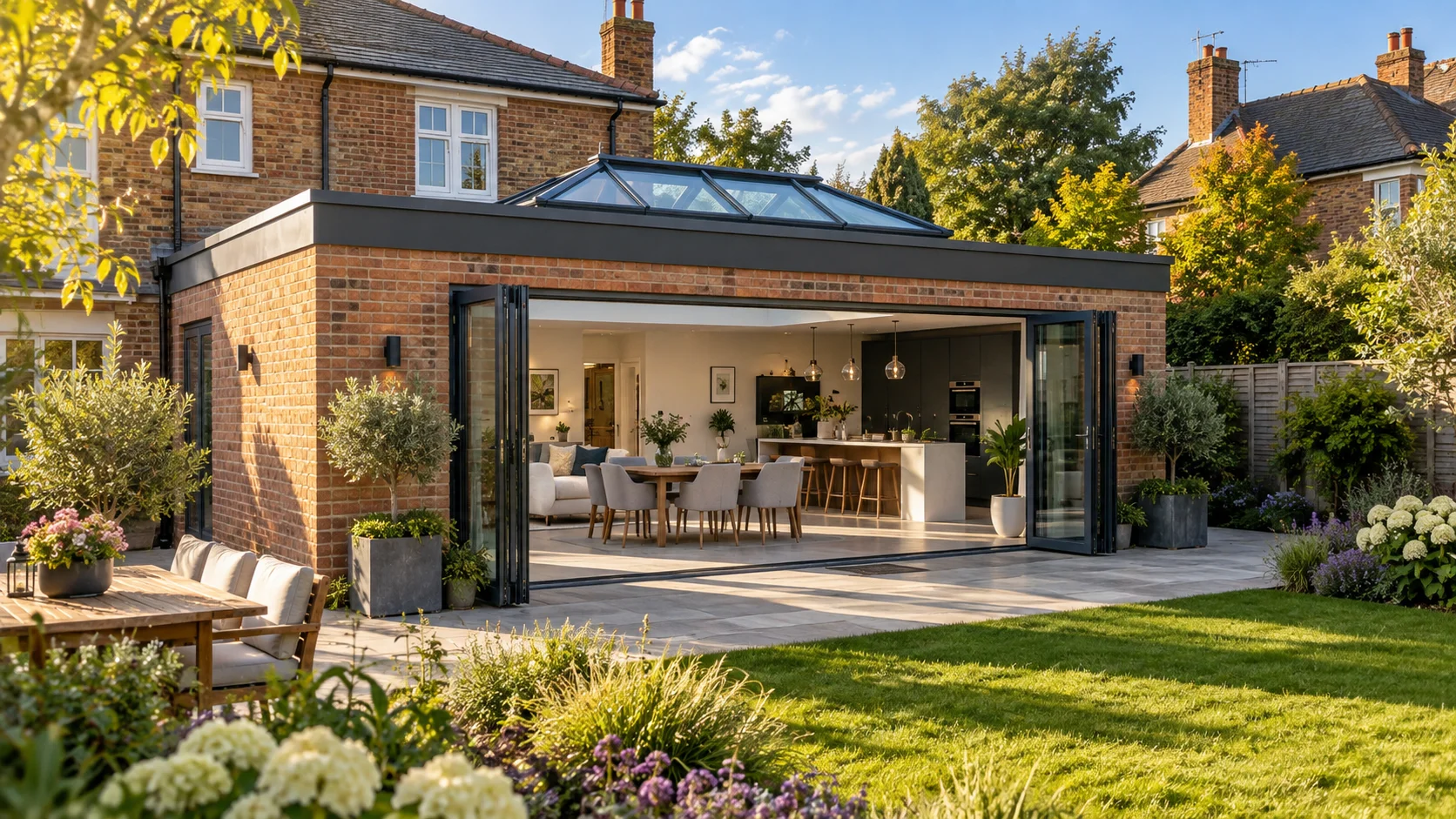
Estate agents generally report that a well-specified roof light in a kitchen extension is among the details they highlight when selling a property. A large flat roof light flooding a kitchen-diner with daylight is an immediate selling point, buyers feel it the moment they walk into the space.
The Cost vs Return Calculation
A quality flat roof light, supply and installation, typically costs between £800 and £3,000 depending on size and specification. A roof lantern for an orangery or larger extension runs £3,000–£8,000 fitted. These are relatively modest investments relative to the total cost of an extension, and their impact on the perceived quality and brightness of the space is disproportionate to their cost.
In general, spending on natural light delivers better return on investment than equivalent spending on kitchen worktops or bathroom tiles, light affects how the entire space feels, not just the surface you're looking at.
When Roof Lights Add the Most Value
• Kitchen extensions where the room would otherwise receive limited daylight from side windows alone
• Single-storey rear extensions where the depth of the room means the back section is far from any window
• Basement conversions, a walk-on roof light at ground level can transform a previously unusable basement
• Loft conversions where dormer windows are constrained by planning, and roof lights provide the primary light source
What Reduces the Return
An incorrectly sized roof light, too small for the room it serves, delivers less perceived benefit than the cost justifies. A leaking roof light creates a negative impression that takes significant remediation to overcome. Poor installation is the most common cause of both underperformance and failure. Specifying from a quality supplier and using an experienced installer eliminates both risks.
The Non-Financial Case
Beyond resale value, the quality of life benefit of natural light in a home is genuinely significant. UK winters are long and grey. A kitchen or living space that is naturally bright from above, even on a dull February afternoon, feels categorically different from one that relies on artificial light. The mood and well-being benefits of daylight are well documented and entirely real, regardless of what the house is ultimately worth.
Contact SmartaView to Discuss Roof Light Specification for Your Project
Explore more
Author at Smartaview, writing about aluminium glazing, home improvements and the buying process.