Do Roof Lights Add Value to Your Home?
Roof lights can make a home brighter, improve the appeal of an extension and strengthen its connection with the outdoors. Discover when they add the most value and which mistakes can reduce their impact.
Natural light is one of the most desirable qualities in a home. Bright rooms tend to feel larger, more welcoming and more comfortable to use throughout the day.
Roof lights provide an effective way to introduce that daylight from above, particularly in extensions where windows and garden doors cannot reach the deepest parts of the room.
But do roof lights genuinely add value to a property?
A well-designed roof light can improve the appeal and perceived quality of a home. However, there is no fixed percentage by which every roof light will increase a property’s selling price. Its contribution depends on the room, product, size, glass, installation and wider quality of the renovation.
How Can a Roof Light Add Value?
A roof light can contribute to property value in several connected ways.
It may:
-
Bring more natural light into a dark room
-
Make an extension feel larger and more open
-
Improve the appearance of a kitchen or living area
-
Create a desirable architectural feature
-
Reduce reliance on artificial lighting during the day
-
Improve ventilation when an opening unit is installed
-
Make a loft, basement or internal room more practical
These improvements can make the property more attractive to future buyers, even where the roof light cannot be assigned a precise financial value on its own.
Natural Light Improves the Experience of a Room
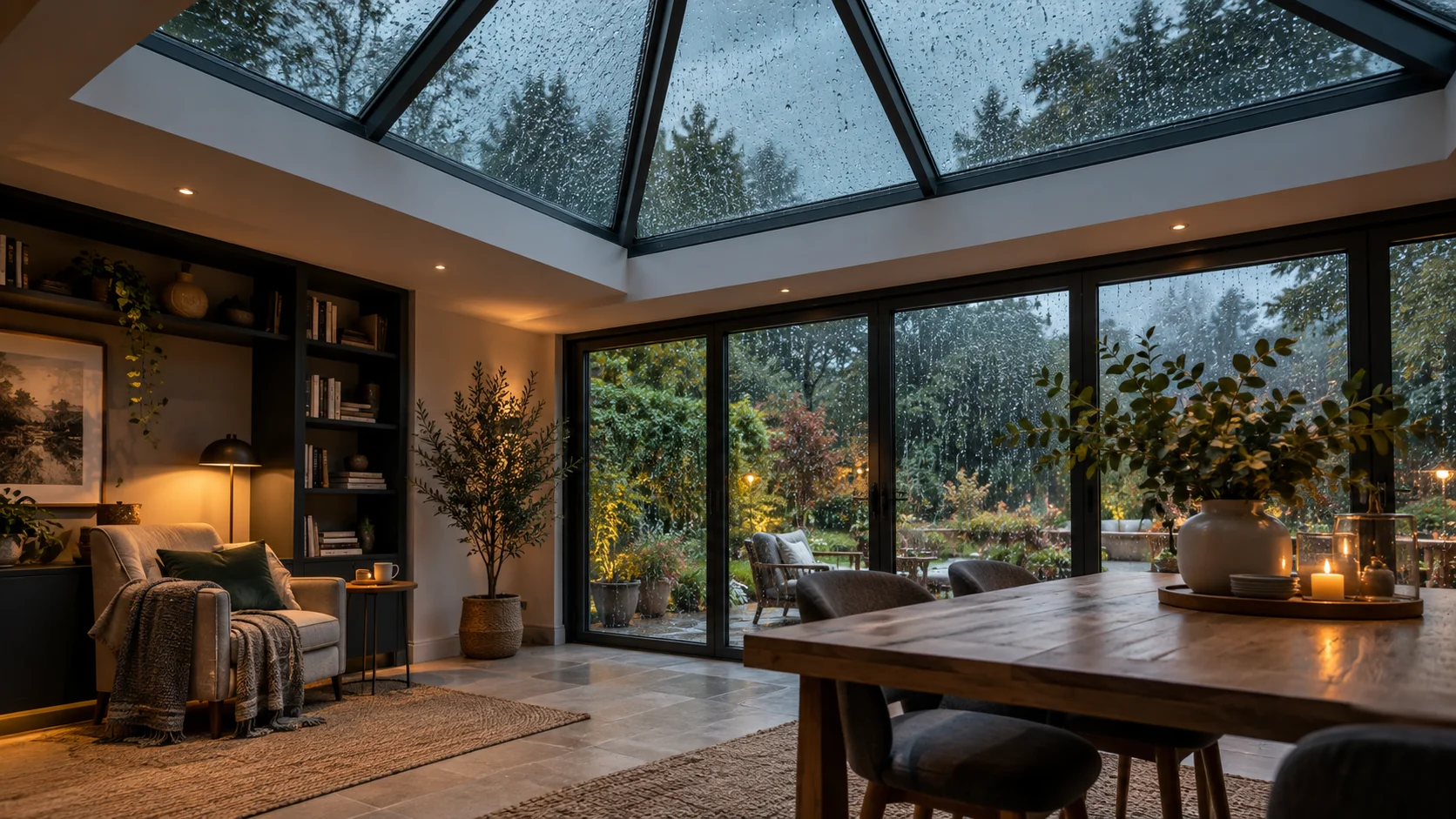
The most immediate benefit of a roof light is the difference it makes to how a room feels.
Daylight entering from above can reach areas that light from vertical doors and windows struggles to reach. This is particularly important in a rear extension, where the original back wall of the house may become the darkest part of the new open-plan space.
A well-positioned roof light can make that central area feel:
-
Brighter
-
More spacious
-
Better connected to the new extension
-
More comfortable for cooking, dining or working
-
Less dependent on electric lighting during daytime hours
Potential buyers often form an impression of a room within moments of entering it. A bright kitchen-diner is more likely to feel inviting than an otherwise similar extension that remains dark in its centre.
Roof Lights Can Make an Extension Feel More Successful
A home extension increases floor area, but additional space does not automatically create a better room.
If the extension is deep, poorly orientated or glazed only at the garden-facing end, it may reduce the amount of light reaching the original house.
This can result in:
-
A dark middle section between the old and new rooms
-
A kitchen that needs artificial lighting throughout the day
-
A visual divide between the extension and original property
-
An open-plan layout that feels long and enclosed
Positioning roof glazing close to the former rear wall can help daylight reach this transition zone.
That can make the entire extension feel more coherent, which may improve how future buyers perceive both the space and the quality of the renovation.
Which Rooms Gain the Most Value from Roof Lights?
Kitchen Extensions
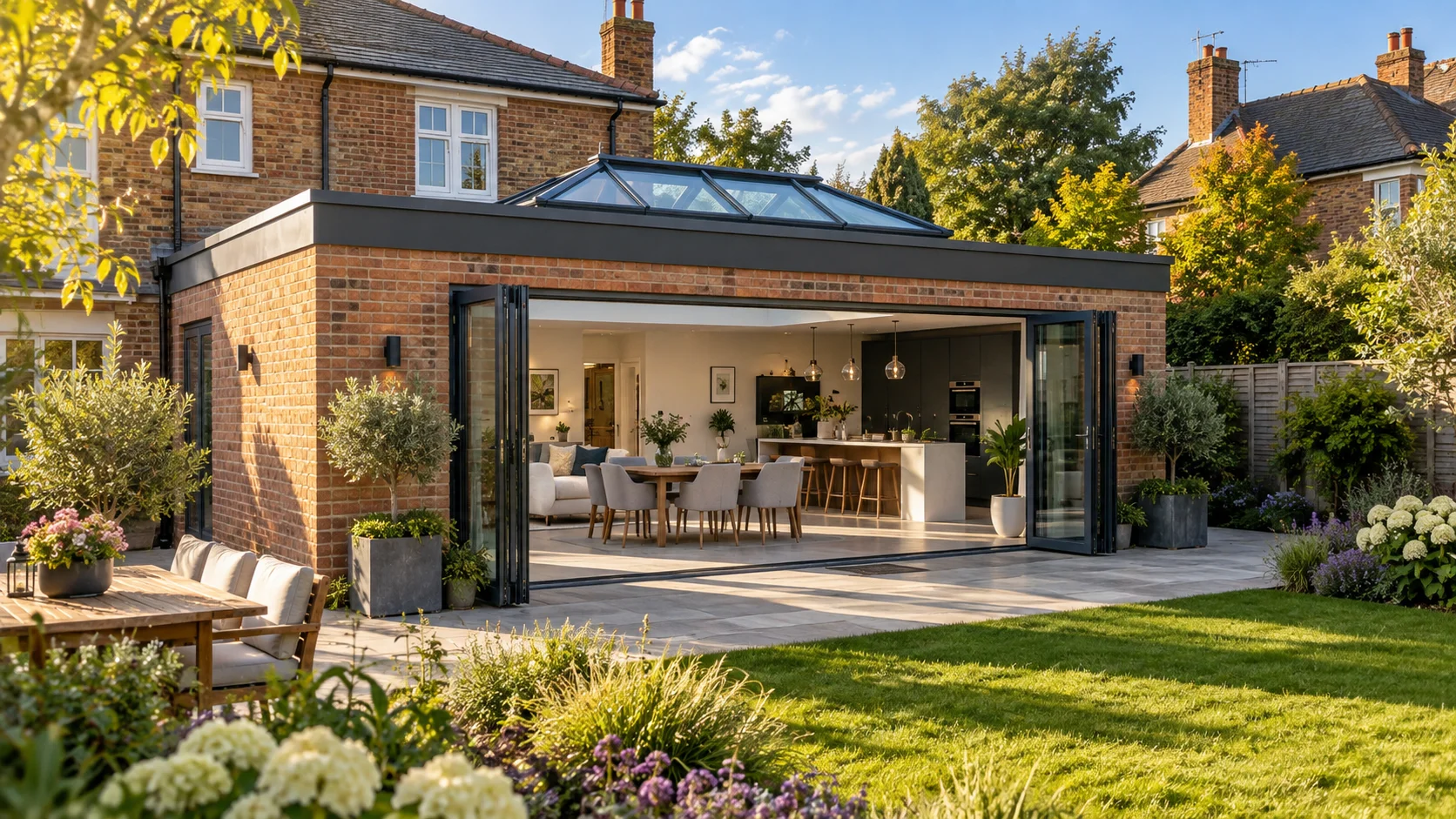
Kitchen extensions are among the strongest applications for roof lights.
They often contain wide bifold or sliding doors at the rear, but these doors may be several metres away from the original part of the house.
A roof light above the kitchen island, dining table or transition between the old and new spaces can distribute daylight more effectively throughout the room.
This can help create the bright, open kitchen-diner many buyers associate with a high-quality modern renovation.
Living and Dining Rooms
A roof light can introduce overhead daylight into a living area without using additional wall space that may be needed for furniture, artwork or storage.
A larger flat roof light or roof lantern can also create a strong focal point above a dining table or seating area.
Loft Conversions
Roof windows and skylights are often essential in loft conversions because the room may have limited vertical wall area for conventional windows.
Good roof glazing can make a loft bedroom, office or bathroom feel like an intentional part of the home rather than a dark converted storage area.
Internal Bathrooms and Hallways
Rooms positioned within the centre of a floor plan can be difficult to light naturally.
A suitable roof light may introduce daylight while preserving privacy through obscured or satin glazing.
Basement Conversions
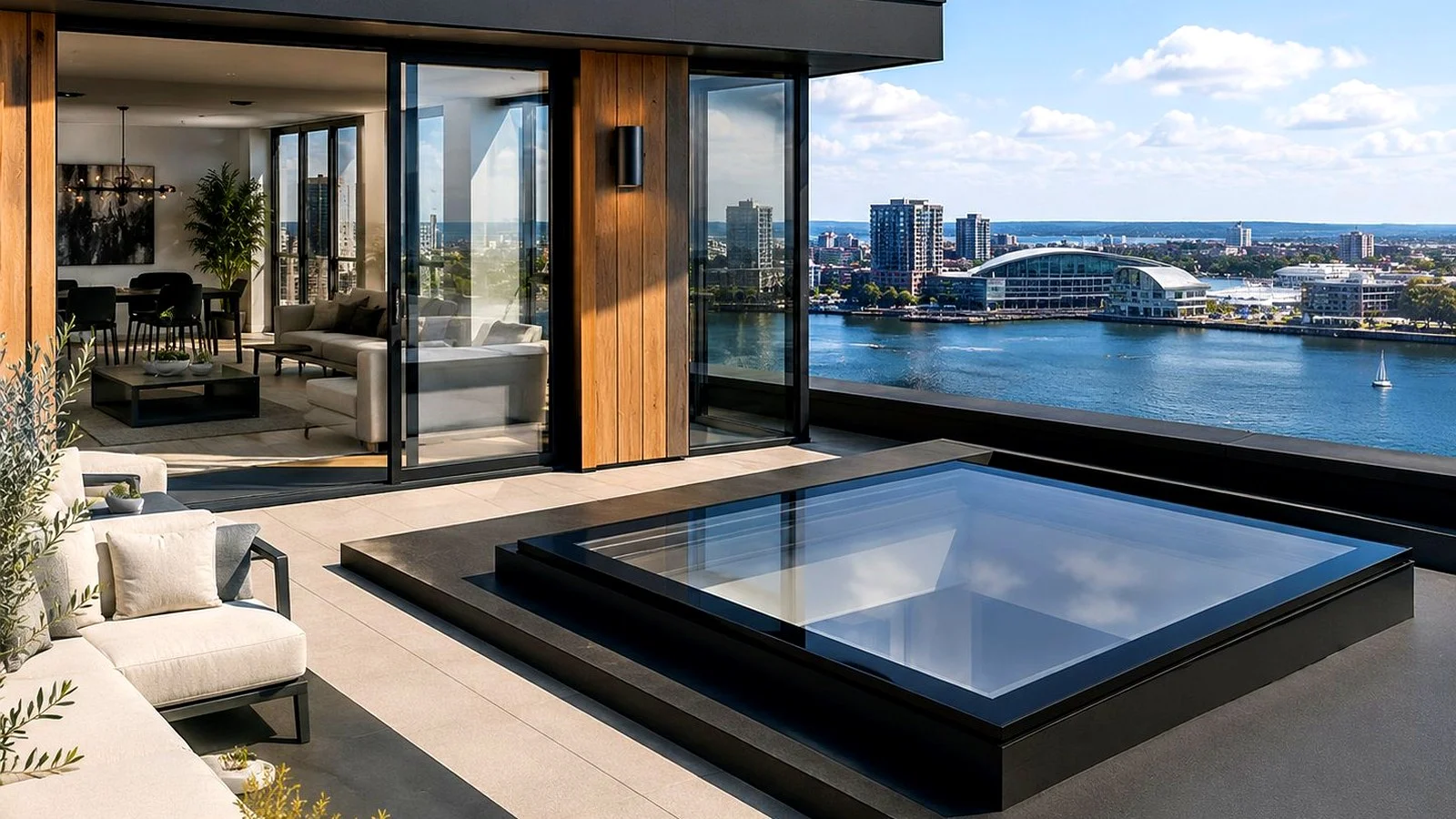
Specialist walk-on roof lights can bring daylight into basement spaces from a terrace, courtyard or garden above.
This can materially improve the usability and perceived quality of a basement that would otherwise depend almost entirely on artificial light.
Garden Rooms
A roof light can make a garden office or studio feel brighter without sacrificing wall space needed for desks, shelving or equipment.
Solar control and ventilation should be considered carefully because smaller glazed buildings can overheat quickly during summer.
Does a Roof Lantern Add More Value Than a Flat Roof Light?
A roof lantern is a raised glazed structure with angled faces, while a flat roof light sits closer to the roof plane.
Both can improve a room, but they create different effects.
A Roof Lantern May Add More Appeal When:
-
The extension has an orangery-style or formal design
-
The room is large enough to accommodate a substantial ceiling feature
-
The raised structure creates useful additional height
-
The lantern is positioned above a principal dining or seating area
-
The proportions suit the roof and room
A Flat Roof Light May Add More Appeal When:
-
The extension has a clean contemporary design
-
A minimal ceiling detail is preferred
-
The room is relatively compact
-
The priority is efficient daylight rather than architectural drama
-
The roof needs to remain visually understated
A larger or more expensive roof lantern does not automatically add more value. The product that best suits the architecture is likely to make the strongest contribution.
Size Has a Major Effect on Value
A roof light that is too small may cost almost as much to install as a more generously sized unit while delivering much less visual and practical impact.
A small glazed panel can appear lost within a large ceiling and provide limited daylight during autumn and winter.
The appropriate size depends on:
-
The room’s floor area
-
The depth and shape of the extension
-
The amount of vertical glazing
-
The room’s orientation
-
Nearby buildings, trees and other obstructions
-
The position of the roof light within the ceiling
-
The intended use of the room
Bigger is not always better. An oversized roof light can create excessive solar gain, increase heat loss and dominate the ceiling.
The goal is a proportion that delivers useful year-round light while remaining balanced with the room and roof.
Position Is as Important as Size
A large roof light in the wrong location may provide less benefit than a smaller unit positioned more carefully.
Useful positions may include:
-
Above the darkest part of a deep extension
-
Alongside the original rear wall of the house
-
Directly above a kitchen island
-
Over a dining table or principal seating area
-
Along a hallway or circulation route
The roof structure also affects what is possible. Roof joists, beams and drainage routes may restrict the position or increase the structural work required.
Roof-light placement should therefore be coordinated with the architectural and structural design before construction begins.
Thermal Performance Protects Long-Term Value
A roof light may make a room brighter, but poor thermal performance can make the same space uncomfortable during cold weather.
Potential buyers may notice:
-
A cold area beneath the glazing
-
Condensation around the frame
-
Draughts around an opening unit
-
High heating requirements
Quality roof glazing should combine:
-
Insulated double or triple glazing
-
Low-emissivity glass coatings
-
Warm-edge spacer bars
-
A thermally broken aluminium frame
-
A correctly insulated upstand
-
Proper insulation around the internal reveal
Compare the whole-unit U-value rather than relying only on a centre-pane glass figure.
A well-insulated product will help preserve the comfort and energy performance of the extension, supporting its appeal over the long term.
Overheating Can Reduce the Benefit
Roof glazing receives more direct sunlight than many vertical windows, making solar gain an important consideration.
A large south or west-facing roof light can make a room uncomfortably warm if the glass and ventilation are not properly specified.
Overheating can be managed through:
-
Solar-control glass
-
An opening roof light
-
Opening windows and garden doors
-
External shading
-
Internal roof-light blinds
-
Mechanical ventilation or cooling
-
Careful control of the total glazed area
A roof light adds the most value when it improves the room throughout the year rather than creating a bright but uncomfortable space during summer.
Opening Roof Lights Can Add Practical Value
An opening roof light provides natural ventilation as well as daylight.
Because warm air rises, opening a unit at roof level can help release:
-
Heat accumulating near the ceiling
-
Cooking moisture
-
Humidity from bathrooms and utility rooms
-
Stale air within a deep room
Electric opening systems may include remote controls, wall switches and automatic rain sensors.
This extra functionality can make the room more practical, although an opening unit generally costs more and includes additional components that may eventually require maintenance.
Where ventilation is already provided effectively through doors, windows or mechanical systems, a fixed roof light may offer better value.
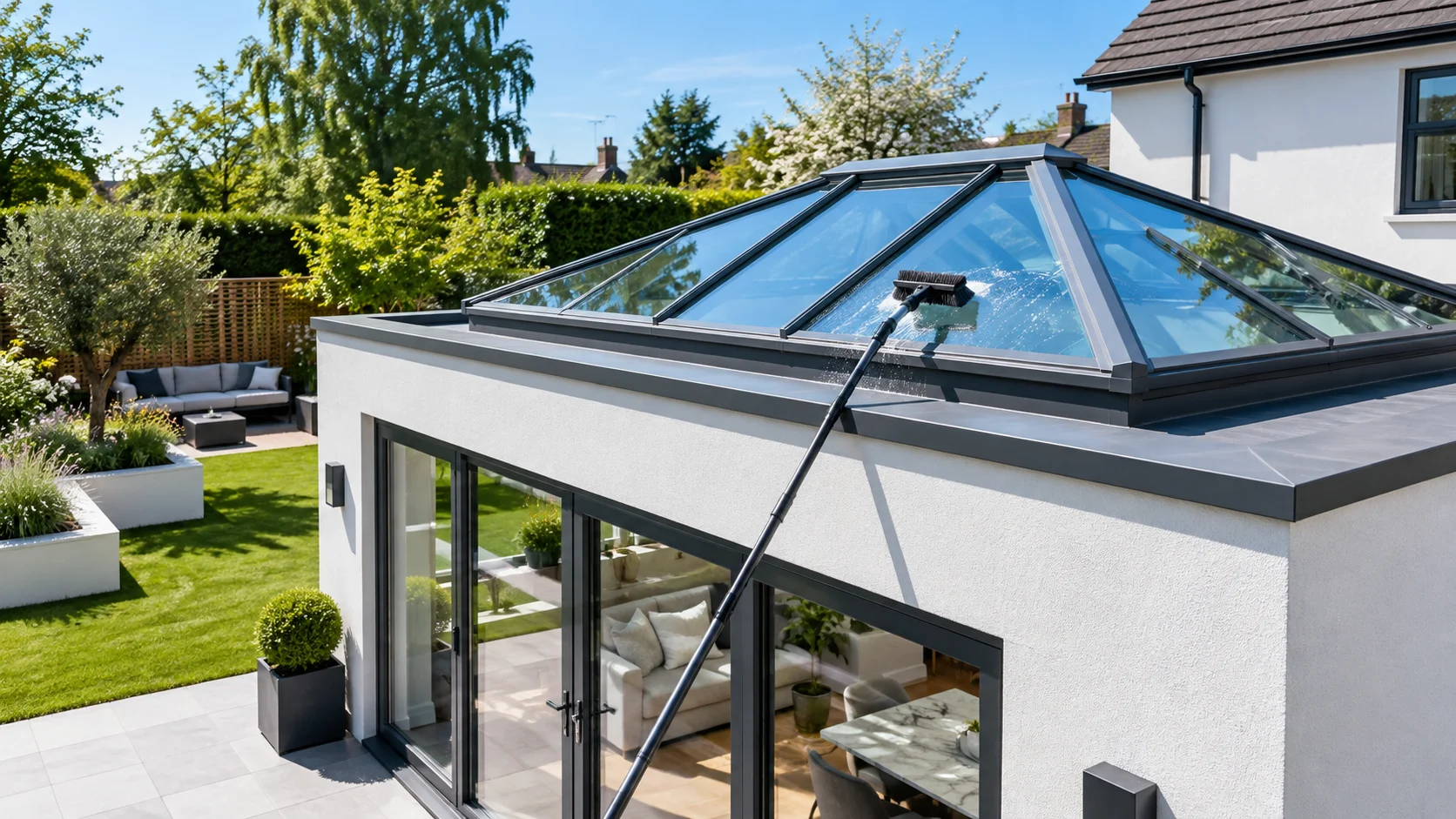
Self-Cleaning Glass Can Preserve the Appearance
Roof lights are difficult to access for routine cleaning, especially when positioned above a kitchen island, stairwell or tall ceiling.
Self-cleaning glass has a specialist coating that helps break down organic dirt and allows rainwater to spread more evenly across the surface.
It does not make the glass completely maintenance-free, but it can reduce the frequency and difficulty of cleaning.
This is valuable because a roof light covered in dirt, moss or standing-water marks will provide less light and appear less attractive to future buyers.
Installation Quality Can Determine Whether Value Is Added or Lost
A well-made roof light can still cause serious problems if it is fitted incorrectly.
Poor installation may lead to:
-
Water leaks
-
Condensation around the opening
-
Cold bridging
-
Standing water on the glass
-
Damage to internal ceilings and decoration
-
Premature failure of seals or roof membranes
A leaking roof light can reduce buyer confidence and create concerns about hidden damage within the roof.
The installation should include:
-
A correctly designed and insulated upstand
-
The required pitch for water drainage
-
Proper integration with the roof membrane
-
Suitable structural support
-
Correct perimeter insulation and air sealing
-
A carefully finished internal reveal
SmartaView supplies roof glazing, so installation should be arranged with a competent contractor experienced with the selected roof-light and roofing systems.
The Internal Finish Matters
The appearance of the ceiling and internal reveal can influence whether a roof light feels like a premium feature or an unfinished building detail.
A well-finished installation should have:
-
Clean and consistent plaster lines
-
A balanced reveal around the glazing
-
No visible staining or cracking
-
Good alignment with nearby walls, cabinetry or ceiling features
-
A frame colour that suits the wider room
Angled reveals may help spread daylight more widely into the room, while deeper vertical reveals create a more defined ceiling opening.
The appropriate detail depends on the roof build-up, structure and architectural design.
Roof Lights Can Improve Saleability Without Guaranteeing a Price Increase
There is an important difference between increasing the mathematical valuation of a property and making it easier to sell.
A roof light may not cause a valuer to add a specific sum to the property. However, it can improve the presentation and desirability of a key room.
That may help by:
-
Creating a stronger first impression
-
Producing brighter estate-agent photography
-
Making the extension feel more spacious
-
Helping the home stand out from similar properties
-
Reducing buyer concerns about a dark open-plan layout
These benefits can strengthen saleability even where the precise financial return cannot be isolated from the wider renovation.
Will a Roof Light Recover Its Full Cost?
There is no guarantee that the complete supply and installation cost will be recovered directly through the eventual sale price.
The result depends on:
-
The local property market
-
The quality and size of the extension
-
The type of roof light selected
-
The standard of installation
-
Whether the room genuinely needed more daylight
-
How long the homeowner enjoys the improvement before selling
The roof light should therefore be considered both a property improvement and a lifestyle investment.
Even if it does not produce a pound-for-pound return, several years of living in a brighter and more enjoyable room may still make the investment worthwhile.
When Do Roof Lights Add the Most Value?
A roof light is likely to make the strongest contribution when:
-
The existing room is noticeably dark
-
The extension is too deep for vertical windows to light effectively
-
The roof light is appropriately sized for the room
-
It is positioned above an important activity area
-
The glass controls heat loss and solar gain
-
The frame and internal finish suit the architecture
-
The product has been installed and waterproofed correctly
-
The room is used frequently rather than occasionally
A generous roof light above a kitchen island in a principal family space will normally have more impact than a small unit above a rarely used utility room.
What Can Reduce the Value of a Roof Light?
Installing a Unit That Is Too Small
An undersized roof light may provide too little daylight to justify the structural and installation work.
Poor Positioning
A roof light placed above an already bright area may leave the darkest part of the room unchanged.
Leaks or Signs of Water Damage
Water staining and damaged plaster will immediately undermine buyer confidence.
Condensation
Regular condensation may suggest poor thermal performance, missing insulation or inadequate ventilation.
Summer Overheating
A room that becomes unusably hot during sunny weather is unlikely to be perceived as an improvement.
Poor Proportions
An oversized roof lantern can dominate a small extension, while a tiny roof light may look like an afterthought in a large ceiling.
Uncoordinated Design
A traditional lantern may conflict with an extremely minimal extension, just as a stark frameless roof light may feel inconsistent within a highly decorative orangery.
Inadequate Documentation
Missing planning, Building Regulations or guarantee documentation may create questions during a future sale.
Planning and Building Regulations
Roof-light work may need to satisfy planning and Building Regulations requirements depending on the property, position and wider project.
Additional approval may be needed where:
-
The property is listed
-
The building is within a conservation area
-
The roof light is positioned on a prominent elevation
-
The property is a flat or leasehold home
-
Permitted development rights are restricted
Building Regulations considerations may include:
-
Structural support around the opening
-
Thermal performance
-
Safety glazing
-
Fire performance of the surrounding roof
-
Ventilation requirements
Retain relevant approvals, invoices, product specifications and guarantee documents. Clear records can make a future property transaction more straightforward.
How to Maximise the Value a Roof Light Adds
To achieve the strongest result:
-
Identify which part of the room needs additional daylight.
-
Choose a roof-light type that suits the architecture.
-
Select dimensions proportionate to the room and ceiling.
-
Coordinate the position with the roof structure.
-
Specify suitable thermal and safety glazing.
-
Assess the risk of overheating and glare.
-
Include solar control or ventilation where appropriate.
-
Use a correctly insulated upstand.
-
Follow the manufacturer’s required installation pitch.
-
Use an experienced roofing and glazing contractor.
-
Finish the internal ceiling and reveals carefully.
-
Keep all approval and guarantee documents.
The Verdict: Do Roof Lights Add Value?
Yes, a properly designed roof light can add value by improving natural light, strengthening the appearance of an extension and making the room more enjoyable to use.
Its impact is greatest where the roof light solves a genuine problem, such as a dark kitchen, deep extension or internal space with limited access to vertical windows.
However, a roof light does not guarantee a specific increase in the sale price. Product quality, size, positioning, thermal performance and installation all determine whether it is viewed as a desirable feature or a potential maintenance concern.
The best roof lights feel integral to the building. They provide useful daylight throughout the year, remain comfortable during summer and winter, and appear to have been considered from the beginning of the project.
Explore Roof Lights with SmartaView
Browse SmartaView’s roof-light range to compare available sizes, framed and frameless designs, and glass specifications.
SmartaView supplies made-to-order roof glazing for UK projects. Final dimensions, structural openings, upstands, waterproofing and installation should be confirmed with the competent professionals responsible for your building work.
Further reading
- How to Choose the Right Roof Light for Your Extension
- What Is a Roof Lantern and Is One Right for Your Extension?
- The Best Door Choices for a Home Extension in 2026
Ready to see your price? Explore SmartaView's roof lights and get an instant online price — free UK mainland delivery, no quote forms. Prefer to talk it through? Speak to our team.
Author at Smartaview, writing about aluminium glazing, home improvements and the buying process.