What Is a Roof Lantern? UK Extension Buyer’s Guide
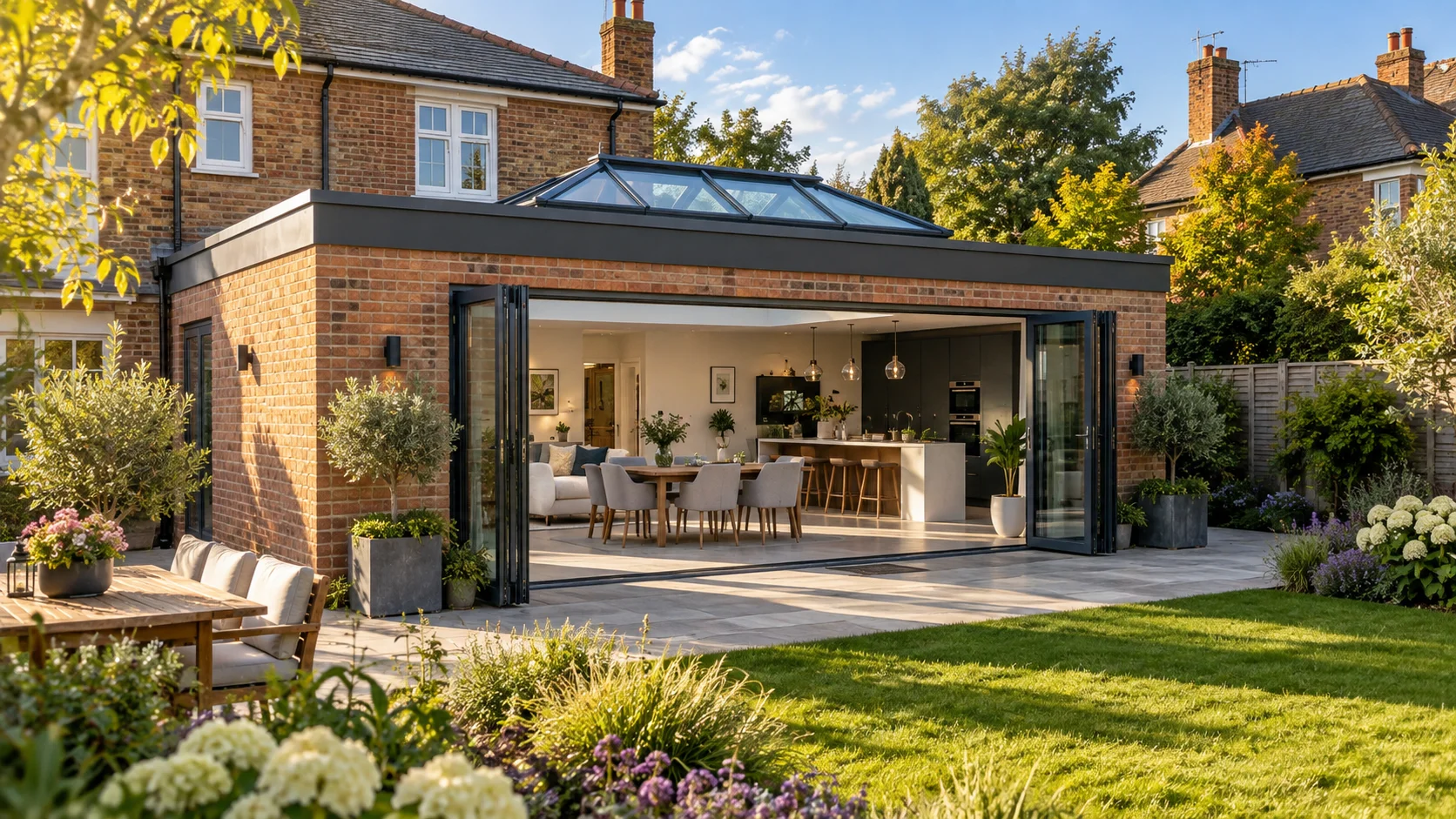
A roof lantern is a raised glazed structure fitted to a flat roof. It brings daylight in from several angles, adds ceiling height and suits larger extensions where the glazing should become a feature.
A roof lantern is one of the most striking architectural features you can add to a single-storey extension.
Unlike a flat roof light that sits close to the roof surface, a lantern rises above the roof and contains several angled panes of glass. From inside, it creates a raised, light-filled ceiling feature that draws the eye upwards and gives the room a greater sense of height.
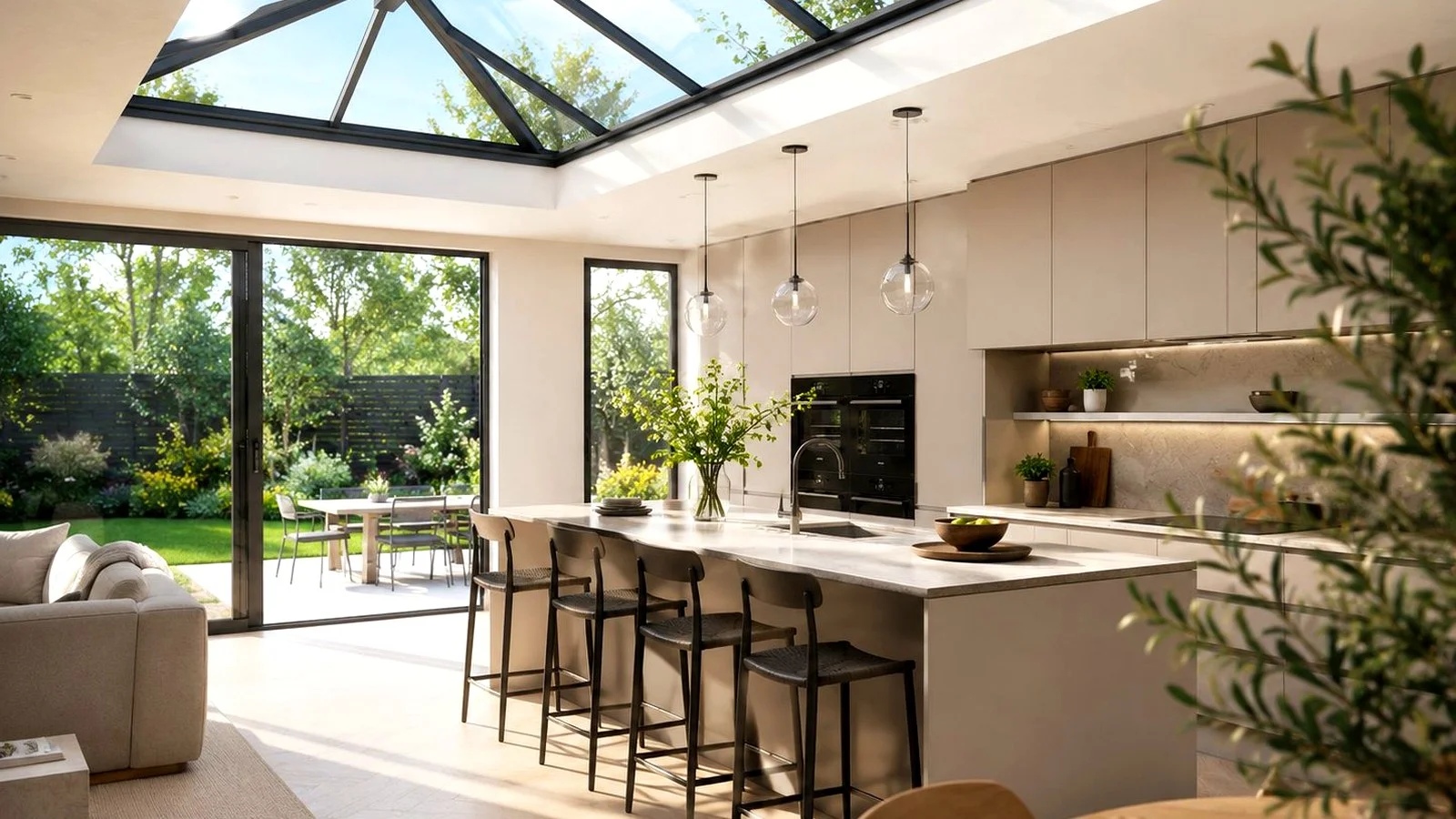
Used in the right setting, a roof lantern can transform an extension. It can introduce daylight from several directions, define a dining or seating area and turn an otherwise plain ceiling into a focal point.
However, roof lanterns are not automatically the best choice for every project. The dimensions, proportions, glazing, orientation and architectural style must all work with the room below.
This guide explains what a roof lantern is, how it differs from a flat roof light and what you should consider before ordering one.
What Is a Roof Lantern?
A roof lantern is a raised glazed structure installed over an opening within a flat or low-pitched roof.
Most roof lanterns contain:
-
A horizontal base frame
-
Angled glazed roof sections
-
A central ridge or apex
-
Aluminium glazing bars supporting the glass
-
Sealed double or triple-glazed units
The lantern is secured to an insulated upstand constructed above the flat roof. The roof covering is dressed around this upstand to create a weatherproof junction.
From outside, the lantern projects above the roofline. From inside, it creates a raised glazed area above the surrounding ceiling.
This distinguishes it from a flat roof light, which normally appears as a single glazed panel sitting close to the roof plane.
Traditional and Contemporary Roof Lanterns
Roof lanterns have been used in orangeries, conservatories and larger homes for centuries.
Traditional lanterns often featured:
-
Timber construction
-
Decorative glazing bars
-
Ornate ridge details
-
Multiple small panes of glass
-
Steeper roof pitches
Modern aluminium roof lanterns apply the same raised-glazing principle using slimmer frames and cleaner profiles.
Contemporary designs may use:
-
Fewer glazing bars
-
Larger glass panels
-
Low-profile ridge sections
-
Dark powder-coated finishes
-
Simple square or rectangular forms
This means a roof lantern does not have to create a traditional orangery appearance. The exact shape, colour and glazing-bar layout can make it suitable for anything from a period-style extension to a clean contemporary kitchen.
How Does a Roof Lantern Bring Light into a Room?
A flat roof light primarily admits daylight through a surface facing upwards. A roof lantern has several angled glazed faces, allowing it to receive light from a broader area of the sky.
This can be especially useful during autumn and winter, when the sun remains lower on the horizon.
The angled panes can receive daylight from different directions throughout the day, although the actual result will depend on:
-
The orientation of the extension
-
The lantern’s size and shape
-
The pitch of the glazed faces
-
Nearby trees and buildings
-
The glass coating and tint
-
The position of the lantern within the room
A well-positioned lantern can spread useful natural light across the room below and help daylight reach the original part of the house beyond the extension.
A Roof Lantern Adds More Than Daylight
The main appeal of a lantern is not simply the quantity of glass. It changes the shape and experience of the ceiling.
A Greater Sense of Height
The raised centre of the lantern creates additional vertical space above the normal ceiling line.
Even where the extension has a standard internal ceiling height, this raised glazed section can make the room feel more generous and less enclosed.
A Defined Focal Point
A lantern naturally draws attention upwards. It can define a particular zone within an open-plan room, such as:
-
A dining table
-
A kitchen island
-
A seating area
-
A central circulation space
This can help a large open-plan extension feel structured without using walls or changes in floor level.
Changing Light Throughout the Day
Because the lantern receives light from several angles, its appearance changes throughout the day.
Morning light may illuminate one glazed face, while warmer afternoon or evening light enters through another. This creates more variation than a completely enclosed ceiling.
A View of the Sky
A roof lantern creates a direct visual connection with the sky above the room.
This can make an extension feel more open even on an overcast day and provides a changing view of clouds, weather and evening light.
Roof Lantern vs Flat Roof Light
Both roof lanterns and flat roof lights introduce daylight from above, but they produce different architectural results.
A Roof Lantern Is Usually Better When:
-
You want the ceiling glazing to form a major design feature
-
The room is large enough to accommodate a raised structure
-
The extension has orangery, transitional or classically proportioned architecture
-
You want to define a dining, kitchen or seating zone
-
Additional perceived ceiling height is desirable
-
The lantern can be incorporated into the roof design from the outset
A Flat Roof Light Is Usually Better When:
-
The architecture is deliberately minimal
-
You want the glazing to sit quietly within the ceiling
-
The extension is relatively compact
-
External roof height must be kept as low as possible
-
The available budget is more limited
-
A large uninterrupted glass panel is preferred to multiple angled panes
Neither option is universally better. The right choice depends on whether you want the roof glazing to appear minimal or become a defining architectural feature.
Which Extensions Suit a Roof Lantern?
Kitchen-Dining Extensions
A lantern can work particularly well above a dining table or kitchen island.
This positions the strongest source of overhead daylight above an area used frequently and creates a clear centre to the open-plan layout.
Where bifold or sliding doors are positioned at the garden end of the extension, the lantern can help daylight reach further towards the original house.
Orangery-Style Extensions
Roof lanterns are a natural fit for orangery-style rooms, where a solid perimeter roof surrounds a central glazed feature.
The solid roof sections provide insulation and space for lighting, while the lantern creates height and overhead daylight in the centre.
Living-Room Extensions
A lantern above a principal seating area can make a new living room feel more spacious and connected to the outside.
Glare should be considered where a television is positioned nearby.
Garden Rooms
A suitably proportioned lantern can make a garden room feel more substantial and architectural.
However, solar gain and ventilation require careful planning because a smaller detached room can heat up quickly.
Utility and Boot Rooms
A compact lantern can bring unexpected daylight and character into a practical room that might otherwise have limited wall space for windows.
The scale should remain appropriate so the lantern does not overwhelm the room.
When Might a Roof Lantern Be the Wrong Choice?
The Room Is Too Small
A lantern introduces visible height, framing and several panes of glass. In a very small extension, it may dominate the ceiling rather than complement it.
A flat roof light may provide the required daylight with less visual weight.
The Architecture Is Extremely Minimal
A raised ridge and visible glazing bars may conflict with an extension designed around completely flat surfaces and concealed details.
A frameless or slim-framed flat roof light may be more coherent in that setting.
Planning or Roof-Height Restrictions Apply
Because a lantern projects above the roof, its external height may affect planning, permitted-development or neighbouring considerations.
This is especially relevant near boundaries or where the roof is visible from surrounding properties and public areas.
The Roof Cannot Support the Proposed Opening
A large lantern requires a substantial structural opening and supporting upstand.
The surrounding beams and joists must transfer roof loads safely around the opening.
The Budget Is Better Used Elsewhere
A lantern normally contains more framing, glass and assembly than a comparable flat roof light.
Where the main objective is simply to brighten the room, a large fixed roof light may deliver better value.
How Large Should a Roof Lantern Be?
A roof lantern should be proportionate to both the room and the surrounding ceiling.
If it is too small, it can look like an afterthought and provide less daylight than expected. If it is too large, it can dominate the ceiling and leave too little solid roof around its perimeter.
When selecting the dimensions, consider:
-
The total floor and ceiling area
-
The room’s length and width
-
The position of kitchen units, islands and dining furniture
-
The width of the solid ceiling border around the lantern
-
The location of beams, joists and drainage falls
-
The dimensions and pitch of the lantern itself
-
The amount of other glass within the extension
A useful design approach is to align the lantern with the feature beneath it.
For example, a rectangular lantern may follow the proportions of a kitchen island or dining table, creating an intentional relationship between the ceiling and the room layout.
Square or Rectangular Roof Lantern?
Square Lanterns
A square lantern creates a balanced, symmetrical feature.
It works particularly well above:
-
A square kitchen island
-
A compact dining area
-
A central seating arrangement
-
A smaller square or near-square extension
Rectangular Lanterns
A rectangular lantern works well in longer kitchen-diners and extensions with a clear linear direction.
It can follow:
-
A long kitchen island
-
A rectangular dining table
-
The axis between the original house and garden
-
The width of a larger seating zone
The shape should relate to the room rather than being chosen solely from a list of available dimensions.
Glazing-Bar Layouts
The number and position of the aluminium bars has a major effect on the appearance of a roof lantern.
Minimal Layouts
Minimal lanterns use fewer bars and larger glass panels.
They provide:
-
A cleaner view of the sky
-
A more contemporary appearance
-
Less visual interruption
The maximum possible pane size will depend on the lantern dimensions, glass weight and structural design.
Structured Grid Layouts
A lantern with additional glazing bars creates a stronger rhythm across the ceiling.
This can suit:
-
Traditional or orangery-style extensions
-
Larger lanterns requiring more visual structure
-
Rooms containing other grid-based glazing
-
Projects where the frame is intended to be a visible feature
Too many bars can make a smaller lantern appear busy, so the layout should remain proportionate to the glass area.
Double or Triple Glazing?
Modern roof lanterns are generally available with insulated double or triple glazing.
Double Glazing
Quality double glazing may be appropriate where:
-
The lantern is moderate in size
-
The extension is otherwise well insulated
-
The room receives useful solar gain
-
The complete lantern achieves the required thermal performance
Triple Glazing
Triple glazing may be worth considering where:
-
The lantern contains a substantial area of glass
-
The extension faces north
-
The property is in a colder or exposed location
-
The room will be heated and occupied throughout winter
-
The wider project is targeting enhanced energy efficiency
Triple-glazed units are heavier and normally more expensive. The frame and supporting structure must be designed for the additional weight.
Compare the whole-lantern U-value rather than looking only at the centre-pane glass figure.
Thermally Broken Aluminium Frames
Aluminium is strong and stable, making it well suited to the slender structural sections required within a roof lantern.
However, aluminium also conducts heat. A residential roof lantern should therefore use thermally broken aluminium profiles.
A thermal break separates the inside and outside sections of the frame using a less conductive material.
This helps:
-
Reduce heat transfer through the frame
-
Keep internal frame surfaces warmer
-
Improve the overall U-value
-
Reduce the likelihood of surface condensation
The thermal break is contained within the aluminium profile and does not detract from the visible design.
Solar-Control Glass
A roof lantern receives substantial sunlight because its glass faces several directions and sits above the surrounding roof.
This can create useful warmth during colder weather but may contribute to overheating in summer.
Solar-control glass reduces the amount of solar energy passing through the glazing while continuing to admit daylight.
It is particularly worth considering where:
-
The extension faces south or west
-
The lantern is relatively large
-
The room also contains wide bifold or sliding doors
-
External shading is limited
-
The room will be occupied throughout summer
Solar-control glass is available in different colours and performance levels. Some options appear nearly clear, while others create a visible blue, grey, bronze or neutral tint.
Consider how the glass will affect both the view of the sky and the colour of daylight within the room.
Privacy and Tinted Glass
A roof lantern may be overlooked by upper-floor windows in neighbouring properties.
Privacy glass can diffuse the view while maintaining overhead daylight.
This may be useful for:
-
Urban extensions
-
Bathrooms and spa rooms
-
Properties closely surrounded by taller buildings
-
Rooms where a softer light quality is preferred
Tinted glass may provide a degree of visual screening and glare reduction, but it should not automatically be treated as complete privacy glazing.
Check the appearance of the chosen glass in both daytime and evening conditions. When the room is illuminated internally after dark, the level of privacy may change.
Self-Cleaning Glass
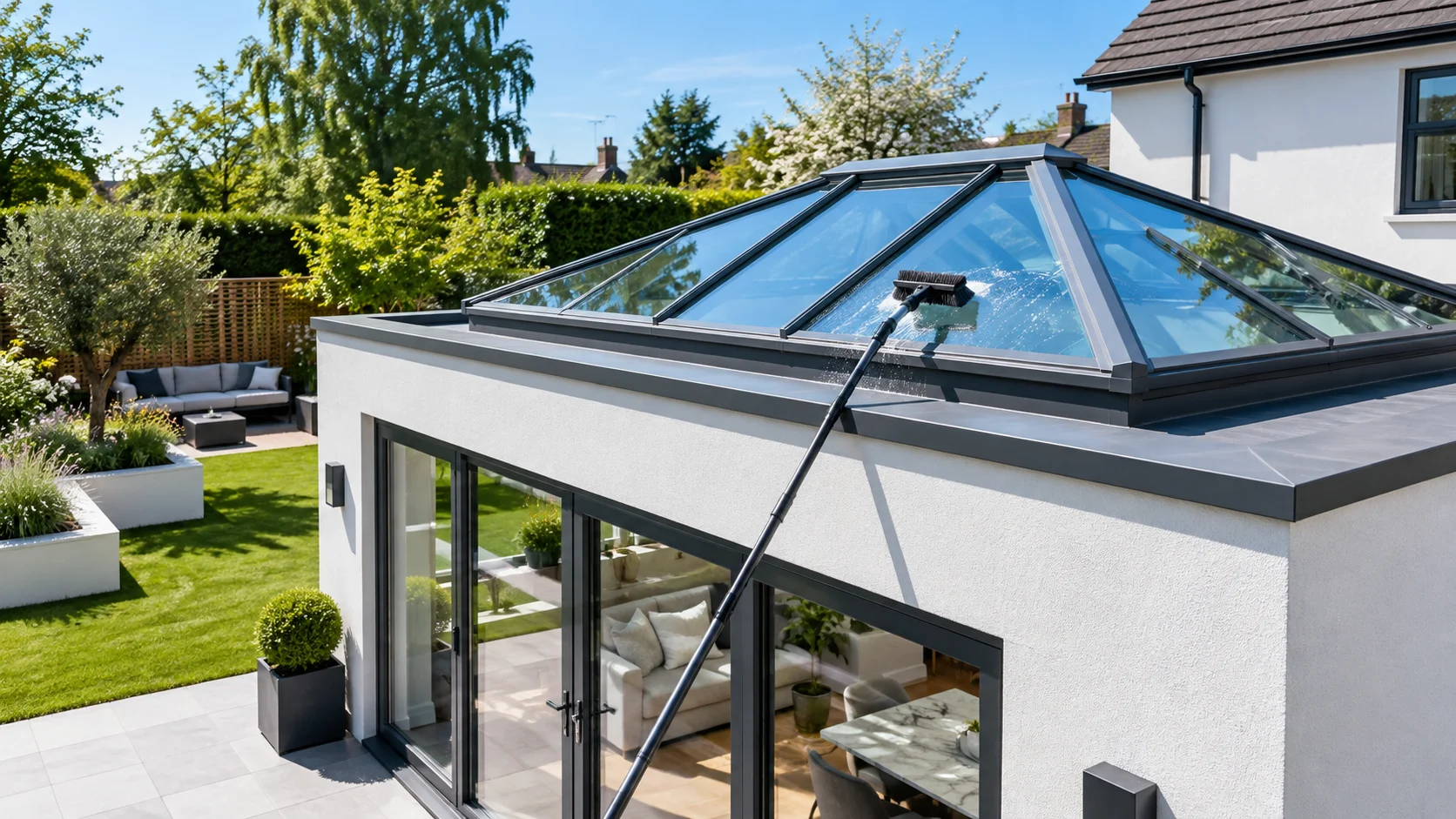
Roof-lantern glass is difficult to reach safely, so a self-cleaning coating is a valuable practical feature.
The coating uses daylight to help break down organic material on the exterior glass. Rainwater then spreads across the surface more evenly, helping wash loosened dirt away.
Self-cleaning glass can reduce the frequency of manual cleaning, but it does not make the lantern completely maintenance-free.
Occasional attention may still be required for:
-
Bird droppings
-
Tree sap
-
Building dust
-
Moss or debris around the frame
-
Areas sheltered from rainfall
A safe method of access should be considered during the design of the roof.
Choosing the Frame Colour
The aluminium frame can usually be powder-coated in a range of colours.
Common choices include:
-
Anthracite grey
-
Jet black
-
White
-
Warm and neutral greys
-
Bespoke RAL colours
Dark colours create a strong outline against the sky and can coordinate with black or anthracite bifold doors.
White frames may blend more subtly with a pale ceiling, particularly in traditional and orangery-style interiors.
Dual-colour frames may also be available, allowing the exterior to coordinate with the roof and external doors while the interior uses a lighter finish.
For a coherent extension, consider matching the lantern frame with:
-
Bifold or sliding doors
-
Aluminium windows
-
Internal glazed doors
-
External roofline and drainage details
Confirm the exact RAL reference, texture and gloss level rather than relying only on a general colour name.
Will a Roof Lantern Make the Room Too Hot?
A poorly specified lantern can contribute to summer overheating, but this is not inevitable.
The risk depends on:
-
The lantern’s glazed area
-
The room’s orientation
-
The glass solar-performance specification
-
The amount of additional glazing in the room
-
The available ventilation
-
External shading from trees and buildings
-
The insulation and thermal mass of the extension
Overheating can be managed through a combination of:
-
Solar-control glazing
-
Opening windows and garden doors
-
Opening roof vents where available
-
External shading
-
Internal blinds
-
Mechanical ventilation or cooling
The complete glazing strategy should be considered before the lantern is ordered.
Ventilation and Opening Roof Lanterns
Some roof lantern systems can include one or more opening sections for natural ventilation.
Roof-level ventilation can be effective because warm air rises and collects at the highest point in the room.
An opening vent may help release:
-
Excess summer heat
-
Cooking moisture
-
Humidity
-
Stale air within a deep extension
However, opening sections add cost and introduce additional frames, seals and operating mechanisms.
Where ventilation is already provided effectively through doors, windows and mechanical systems, a completely fixed lantern may offer a cleaner and simpler solution.
The Upstand and Roof Opening
A roof lantern is installed on an upstand constructed around the opening in the flat roof.
The upstand performs several important functions:
-
Supporting the lantern
-
Raising it above the roof surface
-
Providing a surface for the roof membrane to terminate against
-
Maintaining insulation around the roof opening
-
Forming the internal ceiling reveal
The upstand must be constructed to the dimensions required by the lantern manufacturer.
Do not confuse:
-
The lantern’s overall external dimensions
-
The required upstand dimensions
-
The structural roof opening
-
The visible opening from inside the room
These measurements may all differ.
The supplier, builder, roofer and structural designer should confirm the required dimensions before construction proceeds.
Structural Requirements
A roof lantern and its glazed units can be heavy. The structure below must safely support the lantern and transfer loads around the roof opening.
The design may need to account for:
-
The dead weight of the aluminium and glass
-
Wind loads
-
Snow loads
-
The span of the roof opening
-
The position of supporting beams and joists
-
Movement and deflection around the opening
The opening and supporting structure should be designed before the lantern is ordered.
For larger units, a structural engineer may need to specify supporting steelwork, timber beams or reinforced framing around the upstand.
Waterproofing and Installation
A quality roof lantern depends on a correctly constructed and waterproofed base.
The installation should include:
-
An upstand built to the required dimensions
-
Suitable insulation around the complete opening
-
Proper integration with the flat-roof membrane
-
Correctly installed flashings, seals and cappings
-
Secure mechanical fixings
-
Unobstructed roof drainage around the lantern
-
A carefully finished internal ceiling reveal
Most roof-lantern leaks result from problems around the roof junction rather than water passing directly through the glass.
Installation should be completed by competent professionals familiar with the selected lantern and roofing systems.
SmartaView is a supply-only retailer and does not provide installation services.
Condensation Around a Roof Lantern
Condensation forms when warm, humid indoor air contacts a sufficiently cold surface.
The risk can be reduced through:
-
Thermally broken aluminium frames
-
Insulated double or triple glazing
-
A properly insulated upstand
-
Continuous insulation around the internal reveal
-
Correct air sealing
-
Adequate room ventilation
Condensation appearing around the base of the lantern may indicate missing insulation or a cold bridge within the supporting construction rather than a fault with the lantern itself.
Planning Permission
A roof lantern installed as part of a new extension will normally be considered within the planning status of the wider project.
Its height, location and visibility may still affect whether permission is required.
Additional restrictions can apply where:
-
The property is listed
-
The home is in a conservation area
-
The lantern is visible from the principal elevation
-
The extension is close to a boundary
-
Permitted-development rights have been restricted
-
The property is a flat or leasehold home
Planning rules vary across England, Wales, Scotland and Northern Ireland.
Confirm the position with your designer or local planning authority before construction begins, particularly where the lantern changes the overall roof height.
Building Regulations
Building Regulations considerations may include:
-
The structural support around the opening
-
The thermal performance of the lantern and surrounding roof
-
The safety-glass specification
-
The fire performance of nearby roof materials
-
Ventilation and overheating
-
Drainage and weather resistance
Your architect, building designer, structural engineer or Building Control body can advise how these requirements apply to the project.
How Much Does a Roof Lantern Cost?
The price of a roof lantern depends on its dimensions and complete specification.
The main cost factors include:
-
The length and width of the lantern
-
The shape and glazing-bar layout
-
Double or triple glazing
-
The selected glass finish
-
Solar-control and self-cleaning coatings
-
The frame colour
-
Single or dual-colour production
-
The structural opening and upstand
-
Roof access and lifting requirements
-
Installation and waterproofing complexity
The lantern’s supply price should be considered alongside the cost of the supporting structure, roof membrane, lifting equipment, internal finishing and installation.
When comparing quotations, make sure every supplier has included the same dimensions, glass, colour and performance specification.
Delivery and Access
Roof-lantern components and glass units may be large, fragile and heavy.
Before ordering, consider:
-
How the delivery vehicle will reach the property
-
Where the components can be stored safely
-
Whether scaffolding will obstruct access
-
How the glass will be lifted onto the roof
-
Whether specialist glazing or lifting equipment is required
-
Who will inspect the components when they arrive
Access and lifting arrangements should be agreed before delivery rather than improvised once the lantern reaches the site.
Roof-Lantern Buying Checklist
Before approving your order, confirm:
-
The overall lantern dimensions
-
The required upstand dimensions
-
The square or rectangular orientation
-
The design shape and glazing-bar layout
-
The ridge position and roof pitch
-
Whether the unit is double or triple glazed
-
The whole-unit thermal performance
-
The safety-glass construction
-
The solar-control and glass-tint specification
-
Whether privacy glass is required
-
Whether self-cleaning glass is included
-
The internal and external frame colours
-
The structural support around the opening
-
The roof-membrane and waterproofing details
-
The delivery, storage and lifting plan
-
The applicable product guarantee
Is a Roof Lantern Right for Your Extension?
A roof lantern may be right for your project if you want more than a simple source of overhead daylight.
It is particularly effective when:
-
The room is large enough to support a prominent ceiling feature
-
The lantern can be aligned with an important area below
-
The architecture benefits from a raised glazed structure
-
The dimensions and structure can be planned before construction
-
The glass is specified to control heat loss and solar gain
-
The budget allows for the lantern, supporting structure and installation
A flat roof light may be the better choice if you want a minimal ceiling, have a smaller room or need to control the overall roof height and project cost.
The decision should be based on the complete room rather than the roof product in isolation. The lantern’s proportions, position, glass and frame design should all support the architecture below it.
Explore Roof Lanterns with SmartaView
Browse SmartaView’s aluminium roof-lantern range to compare shapes, dimensions, glazing options and frame finishes.
SmartaView supplies made-to-order roof lanterns directly to UK projects. Final dimensions, structural support, upstand construction, waterproofing, lifting and installation should be confirmed with the competent professionals responsible for your building work.
Further reading
- How to Choose the Right Roof Light for Your Extension
- Do Roof Lights Add Value to Your Home?
- Extension Ideas for More Natural Light: What Actually Works
Ready to see your price? Explore SmartaView's aluminium roof lanterns and get an instant online price — free UK mainland delivery, no quote forms. Prefer to talk it through? Speak to our team.
Author at Smartaview, writing about aluminium glazing, home improvements and the buying process.